PoE standard

Home

PoE standard

  • What standards do PoE splitters support (e.g., IEEE 802.3af, 802.3at, 802.3bt)?
    Jan 17, 2022
      PoE splitters support different Power over Ethernet (PoE) standards depending on their power requirements and compatibility with network infrastructure. These standards determine how much power the splitter can receive and distribute to the connected non-PoE device.   1. IEEE 802.3af (PoE) – Up to 15.4W Overview: --- Introduced in 2003, IEEE 802.3af is the first official PoE standard. --- Provides up to 15.4W per port, though only 12.95W is available after accounting for power loss in the cable. --- Uses Category 5e (Cat5e) or higher Ethernet cables. --- Supports 10/100/1000 Mbps (Gigabit Ethernet) networks. PoE Splitter Compatibility: --- Converts PoE input (48V) into lower voltages like 5V, 9V, or 12V. Suitable for low-power devices, such as: --- IP cameras --- VoIP phones --- Basic wireless access points (WAPs) --- IoT sensors and embedded systems     2. IEEE 802.3at (PoE+) – Up to 30W Overview: --- Introduced in 2009, this is an upgraded version of 802.3af. --- Provides up to 30W per port, with at least 25.5W available after cable loss. --- Uses Cat5e or higher Ethernet cables. --- Backward compatible with 802.3af, meaning PoE+ switches can power both PoE (15.4W) and PoE+ (30W) devices. PoE Splitter Compatibility: --- Converts PoE+ input (48V–57V) into 12V, 9V, or 5V DC outputs. Suitable for moderate-power devices, such as: --- High-definition IP cameras (PTZ cameras with motors) --- Dual-band wireless access points --- Video intercom systems --- Some industrial controllers     3. IEEE 802.3bt (PoE++ / PoE++ Type 3 & Type 4) – Up to 60W / 100W Overview: --- Introduced in 2018, this is the latest and most powerful PoE standard. Two categories: --- Type 3: Provides up to 60W per port (51W after cable loss). --- Type 4: Provides up to 100W per port (71W after cable loss). Uses all four twisted pairs in an Ethernet cable for power transmission. Requires Cat6 or higher cables for optimal performance. PoE Splitter Compatibility: --- Converts PoE++ input (48V–57V) into higher-wattage outputs (12V, 24V, or even 48V DC). Suitable for high-power devices, such as: --- 4K PTZ cameras with heaters --- High-performance Wi-Fi 6 access points --- Smart lighting and building automation systems --- Digital signage displays --- Mini PCs and industrial devices requiring more power     Comparison Table of PoE Standards for Splitters PoE Standard Year Max Power per Port Usable Power Devices Powered via Splitter IEEE 802.3af (PoE) 2003 15.4W 12.95W IP cameras, VoIP phones, basic access points, IoT devices IEEE 802.3at (PoE+) 2009 30W 25.5W PTZ cameras, dual-band APs, video intercoms IEEE 802.3bt (PoE++) Type 3 2018 60W 51W High-power Wi-Fi 6 APs, large LED screens, industrial controllers IEEE 802.3bt (PoE++) Type 4 2018 100W 71W 4K PTZ cameras with heaters, digital signage, high-power industrial devices     Choosing the Right PoE Splitter 1. Check the power requirements of your non-PoE device (voltage and wattage). 2. Match the PoE standard of your splitter with your PoE switch or injector. 3. Ensure voltage compatibility (most splitters output 5V, 9V, 12V, or 24V). 4. Use high-quality Ethernet cables (Cat5e for PoE/PoE+, Cat6+ for PoE++).    
    Read More
  • Is it difficult to configure a PoE splitter for specific devices?
    Mar 11, 2022
      Configuring a PoE splitter for specific devices is generally not difficult, but it does require careful attention to a few key factors. The main task involves selecting a PoE splitter that matches the power requirements of the device you're trying to power, as well as ensuring proper connectivity for both data and power. Here’s a detailed breakdown of the process and considerations:   1. Choosing the Right PoE Splitter for Your Device Before configuring a PoE splitter, you must first identify the voltage and power requirements of the device you want to power. This is the most critical step in ensuring that the device works reliably without damage. Key Steps: --- Identify Device Power Requirements: Check the device’s manual or technical specifications for its voltage and power needs. Common voltage requirements for networked devices are 5V, 9V, 12V, or 24V DC. --- PoE Standard Compatibility: Ensure that the PoE standard your device is using (e.g., 802.3af, 802.3at, or 802.3bt) matches the PoE splitter’s capability. PoE (802.3af) provides up to 15.4W, PoE+ (802.3at) provides up to 25.5W, and PoE++ (802.3bt) can deliver up to 60W or even 100W in some cases. --- Check Output Voltage of PoE Splitter: Choose a PoE splitter that provides the correct output voltage that matches the device’s requirements. For example, if your device requires 12V, select a splitter that outputs 12V DC.     2. Selecting the Correct PoE Splitter PoE splitters come with various output voltages, typically in 5V, 9V, 12V, 24V, or 48V configurations. The key is to match the output voltage of the PoE splitter to the voltage required by your device. Here’s how you do it: Match the Device’s Voltage Requirements: --- If your device needs 5V, choose a splitter that converts PoE to 5V. --- If your device needs 12V, select a splitter that outputs 12V. Ensure the splitter provides enough current (measured in amps) to meet the power needs of the device. For instance, a 12V device requiring 1A would need a 12V PoE splitter that can provide at least 12W of power (12V * 1A = 12W). Ensure PoE Standard Compatibility: --- PoE (802.3af): Provides up to 15.4W and is generally sufficient for smaller devices like IP cameras and wireless access points that require lower power. --- PoE+ (802.3at): Delivers up to 25.5W and is typically required for devices like larger IP cameras, some VoIP phones, and network switches. --- PoE++ (802.3bt): Delivers up to 60W or 100W and is necessary for devices like high-power IP cameras, access points, or network switches with higher power demands.     3. Wiring the PoE Splitter Once you’ve selected the appropriate PoE splitter for your device, the configuration itself is typically straightforward, requiring basic wiring. Here’s how you do it: Step-by-Step Installation: --- Connect the PoE Input (Ethernet Cable): --- The PoE splitter has a PoE input port where you connect the Ethernet cable carrying the PoE power and data signal from your PoE switch or injector. --- Ensure that the Ethernet cable is a Cat5e or higher cable to handle both power and data transmission. Connect the PoE Splitter’s Data Output: --- The data output port of the splitter (usually labeled "Data Out") should be connected to the device’s network port (Ethernet port). This allows the device to receive the data signal from the PoE source. --- If the device supports Gigabit Ethernet, ensure that the splitter is capable of handling the required data speed (e.g., Gigabit or 10/100 Mbps). Connect the PoE Splitter’s Power Output: --- The power output port on the PoE splitter will provide the DC voltage to the device. This will typically be a barrel jack or screw terminals depending on the splitter model. --- The output voltage should match the device’s required input voltage. For example, if the device requires 12V DC, the splitter will step down the power from 48V PoE to 12V DC. --- Important: Ensure that the current (measured in amps) provided by the splitter is sufficient for the device. For instance, if the device needs 12V at 1A, make sure the splitter can supply at least 1A of current at 12V. Power On the System: --- Once all connections are made (data and power), power on the PoE switch/injector or PoE source to deliver power and data over the Ethernet cable. --- Your device should now receive both the network connection and the required power.     4. Troubleshooting Common Configuration Issues While configuring a PoE splitter is generally easy, issues may arise from time to time. Here are some common issues and how to address them: Device Not Receiving Power: --- Check Connections: Make sure that both the Ethernet cable (PoE input) and power output (DC) connections are secure. --- Voltage Mismatch: Verify that the PoE splitter is outputting the correct voltage required by the device. If the voltage is too high or too low, the device may not power on or could be damaged. --- Insufficient Power from PoE Source: If using PoE+ (802.3at) or PoE++ (802.3bt), ensure that your PoE source (switch/injector) is providing enough power for both the splitter and the device. Device Not Receiving Data: --- Check Ethernet Cables: Ensure that the Ethernet cables are properly connected and capable of supporting the required speeds (Gigabit Ethernet for higher bandwidth needs). --- PoE Standard Mismatch: If the splitter is not compatible with the PoE standard used by your switch/injector, data may not be transmitted properly. Ensure both devices support the same standard (e.g., PoE or PoE+). --- PoE Splitter Not Outputting Correct Voltage: If the output voltage is incorrect, check whether the PoE splitter supports adjustable output voltages or if you have selected the wrong model. Some splitters come with preset output voltages (e.g., 5V, 9V, 12V), while others may allow adjustment.     Summary of Key Considerations: 1. Device Compatibility: Always match the output voltage and current of the PoE splitter with your device’s power requirements (5V, 12V, etc.). 2. PoE Standards: Ensure that the PoE splitter is compatible with the PoE standard used by your network (802.3af, 802.3at, or 802.3bt). 3. Simple Connections: Configuring a PoE splitter is typically as simple as connecting the Ethernet cable for data and the correct DC output for power. It does not usually require any special configuration or software setup. 4. Troubleshooting: If issues arise, verify connections, check voltage and current ratings, and ensure compatibility between the splitter and device.   In general, configuring a PoE splitter is not difficult, but it requires careful matching of the splitter’s specifications with the device’s power requirements. The process is simple once the correct PoE splitter is selected, and most setups can be completed by following the provided wiring instructions.    
    Read More
  • Does using a PoE splitter affect network speed or performance?
    Apr 07, 2022
      A PoE splitter is a device that separates power and data from a PoE-enabled Ethernet cable, allowing non-PoE devices to receive power while maintaining a network connection. While PoE splitters provide a convenient way to power legacy or low-power devices, they can potentially impact network speed and performance depending on several factors. Below is a detailed breakdown of how PoE splitters work and their effect on network performance.   1. How a PoE Splitter Works --- A PoE splitter takes a PoE-enabled Ethernet input and divides it into: --- A data-only Ethernet output (RJ45) that connects to a non-PoE device. --- A power output (via DC barrel jack or USB) that supplies power to the device. PoE splitters are often used with devices like IP cameras, access points, and IoT sensors that do not have built-in PoE support but still need both power and data.     2. Impact of a PoE Splitter on Network Speed In most cases, a high-quality PoE splitter will not significantly affect network speed or performance. However, certain factors can influence the outcome: a. Network Speed Limitation of the PoE Splitter --- Older or lower-end PoE splitters may only support 10/100 Mbps Ethernet, which can throttle network speeds if you are using a Gigabit (1000 Mbps) network. --- Modern Gigabit-compatible PoE splitters (supporting 1000 Mbps) do not cause any bottlenecking in network speeds. Solution: Always check if the PoE splitter supports Gigabit Ethernet (IEEE 802.3ab) before use in high-speed networks. b. Compatibility with Network Equipment If a PoE splitter is not properly matched with the power and data requirements of the device, it may introduce connection instability, which can indirectly affect performance by causing: --- Frequent disconnects or packet loss due to voltage mismatches. --- Reduced data transfer speeds if the splitter does not fully support the bandwidth required by the device. Solution: Use a PoE splitter that matches the PoE standard of your injector or switch (e.g., IEEE 802.3af, IEEE 802.3at, or IEEE 802.3bt). c. Power and Data Separation Efficiency Some lower-quality PoE splitters may have inefficient power conversion, leading to minor electrical interference or slight latency increases. While this is usually negligible in standard applications, it could affect real-time data transfer applications like: --- Video streaming (IP cameras) --- VoIP calls --- Industrial IoT applications requiring low latency Solution: Choose PoE splitters from reputable manufacturers with low power loss and stable power conversion. d. Additional Latency (Usually Negligible) --- A PoE splitter introduces a slight processing delay as it separates power and data. However, this delay is typically in the microsecond (µs) range, which is not noticeable for most applications. --- However, in scenarios where milliseconds matter (e.g., high-frequency trading networks, real-time automation), any additional latency—even in microseconds—can be undesirable. Solution: For latency-sensitive environments, direct PoE-enabled devices (without splitters) are preferable.     3. Will a PoE Splitter Reduce Network Performance? In most cases, a PoE splitter does NOT reduce network speed or performance, provided that: --- It supports Gigabit Ethernet (if needed). --- It is compatible with the power and data standards of the network. --- It has efficient power conversion with minimal signal interference. However, a low-quality or mismatched PoE splitter can introduce network bottlenecks, packet loss, or reduced speeds, particularly in high-performance applications.     4. Key Considerations When Using a PoE Splitter When choosing a PoE splitter, consider the following: --- PoE Standard Compatibility: Ensure it matches your network’s PoE standard (802.3af, 802.3at, 802.3bt). --- Network Speed Support: Use a Gigabit-compatible PoE splitter if your network requires speeds above 100 Mbps. --- Power Output Compatibility: Ensure the voltage and power output match the connected device’s requirements (e.g., 5V, 9V, 12V). Quality of Components: Avoid cheap, generic PoE splitters that may introduce power instability or electrical noise.     5. Conclusion A PoE splitter does not inherently reduce network speed or performance, as long as it is properly matched with the network speed and power requirements. The key risks arise from using low-speed (10/100 Mbps) splitters, poor-quality components, or mismatched power ratings. Choosing a Gigabit PoE splitter from a reliable manufacturer will ensure that network performance remains stable while still providing power to non-PoE devices.    
    Read More
  • What are the common issues with PoE splitters and how to fix them?
    Apr 28, 2022
      A PoE splitter is a device that separates power and data from a PoE-enabled Ethernet cable, providing both an Ethernet connection and a DC power output for devices that do not natively support PoE. While PoE splitters are useful, they can encounter various issues related to power, data transmission, or compatibility. Below is a detailed guide on common PoE splitter problems and how to fix them.   1. No Power Output from PoE Splitter Possible Causes: --- The PoE source is inactive or not providing power. --- The PoE splitter is faulty or incompatible with the PoE standard. --- The Ethernet cable is damaged or not properly connected. --- The PoE switch or injector has power-saving features enabled, preventing power delivery. How to Fix: Step 1: Check the PoE Power Source --- Test the PoE switch or injector by connecting another PoE-powered device (like a PoE camera or access point). --- Use a PoE tester to check if power is being supplied. Step 2: Verify PoE Compatibility Ensure the PoE splitter matches the PoE standard of the power source: --- 802.3af (PoE): Up to 15.4W --- 802.3at (PoE+): Up to 30W --- 802.3bt (PoE++): Up to 60W or 90W If the PoE source is Passive PoE, ensure the splitter supports passive PoE. Step 3: Check and Replace the Ethernet Cable --- Use a Cat5e or higher-rated cable to ensure power delivery. --- Try a different Ethernet cable to rule out cable failure. Step 4: Restart PoE Switch or Injector Some PoE switches disable power on unused ports. Try restarting the switch or manually enabling PoE on the port.     2. PoE Splitter Provides Incorrect Voltage Possible Causes: --- The splitter is set to the wrong voltage output (some splitters allow switching between 5V, 9V, 12V, or 24V). --- The PoE splitter is incompatible with the device’s power requirements. --- The PoE switch or injector is not supplying enough power to the splitter. How to Fix: Step 1: Verify the Splitter’s Voltage Output --- Check the voltage rating on the splitter and ensure it matches the device’s power requirements. --- If the splitter has a voltage selection switch, set it to the correct value. Step 2: Use a Multimeter to Test Voltage Use a multimeter to measure the DC output of the splitter: --- Place the red probe on the inner pin (+) and the black probe on the outer ring (-). --- Ensure the reading matches the expected voltage (e.g., 12V for a 12V device). Step 3: Upgrade the PoE Power Source If the splitter is not receiving enough power, upgrade to a PoE+ (802.3at) or PoE++ (802.3bt) injector/switch to ensure sufficient wattage.     3. Device Keeps Restarting or Powering Off Intermittently Possible Causes: --- The PoE splitter is not supplying enough power for the connected device. --- The device has a fluctuating power demand, causing instability. --- The PoE switch has an overload protection feature, shutting down the port. How to Fix: Step 1: Check the Device’s Power Requirements --- Compare the device’s wattage requirement with the splitter’s power rating. --- If the device needs 18W, but the splitter only provides 15W, the device may reboot frequently. Step 2: Upgrade to a Higher-Power PoE Splitter Use a PoE+ (802.3at) or PoE++ (802.3bt) splitter if the device requires more than 15W. Step 3: Check for Overload Protection on PoE Switch --- Some PoE switches disable ports if they detect excess power draw. --- Try another PoE port or switch to a higher-wattage PoE switch.     4. Network Connection Issues (No Internet, Slow Speeds, or Disconnects) Possible Causes: --- The Ethernet cable is faulty or too long, causing signal degradation. --- The PoE splitter only supports 10/100Mbps, while the network requires Gigabit speeds (1000Mbps). --- There is interference or a faulty Ethernet connection. How to Fix: Step 1: Check the Ethernet Cable --- Use a Cat6 or Cat6a cable for better speed and signal integrity. --- Replace the Ethernet cable and test again. Step 2: Verify Splitter Speed Compatibility --- If the network requires Gigabit speeds, ensure the PoE splitter supports Gigabit Ethernet (1000Mbps).---  --- If using a 10/100Mbps splitter, replace it with a Gigabit PoE splitter. Step 3: Test with Another Device --- Try connecting a laptop directly to the PoE splitter’s Ethernet output to see if the network works.     5. PoE Splitter Overheats or Stops Working Over Time Possible Causes: The splitter is handling more power than it is rated for. --- Poor heat dissipation or low-quality components in the splitter. --- Continuous overload or improper ventilation. How to Fix: Step 1: Check the Splitter’s Wattage Capacity --- If your splitter is rated for 15W but your device requires 18W, overheating may occur. --- Upgrade to a PoE+ (30W) or PoE++ (60W) splitter. Step 2: Improve Ventilation --- Ensure the splitter is placed in a well-ventilated area and not covered by objects. Step 3: Use a High-Quality PoE Splitter --- Avoid cheap or unbranded splitters with poor thermal design. --- Choose a reputable brand that offers overcurrent and thermal protection.     6. PoE Switch or Injector Port Disables Itself Possible Causes: --- The PoE switch has overload protection triggered by excess power draw. --- The PoE splitter is short-circuited or malfunctioning. --- The switch has power allocation settings, limiting available power. How to Fix: Step 1: Reduce Power Load --- If multiple PoE devices are connected, try unplugging some devices to reduce total power consumption. Step 2: Reset the PoE Port --- Disable and re-enable PoE on the port via the switch settings. --- Try plugging the splitter into a different PoE port. Step 3: Replace the PoE Splitter --- If the issue persists, try a different PoE splitter to rule out a faulty unit.     Conclusion Summary of Common PoE Splitter Issues & Fixes Issue Cause Solution No power output Inactive PoE source, faulty cable, incorrect PoE standard Check PoE source, replace cable, verify compatibility Incorrect voltage Wrong splitter setting, insufficient PoE power Adjust voltage, upgrade PoE source Device reboots Insufficient power from splitter Upgrade to a higher-wattage PoE splitter No network Low-speed splitter, bad cable Use a Gigabit PoE splitter, replace cable Overheating Overloading, poor ventilation Use a higher-wattage splitter, improve cooling PoE port disabled Overload protection Reduce power load, reset PoE port   By following these troubleshooting steps, you can identify and resolve PoE splitter problems, ensuring stable power and network performance.     
    Read More
  • What should I consider when buying a PoE splitter?
    Jul 13, 2022
      When buying a PoE splitter, it's important to consider several key factors to ensure compatibility, efficiency, and reliability for your network devices. PoE splitters are used to separate power and data from a PoE-enabled Ethernet connection, allowing non-PoE devices to receive power without requiring a separate power adapter. Here’s a detailed guide on what to consider when purchasing a PoE splitter:   1. PoE Standard Compatibility The first thing to check is whether the PoE splitter supports the PoE standard used by your PoE switch or injector. There are three main PoE standards: --- 802.3af (PoE): Delivers up to 15.4W (with a usable 12.95W at the device). Suitable for low-power devices like IP cameras, VoIP phones, and small access points. --- 802.3at (PoE+): Delivers up to 30W (with a usable 25.5W). Used for higher-powered devices such as PTZ cameras, advanced access points, or mini switches. --- 802.3bt (PoE++, High-Power PoE): Delivers up to 60W or 100W, used for high-power network devices, such as network switches, LED lighting systems, and industrial equipment. How to Choose: --- Check your PoE source (switch or injector) to determine the standard it supports. --- Select a PoE splitter that matches or exceeds that standard to avoid power limitations.     2. Output Voltage Compatibility PoE splitters convert 48V or 54V PoE power to a lower voltage suitable for non-PoE devices. The most common output voltage options are: --- 5V – Suitable for Raspberry Pi, single-board computers, USB-powered devices, or low-power IoT devices. --- 9V – Used for some network cameras and specialized networking hardware. --- 12V – The most common voltage for IP cameras, access points, routers, and small network switches. --- 24V – Required for certain wireless bridges, industrial equipment, or telecom devices. How to Choose: --- Check your device’s voltage requirement in its specifications (e.g., 12V DC). --- Ensure the PoE splitter outputs the correct voltage to avoid damaging the device. --- Some PoE splitters come with adjustable voltage settings (e.g., 5V/9V/12V), making them more versatile for multiple devices.     3. Power Output & Current Capacity Each device requires a specific amount of power, measured in watts (W) or amps (A). You need to ensure that the PoE splitter can provide enough power for your device. Example Power Needs for Devices: Device Type Typical Voltage Typical Power Requirement IP Camera 12V 5W–15W Wireless Access Point 12V/24V 6W–20W VoIP Phone 5V/12V 3W–10W Mini Network Switch 12V 10W–30W Raspberry Pi 5V 10W Industrial Equipment 24V 20W+   How to Choose: Multiply the voltage (V) by the required current (A) to determine power needs (Watts = Volts × Amps). Ensure the PoE splitter can supply sufficient power for your device. --- Example: If an IP camera needs 12V and 1A, the PoE splitter must provide at least 12W (12V × 1A = 12W). If using PoE+ or PoE++ splitters, confirm they can handle higher wattages (e.g., 25.5W for PoE+ devices).     4. Ethernet Speed Compatibility PoE splitters pass through network data to the connected device. You need to ensure that the splitter supports the correct Ethernet speed for your network. Common Ethernet Speed Options: --- 10/100 Mbps (Fast Ethernet): Suitable for basic IP cameras, VoIP phones, or simple IoT devices. --- Gigabit (1000 Mbps): Required for high-speed access points, advanced IP cameras, or mini network switches. --- 2.5G/5G/10G Ethernet: Needed for high-performance enterprise-grade networking devices. How to Choose: --- If using Gigabit networking, select a PoE splitter that supports Gigabit Ethernet (1000 Mbps). --- If your device only needs 10/100 Mbps, a basic PoE splitter will work. --- Avoid bottlenecks by ensuring the splitter does not reduce the network speed of connected devices.     5. Connector Types & Compatibility PoE splitters typically have two output connectors: --- Ethernet RJ45 Output (Data): Connects to the device’s network port. --- DC Power Output (Power): Connects to the device’s power input. Considerations: --- DC Power Plug Size: Most splitters use a 5.5mm × 2.1mm barrel jack. Some devices require different sizes (e.g., 5.5mm × 2.5mm), so check before purchasing. --- USB Output: Some splitters offer a USB output (e.g., 5V USB for Raspberry Pi or USB-powered devices). --- Screw Terminal Connectors: Used for industrial applications where a standard barrel jack isn’t suitable. How to Choose: --- Ensure the DC power connector is the correct size for your device or use an adapter. --- If powering a USB device, choose a PoE splitter with USB output (e.g., USB-A or USB-C).     6. Build Quality & Environmental Considerations If the PoE splitter will be used in harsh environments (outdoor, industrial, or high-temperature settings), consider the following: Weatherproofing (IP Rating): --- IP65/IP67: For outdoor or waterproof applications. --- Indoor Use Only: If no IP rating is specified. Temperature Range: --- If used in extreme conditions (hot/cold), check for industrial-grade splitters with wider operating temperatures. Surge Protection: --- Protects against voltage spikes and electrical surges.     7. Brand & Reliability Choosing a reputable brand ensures better quality, longevity, and compatibility. Some well-known brands for PoE splitters include: --- TP-Link --- Ubiquiti (Ubiquiti PoE adapters) --- TRENDnet --- MikroTik --- Cudy --- BV-Tech --- Benchu Group Look for customer reviews, warranty policies, and compatibility confirmations before purchasing.     8. Cost vs. Features PoE splitters range from $10 to $50+, depending on their power capabilities, speed, and additional features. General Price Ranges: --- Basic 10/100 Mbps PoE splitters (802.3af, 5V/12V) → $10-$20 --- Gigabit PoE splitters (12V, 24V, 802.3af/at support) → $20-$35 --- High-power PoE+ or PoE++ splitters (25W-60W, industrial-grade) → $35-$50+ How to Choose: --- For simple setups (VoIP, cameras, access points), a basic 802.3af PoE splitter is sufficient. --- For high-speed networks (Gigabit Ethernet), invest in a PoE splitter that supports Gigabit speeds. --- For industrial or high-power use, look for rugged PoE++ (802.3bt) splitters.     Conclusion: How to Choose the Best PoE Splitter --- Check PoE standard (802.3af/at/bt) to match your PoE source --- Ensure correct output voltage (5V, 9V, 12V, 24V, etc.) --- Confirm power output is sufficient for your device --- Choose the right Ethernet speed (Gigabit for high-speed networking) --- Verify connector types (DC plug size, USB, screw terminal, etc.) --- Consider build quality, weatherproofing, and surge protection --- Pick a reputable brand with good reviews   By following these guidelines, you can choose the right PoE splitter for your specific needs and ensure reliable power delivery to your non-PoE devices.     
    Read More
  • What is the maximum power budget for a 24 port PoE switch?
    Nov 25, 2024
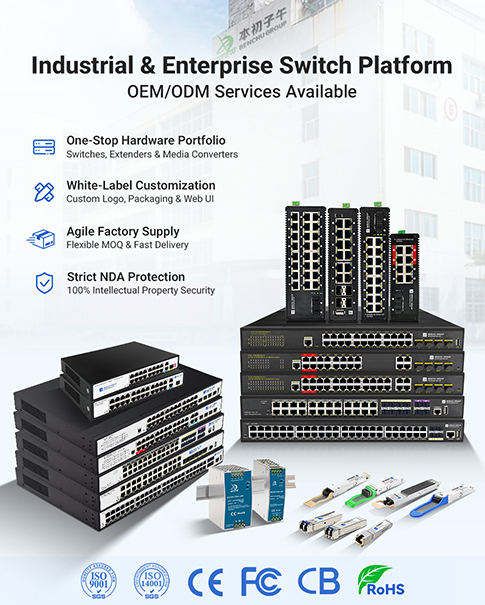
      The maximum power budget for a 24-port PoE switch depends on the PoE standard it supports and the total power capacity designed by the manufacturer. Here's a detailed breakdown of factors that determine the power budget and common configurations:   1. PoE Standards and Per-Port Power Delivery The PoE standard determines how much power a single port can supply. Below are the main standards: IEEE 802.3af (PoE) --- Maximum per-port power: 15.4W --- Typical use cases: IP phones, basic IP cameras, and low-power wireless access points. --- Maximum total power budget: 15.4W × 24 = 369.6W However, manufacturers typically design the power budget slightly below this theoretical maximum for reliability. IEEE 802.3at (PoE+) --- Maximum per-port power: 30W --- Typical use cases: PTZ cameras, dual-band wireless APs, and video phones. --- Maximum total power budget: 30W × 24 = 720W This is common for mid-tier PoE switches, although some might limit the budget to ensure stable operation. IEEE 802.3bt (PoE++) Maximum per-port power: --- 60W (Type 3) --- 90W (Type 4) --- Typical use cases: High-power devices like outdoor PTZ cameras with heaters, LED lighting, and high-capacity APs. --- Maximum total power budget: Up to 2160W (90W × 24). This is rare in practice, as such switches are designed with limited simultaneous high-power usage in mind.     2. Power Supply and Manufacturer Limitations Most 24-port PoE switches do not supply the theoretical maximum power to all ports simultaneously. Manufacturers design switches with a shared power budget, which limits how many ports can operate at maximum power. --- Entry-level switches: Power budgets typically range from 250W to 370W, sufficient for devices like VoIP phones or basic IP cameras. --- Mid-tier switches: Power budgets are often 400W to 600W, accommodating more PoE+ devices. --- High-end switches: These may offer power budgets of 750W to 1000W+, often designed for enterprise environments with PoE++ devices.     3. Power Management Features Modern PoE switches often include dynamic power allocation and power prioritization features: --- Dynamic allocation: Only delivers the power each device needs, conserving energy. --- Power prioritization: Ensures critical devices (e.g., IP cameras or APs) receive power if the budget is exceeded.     4. Real-World Examples Here are examples of maximum power budgets for different types of 24-port PoE switches: --- Cisco Catalyst 9200L 24P PoE+ Switch: 370W power budget (PoE+). --- Ubiquiti UniFi Switch Pro 24 PoE: 400W power budget (PoE+). --- Netgear GS728TPP (ProSAFE): 760W power budget (PoE+). --- TP-Link TL-SG3428XMP: 384W power budget (PoE+).     Conclusion The maximum power budget of a 24 port PoE switch typically ranges from 250W to over 1000W, depending on the PoE standard and the switch’s power supply design. When selecting a switch: 1.Calculate Device Requirements: Add up the power needs of all PoE devices. 2.Choose the Right Budget: Ensure the switch can meet these demands with some overhead. 3.Plan for Scalability: Consider future network expansion and potential for higher-power devices.    
    Read More
  • How does PoE work with IP telephony?
    Nov 15, 2023
      Power over Ethernet (PoE) works seamlessly with IP telephony by providing both data connectivity and power to IP phones through a single Ethernet cable. Here’s how it functions:   1. Data and Power over One Cable IP phones require both a data connection to transmit voice over the network (VoIP) and electrical power to function. PoE enables this by delivering: --- Power: Up to 15.4W (PoE) or 30W (PoE+) per port, depending on the PoE standard. --- Data: Transmits voice data and other network information between the IP phone and the network.     2. Simplified Installation --- Since IP phones can be powered through the Ethernet cable, there’s no need for a separate power supply. This makes installation easier, especially in large office environments where deploying multiple phones can be cumbersome.     3. Centralized Power Management With PoE switches, power to IP phones can be centrally managed. Administrators can: --- Monitor power usage. --- Restart or power down phones remotely for troubleshooting or updates. --- Prioritize power distribution if there's a power shortage.     4. Uninterrupted Service --- When connected to a PoE-enabled switch with backup power (like an uninterruptible power supply, or UPS), IP phones can continue to operate even during a power outage. This is especially important for critical communications.     5. Cost and Energy Efficiency --- PoE eliminates the need for separate AC power outlets near every phone, reducing electrical infrastructure costs. It also streamlines power consumption, as the switch can automatically provide the exact amount of power needed for each device.     6. Flexibility and Scalability --- PoE makes it easy to scale IP telephony systems since phones can be moved or added without the need to install new electrical outlets. This enhances the flexibility of office layouts and future expansions.     How It Works in Practice: --- The PoE switch (or a PoE injector) supplies power to the IP phone through the Ethernet cable. --- The IP phone connects to the network, receiving both power and voice data (VoIP traffic). --- This connection allows the phone to function without the need for a separate power supply, supporting voice calls, video calls, and other telephony features.     In summary, PoE significantly simplifies the deployment of IP telephony systems by reducing the need for additional power infrastructure, enhancing flexibility, and improving management and reliability.    
    Read More
  • What is the maximum distance a PoE extender can support?
    Jun 21, 2021
      Maximum Distance a PoE Extender Can Support The maximum distance a PoE extender can support depends on several factors, including the number of extenders used, the power budget, cable quality, and the type of PoE standard in use. Here is a detailed explanation:   1. Standard Ethernet Distance Limitation --- The standard Ethernet cable length limit is 100 meters (328 feet) for both data and power transmission. --- A PoE extender increases this range by regenerating the power and data signals, allowing the connection to exceed the standard limitation.     2. Single PoE Extender Distance --- Most PoE extenders can add 100 meters (328 feet) of additional range to the existing Ethernet cable. --- For example, with one extender, the total distance becomes 200 meters (656 feet): --- 100 meters from the switch to the extender. --- 100 meters from the extender to the device.     3. Cascading Multiple Extenders By daisy-chaining multiple PoE extenders, you can achieve much longer distances: --- Two Extenders: 300 meters (984 feet). --- Three Extenders: 400 meters (1,312 feet). --- Some high-quality extenders support chaining up to 4 or 5 extenders, reaching distances of up to 500 meters (1,640 feet) or more. Limitations on Cascading --- Power Budget: Each extender and device consumes power, which reduces the available power budget as the distance increases. --- Signal Degradation: Although extenders regenerate signals, cascading too many can lead to latency or bandwidth limitations. --- Maximum Devices: Manufacturers may specify a limit on the number of extenders that can be chained to maintain performance.     4. Cable Quality and Type --- Cat 5e and Cat 6 Cables: These are commonly recommended for PoE installations due to their low signal attenuation and support for higher data speeds. --- Shielded Twisted Pair (STP): Recommended for outdoor or industrial environments to reduce interference. --- Using higher-quality cables helps maintain performance over longer distances and supports higher power levels.     5. Power Requirements PoE Standards: --- 802.3af (PoE): Supplies up to 15.4W per device, suitable for low-power devices like VoIP phones and basic IP cameras. --- 802.3at (PoE+): Supplies up to 30W per device, suitable for devices like high-power cameras and wireless access points. --- 802.3bt (PoE++): Supplies up to 60W or 100W, enabling longer distances and support for power-hungry devices. --- Power Loss: As distance increases, power losses occur in the cable. It's essential to ensure that enough power reaches the final device.     6. Advanced PoE Extender Models Some advanced PoE extenders are designed for longer distances: --- Ultra-Long-Range Extenders: These models can extend a single Ethernet cable to distances up to 800 meters (2,625 feet) or more with specialized configurations. --- High-Power Extenders: Built to support PoE++ standards for high-wattage devices over extended distances.     Applications of Extended PoE Distances 1. Security Systems: Installing IP cameras at remote locations like parking lots or large industrial sites. 2. Wireless Networks: Deploying wireless access points to cover outdoor areas or large campuses. 3. Smart Cities: Powering remote devices like smart streetlights or traffic monitoring systems. 4. Industrial Sites: Supporting sensors, controls, and monitoring equipment across expansive facilities.     Conclusion The maximum distance a PoE extender can support typically starts at an additional 100 meters (328 feet) per extender. By cascading multiple extenders and using high-quality cables, it is possible to extend the range up to 500 meters (1,640 feet) or more. Advanced extenders with ultra-long-range capabilities may achieve even greater distances, but careful consideration of power budgets, cable quality, and device requirements is necessary to ensure reliable operation over extended ranges.    
    Read More
  • What factors should I consider when purchasing a PoE extender?
    Nov 06, 2022
      When purchasing a PoE (Power over Ethernet) extender, several factors should be considered to ensure that the device meets your specific requirements. Below is a detailed description of the key factors to keep in mind:   1. Power Requirements PoE Standards (IEEE 802.3af, 802.3at, 802.3bt): Ensure the extender supports the PoE standard that matches your devices. The most common standards are: --- 802.3af (PoE): Delivers up to 15.4W per port, typically for low-power devices like IP cameras, VoIP phones, etc. --- 802.3at (PoE+): Delivers up to 25.5W per port, suitable for more power-hungry devices. --- 802.3bt (PoE++): Delivers up to 60W (Type 3) or 100W (Type 4) per port, ideal for devices requiring higher power, such as high-end security cameras or wireless access points. --- Power Budget: Ensure the extender provides sufficient power for your connected devices, especially if you plan to power multiple devices over long distances. --- Power Over Distance: Some extenders can only pass a limited amount of power over long distances. Make sure the extender can supply adequate power at the required distance.     2. Data Speed (Bandwidth) Ethernet Speed Support: --- 10/100Mbps (Fast Ethernet): Suitable for low-bandwidth applications like basic IP cameras or sensors. --- 1Gbps (Gigabit Ethernet): Ideal for high-bandwidth applications like HD video surveillance, VoIP, or large-scale networking. --- 2.5Gbps, 5Gbps, or 10Gbps: For applications requiring ultra-high-speed data transmission, like large-scale data centers or high-resolution video monitoring systems. --- Consider the data speed of both the extender and the connected devices to ensure compatibility.     3. Maximum Range/Distance Effective Range of the Extender: --- Standard Ethernet cables (Cat5e or Cat6) have a range limit of 100 meters (328 feet) for data and power. PoE extenders can significantly extend this distance. --- Many extenders can extend the signal up to 300 meters (984 feet) or more, depending on the model and PoE standard. --- Cascading: Some extenders can be daisy-chained together to further extend the range. However, keep in mind that each additional extender may slightly reduce the available power for downstream devices.     4. Environmental Considerations Indoor vs. Outdoor Use: --- If you're deploying PoE extenders outdoors, make sure they have an appropriate IP rating (Ingress Protection), such as IP65 or IP67, to ensure protection against dust, water, and environmental factors. --- For indoor use, typical extenders without an IP rating will suffice, but ensure that they are compact and easy to install in your environment. Temperature Range: --- If deploying in harsh conditions, choose a PoE extender rated for extended temperature ranges (e.g., -40°C to 75°C) for industrial or outdoor use.     5. Number of Ports Single vs. Multi-Port Extenders: --- Single-Port Extenders are useful if you need to extend the network for one device at a time, such as a single camera or access point. --- Multi-Port Extenders can provide several PoE ports (usually 2, 4, or more), allowing multiple devices to be powered and connected simultaneously. This can reduce the need for additional network infrastructure. --- Choose the number of ports based on how many devices you need to power and network.     6. Cable Compatibility Ethernet Cable Quality: --- Ensure the extender supports the type of Ethernet cable you're using. For instance, if you're using Cat5e, Cat6, or Cat6a cables, check that the extender supports these standards to achieve optimal speeds and distances. --- Higher-quality cables (e.g., Cat6a or Cat7) are better for longer distances and higher speeds.     7. PoE Power Delivery (Endspan vs. Midspan) Endspan vs. Midspan: --- Endspan Extender: This type of extender provides both data and power directly from a PoE switch. --- Midspan Extender: Typically used when the switch itself does not provide PoE, so the midspan device injects power into the Ethernet cable. --- Choose based on the type of network infrastructure you already have.     8. Mounting and Installation Installation Flexibility: --- Consider how easy the extender will be to install. Some extenders come with wall mounts, rack-mountable designs, or DIN rail mounts (for industrial applications). --- Make sure the device fits into your existing network setup and can be installed in the environment (e.g., ceiling, wall, cabinet, or outdoor pole).     9. Cost and Budget --- Basic Extenders: These are typically affordable and range from $15 to $30, designed for low-power devices in smaller or simpler installations. --- Advanced Extenders: If you're extending high-power PoE or Gigabit speeds, expect to pay between $40 to $100, depending on the specifications. --- Industrial-grade Extenders: For rugged, high-power, and high-speed models with extended ranges, prices can range from $100 to $200 or more. --- Always weigh the cost against the features and ensure that the extender meets both your current and future needs.     10. Brand and Warranty --- Brand Reliability: Choose an extender from a reputable manufacturer known for providing reliable PoE products, such as Cisco, Netgear, Ubiquiti, TP-Link, or other trusted brands in networking equipment. --- Warranty and Support: Look for products with at least a 1-year warranty and consider customer support availability in case you encounter issues after installation.     11. Security and Management Features Management Features: Some PoE extenders, particularly those for enterprise or industrial networks, may offer advanced management features such as: --- VLAN support for network segmentation. --- PoE management to control and monitor power distribution to connected devices. --- Link aggregation for increased bandwidth. --- LED indicators or a web interface for real-time monitoring of device status and health.     12. Compatibility with Network Devices --- Device Compatibility: Ensure that the PoE extender is compatible with your existing network devices. Check for PoE class compatibility and verify that the extender can handle the required power levels for each device you plan to connect.     Conclusion When purchasing a PoE extender, it's crucial to balance performance requirements, environmental conditions, installation considerations, and budget constraints. By taking into account the factors listed above, you can select an extender that best fits your specific use case, whether you're expanding your network in a small office, securing a large campus, or powering remote industrial devices over long distances.    
    Read More
  • What standards do PoE injectors typically follow (e.g., IEEE 802.3af/at/bt)?
    Apr 21, 2022
      PoE Injector Standards PoE injectors provide Power over Ethernet (PoE) by combining power and data into a single Ethernet cable, allowing devices to receive both without requiring separate power cords. PoE injectors adhere to specific standards to ensure compatibility, safety, and efficient power delivery. The most common standards followed by PoE injectors are established by the Institute of Electrical and Electronics Engineers (IEEE). Here is a detailed description of the typical standards:   1. IEEE 802.3af (PoE) – Standard PoE Overview: --- Introduced in 2003, this is the original PoE standard. --- Supports devices with lower power requirements. Specifications: --- Maximum Power Output at PSE (Power Sourcing Equipment): 15.4W per port. --- Power Available at PD (Powered Device): 12.95W (accounting for power loss over the Ethernet cable). --- Voltage: 44V to 57V DC. --- Current: Maximum 350mA. --- Supported Cable Types: Cat5 or better. Common Devices Supported: --- VoIP phones --- Basic IP cameras --- Simple wireless access points --- IoT devices with low power needs (e.g., sensors). Limitations: --- Not sufficient for high-power devices like PTZ cameras or advanced Wi-Fi access points.     2. IEEE 802.3at (PoE+) – Enhanced PoE Overview: --- Introduced in 2009, this standard expanded on 802.3af to support higher-power devices. Specifications: --- Maximum Power Output at PSE: 30W per port. --- Power Available at PD: 25.5W (accounting for power loss). --- Voltage: 50V to 57V DC. --- Current: Maximum 600mA. --- Supported Cable Types: Cat5 or better. Common Devices Supported: --- PTZ cameras --- Advanced wireless access points (Wi-Fi 5 and some Wi-Fi 6 models) --- Small switches --- Digital signage and displays --- VoIP phones with video capabilities. Advantages: --- Backward-compatible with 802.3af devices. --- Can power most devices used in small and medium-sized networks.     3. IEEE 802.3bt (PoE++ or 4PPoE) – High-Power PoE Overview: --- Introduced in 2018, this is the latest standard for devices with high power requirements. --- Supports significantly higher power delivery by using all four twisted pairs in an Ethernet cable (compared to two pairs in previous standards). Specifications: Maximum Power Output at PSE: --- Type 3: 60W per port. --- Type 4: 100W per port. Power Available at PD: --- Type 3: 51W (Type 3 devices). --- Type 4: 71W (Type 4 devices). --- Voltage: 50V to 57V DC. --- Current: Up to 960mA per pair (Type 3) or up to 1.5A per pair (Type 4). --- Supported Cable Types: Cat5e or better for Type 3; Cat6 or better for Type 4. Common Devices Supported: --- PTZ cameras with heaters/blowers for outdoor use. --- Advanced Wi-Fi 6 and Wi-Fi 6E access points. --- LED lighting systems. --- Networked audio systems. --- High-power IoT devices. --- Interactive kiosks and large digital signage displays. Advantages: --- Backward-compatible with 802.3af and 802.3at devices. --- Enables powering multiple or power-hungry devices with a single PoE injector.     4. Passive PoE Overview: --- Unlike IEEE standards, Passive PoE is a proprietary implementation that does not conform to 802.3af/at/bt standards. --- Delivers power at a fixed voltage, typically 12V, 24V, or 48V, without negotiating power with the powered device. Specifications: --- Voltage and power output vary by manufacturer. --- No dynamic power negotiation, which means devices must match the specific voltage and power output. Common Devices Supported: --- Proprietary devices from certain manufacturers (e.g., Ubiquiti, MikroTik). --- Simple devices like small wireless radios or non-standard IP cameras. Limitations: --- Lack of standardization may lead to compatibility issues. --- Devices must be carefully matched to avoid damage.     Comparison of Standards Standard Maximum Power Output (PSE) Power at PD Voltage (DC) Current Common Use Cases 802.3af 15.4W 12.95W 44V–57V 350mA VoIP phones, basic IP cameras, WAPs 802.3at 30W 25.5W 50V–57V 600mA PTZ cameras, advanced WAPs, signage 802.3bt 60W (Type 3) / 100W (Type 4) 51W / 71W 50V–57V 960mA–1.5A High-power devices (Wi-Fi 6 APs, LED lighting) Passive PoE Varies Varies Fixed (12V, 24V, 48V) Varies Proprietary or legacy devices     Factors to Consider When Choosing a PoE Injector Based on Standards Device Compatibility: --- Check the powered device's PoE standard (e.g., 802.3af/at/bt) to ensure compatibility. --- For non-standard devices, verify compatibility with Passive PoE if applicable. Power Requirements: --- Determine the wattage required by the device. Use 802.3bt injectors for devices with power demands exceeding 25.5W. Cable Type: --- Ensure the Ethernet cables meet the required specifications (e.g., Cat5e for PoE++ Type 3, Cat6 for Type 4). Future-Proofing: --- Opt for 802.3bt injectors if you plan to deploy high-power devices in the future, even if your current devices only require 802.3af or 802.3at. Network Scale: --- Use injectors for single or small numbers of devices. For larger installations, consider PoE switches.   By understanding these standards, you can select a PoE injector that aligns with your device requirements, installation environment, and future needs.    
    Read More
  • What is the maximum power output of a PoE injector?
    May 25, 2022
      Maximum Power Output of a PoE Injector The maximum power output of a PoE injector refers to the amount of electrical power it can deliver to a Powered Device (PD) over an Ethernet cable. This power is essential for ensuring that network devices requiring both data and power (such as IP cameras, wireless access points, or VoIP phones) can operate correctly without the need for separate power cables. PoE injectors follow IEEE standards for power delivery, and the maximum power output depends on the specific PoE standard being used. Here’s a detailed breakdown:   1. IEEE 802.3af (PoE) – 15.4W per port Maximum Power Output at PSE (Power Sourcing Equipment): --- 15.4 watts is the maximum power that a PoE injector (PSE) can supply to a Powered Device (PD). --- Power Delivered to PD: The actual power that reaches the powered device is typically around 12.95W due to losses in the Ethernet cable. Specifications: --- Voltage: 44V to 57V DC --- Current: Maximum 350mA --- Power Delivered to PD: 12.95W (considering losses over the Ethernet cable) --- Common Use Cases: --- Basic IP cameras --- VoIP phones --- Simple wireless access points (WAPs) --- Low-power IoT devices --- Small sensors     2. IEEE 802.3at (PoE+) – 30W per port Maximum Power Output at PSE (Power Sourcing Equipment): --- 30 watts is the maximum power that a PoE injector (compliant with IEEE 802.3at) can deliver to a device. --- Power Delivered to PD: Typically around 25.5W, after accounting for losses. Specifications: --- Voltage: 50V to 57V DC --- Current: Maximum 600mA --- Power Delivered to PD: 25.5W (considering losses over the Ethernet cable) Common Use Cases: --- PTZ (Pan-Tilt-Zoom) cameras --- Advanced wireless access points (WAPs) --- Video-capable VoIP phones --- Digital signage --- Small network switches     3. IEEE 802.3bt (PoE++ or 4PPoE) – 60W to 100W per port IEEE 802.3bt is the latest standard, and it provides two types of power outputs: --- Type 3 (PoE++) – 60W per port Maximum Power Output at PSE: 60W per port is the maximum power that can be delivered by a PoE injector. --- Power Delivered to PD: Typically around 51W (due to power loss). Specifications: --- Voltage: 50V to 57V DC --- Current: Up to 960mA --- Power Delivered to PD: 51W (considering losses over the Ethernet cable) Common Use Cases: --- High-performance wireless access points (Wi-Fi 6) --- PTZ cameras with heaters/blowers --- Digital signage (larger displays) --- LED lighting systems --- Smart IoT devices --- Type 4 (PoE++ or 4PPoE) – 100W per port Maximum Power Output at PSE: 100W per port is the maximum power that a PoE injector can supply. Power Delivered to PD: Typically around 71W (accounting for losses). Specifications: --- Voltage: 50V to 57V DC --- Current: Up to 1.5A per pair (since Type 4 uses all four pairs in an Ethernet cable) --- Power Delivered to PD: 71W (considering losses over the Ethernet cable) Common Use Cases: --- Wi-Fi 6E access points (the next generation of wireless technology) --- Large digital signage displays --- High-power devices like advanced IP cameras (including PTZ) --- Edge computing devices --- LED lighting systems for large areas     4. Passive PoE Maximum Power Output at PSE: --- The maximum power output of passive PoE is not standardized. It typically ranges between 12V, 24V, or 48V, depending on the injector's design and manufacturer. --- Unlike IEEE 802.3 standards, passive PoE does not use power negotiation and provides a fixed voltage. The maximum power delivered depends entirely on the specific model. Common Use Cases: --- Ubiquiti Networks devices like their wireless radios or access points. --- Proprietary devices where specific voltage is required (e.g., some legacy networking equipment).     Comparison of Power Outputs: Standard Maximum Power Output (PSE) Power Delivered to PD Voltage Range (DC) Common Use Cases 802.3af (PoE) 15.4W 12.95W 44V - 57V VoIP phones, basic IP cameras, small WAPs 802.3at (PoE+) 30W 25.5W 50V - 57V PTZ cameras, advanced WAPs, digital signage 802.3bt (PoE++) 60W (Type 3), 100W (Type 4) 51W (Type 3), 71W (Type 4) 50V - 57V Wi-Fi 6 APs, PTZ cameras, LED lighting Passive PoE Varies (typically 12V, 24V, 48V) Varies Fixed (e.g., 12V, 24V, 48V) Proprietary devices, legacy equipment     Key Takeaways: --- IEEE 802.3af (PoE) is ideal for low-power devices such as IP cameras and VoIP phones, with a maximum output of 15.4W. --- IEEE 802.3at (PoE+) supports higher power demands, up to 30W, making it suitable for PTZ cameras and advanced access points. --- IEEE 802.3bt (PoE++ or 4PPoE) offers Type 3 (60W) and Type 4 (100W) outputs, capable of powering high-demand devices like Wi-Fi 6 access points and large digital signage displays. --- Passive PoE provides varying levels of power depending on the manufacturer, with no standardized voltage or power negotiation, often used for proprietary devices.   The power output of a PoE injector determines what devices it can power, so it’s crucial to choose an injector that matches the power requirements of the devices in your network. For high-wattage devices, PoE++ injectors (802.3bt) are essential, while lower-power devices may only require standard PoE (802.3af) injectors.    
    Read More
  • What is the maximum cable length for a PoE injector to work effectively?
    May 30, 2022
      Maximum Cable Length for a PoE Injector to Work Effectively The maximum cable length for a PoE injector to work effectively is primarily determined by the Ethernet standards (such as IEEE 802.3af, 802.3at, and IEEE 802.3bt) and the quality of the Ethernet cable used in the connection. Power over Ethernet (PoE) combines both data and power into the same Ethernet cable, and the longer the cable, the more power loss and signal degradation can occur, which can affect performance. Here’s a detailed description of the maximum cable length and the factors that influence it:   1. Maximum Cable Length for Standard Ethernet (100 meters) --- The IEEE 802.3 Ethernet standard specifies a maximum cable length of 100 meters (328 feet) for Ethernet connections over Cat5e, Cat6, and Cat6a cables. This distance includes both data transmission and power delivery through the same cable. --- 100 meters (328 feet) is the maximum length for unshielded twisted pair (UTP) cables (Cat5e, Cat6, Cat6a) for both data transmission and PoE power delivery. --- However, this distance can vary based on the PoE standard, cable quality, and whether the power requirements of the PoE device are low or high.     2. Key Factors Affecting PoE Performance Over Distance a) PoE Standard (Power and Data Transmission) The amount of power delivered over Ethernet decreases with distance, and different PoE standards have different power output capabilities: --- IEEE 802.3af (PoE): Provides up to 15.4 watts of power over the Ethernet cable to the powered device (PD). The maximum effective distance is 100 meters for most standard devices, but beyond this, voltage drops can occur, potentially causing devices to malfunction if the power requirements are not met. --- IEEE 802.3at (PoE+): Provides up to 25.5 watts of power. With PoE+, power loss over distance is less of a concern compared to the standard 802.3af because more power is being delivered. Still, performance may degrade beyond 100 meters. --- IEEE 802.3bt (PoE++ or 4PPoE): Provides up to 60 watts (Type 3) or 100 watts (Type 4) of power. PoE++ can effectively provide power over longer distances than PoE or PoE+ because it delivers more wattage, but the power loss due to the longer cable distance will still need to be managed. b) Cable Category --- Cat5e: Supports 10/100/1000Mbps speeds and is suitable for PoE applications up to 100 meters. However, for PoE++ (especially high-power devices), Cat6 or Cat6a is preferred to ensure minimal power loss. --- Cat6 and Cat6a: Both support gigabit speeds and higher bandwidth (up to 10Gbps for Cat6a). These cables are better suited for PoE+ and PoE++ (IEEE 802.3at and IEEE 802.3bt) as they can handle higher frequencies and minimize data loss or interference over longer distances. c) Cable Quality --- Solid Copper Conductors: Higher-quality Ethernet cables made with solid copper conductors provide better power efficiency and less resistance over long distances compared to copper-clad aluminum (CCA) cables. Using solid copper cables is highly recommended for PoE applications to minimize power loss. --- Shielded Ethernet Cable (STP or FTP): Shielded cables (e.g., STP or FTP) provide additional protection against electromagnetic interference (EMI), making them suitable for industrial environments or areas with high interference. d) PoE Device Power Requirements --- High-power devices (such as PoE++ cameras or high-power access points) require more power, and thus the power loss due to cable length becomes more significant. In such cases, using higher-quality cables (like Cat6a) and keeping the distance within 100 meters is essential. --- Low-power devices (such as VoIP phones or basic IP cameras) have lower power requirements and may work at longer distances within the same cable length.     3. Power Loss Over Distance The power loss due to the cable length is the primary limiting factor. As the cable length increases, there’s a drop in the voltage sent over the cable, which can result in insufficient power reaching the device. To mitigate this: --- PoE Extenders: In cases where you need to extend the range beyond 100 meters, you can use PoE extenders. These devices amplify the PoE signal and power, allowing you to extend the range of PoE up to 200 meters or more. --- Power Injection at Intermediate Points: Another approach is to inject power at intermediate points along the cable path using additional PoE injectors or mid-span injectors.     4. Practical Recommendations for Maximum Length --- For PoE (802.3af) and PoE+ (802.3at), the practical maximum length is generally 100 meters. Beyond that, the power loss may be significant enough to cause device instability or failure to power on. --- For PoE++ (802.3bt), you may be able to go slightly beyond 100 meters depending on the quality of the cable and the power requirements of the device. However, for PoE++ Type 4 (100W), it's recommended to keep the cable length at or below 100 meters to avoid significant power loss.     5. Enhancing PoE Performance Beyond 100 Meters If you need to extend the PoE connection beyond 100 meters while maintaining stable power and data transmission: --- PoE Extenders: Use PoE extenders to amplify the signal and extend the range to 200 meters or more. --- Switch with Higher Power Capability: For installations requiring long distances, consider using a PoE switch that supports higher power outputs (like 802.3bt PoE++), especially when working with high-power devices. --- Opt for Higher-Quality Cable: Using Cat6a or Cat7 cables with solid copper conductors can minimize power loss over long distances.     Conclusion --- The maximum cable length for a PoE injector to work effectively is typically 100 meters (328 feet) for most PoE standards (802.3af, 802.3at, and 802.3bt). --- For longer distances, use PoE extenders, higher-quality cables (e.g., Cat6a), and ensure that the PoE injector supports the necessary power requirements. --- Pay attention to the power demands of your devices and network infrastructure to ensure optimal performance over extended cable lengths. By managing these factors, you can effectively deploy PoE solutions across a large area while maintaining reliable data and power delivery to your devices.    
    Read More
1 2
A total of2pages

leave a message

leave a message
If you are interested in our products and want to know more details,please leave a message here,we will reply you as soon as we can.
submit

home

products

WhatsApp

Contact Us