PoE Ethernet Switches

Home

PoE Ethernet Switches

  • Will a PoE switch damage non PoE devices?
    Jul 26, 2024
    When it comes to connecting non-PoE devices with a PoE (Power over Ethernet) switch, a common question is whether it will cause damage or other adverse effects to the device. In this article, we will answer this common question and delve into the safety and application practices of PoE technology.   PoE Technology Background PoE technology allows data and power to be transmitted over a single Ethernet cable. This technology is widely used in various network devices, especially in scenarios where remote power supply is required, such as security cameras, IP phones, and wireless access points.   Safety of non-PoE devices Connecting non-PoE devices to PoE Ethernet Switches usually does not directly cause damage to the device. PoE switches intelligently identify the type of connected devices and only transmit data to non-PoE devices without providing power. Therefore, from a power perspective, the connection between non-PoE devices and PoE switches is safe.   Protection mechanisms and standards Modern PoE switches are usually equipped with multiple protection mechanisms, such as current protection, overload protection, and short-circuit protection. These protection measures can effectively prevent power problems caused by connecting non-PoE devices and ensure the stable operation and safety of network devices. It is important to make sure you choose 16 Port Gigabit Managed Ethernet Switch Custom that comply with IEEE standards (such as 802.3af, 802.3at, or 802.3bt) to ensure compatibility and safety.     PoE compatibility with non-PoE devices PoE switches can be used with non-PoE devices at the same time, but the following points need to be noted: 1. Power transmission control: PoE Network Switches will identify whether PoE power is required when connecting devices, and only devices that support PoE will receive power supply. When non-PoE devices are connected to PoE ports, only data is transmitted and no power is sent. 2. Passive PoE risks: Be careful to avoid using Passive PoE devices because they may send current without confirming device support, resulting in an increased risk of device damage.   Industry development With the rapid development of the Internet of Things (IoT) and intelligent applications, PoE technology has been widely used in various industries. Enterprises are increasingly choosing PoE technology because it provides flexible equipment deployment and management solutions while reducing equipment installation costs and complexity. This trend has promoted the application of PoE technology in smart buildings, security monitoring, and industrial automation. It can be seen that it is generally safe to use PoE switches to connect non-PoE devices, as long as you choose standard-compliant devices and follow best practices. Modern PoE technology not only provides reliable power supply and data transmission, but also ensures the security of devices and networks through intelligent management and protection mechanisms. With the advancement of technology and the growth of market demand, PoE technology will continue to play an important role in various industries and provide enterprises with efficient and reliable network solutions.    
    Read More
  • How does PoE technology work?
    Sep 20, 2020
      Power over Ethernet (PoE) technology allows Ethernet cables to carry both data and electrical power to network devices over a single cable. This eliminates the need for separate power supplies and reduces cable clutter, making the installation of devices like IP cameras, wireless access points, and VoIP phones more efficient. Here’s a breakdown of how PoE technology works:   1. Basic Components of PoE Power Sourcing Equipment (PSE): This is the device that delivers power over the Ethernet cable. It could be a PoE-enabled switch, a PoE injector, or a router with PoE capabilities. The PSE determines how much power is needed and delivers it accordingly. Powered Device (PD): The device that receives both power and data from the Ethernet cable. Examples include IP cameras, wireless access points, VoIP phones, and other networked devices. The PD communicates with the PSE to receive the appropriate amount of power. Ethernet Cable: PoE typically uses standard Cat5e, Cat6, or higher Ethernet cables to transmit both power and data over the same cable. The cable is divided into pairs of wires, some of which are used for data transmission, while others are used for power delivery.     2. How Power is Delivered Over Ethernet PoE technology works by sending low-voltage DC power over the same twisted-pair cables used for data transmission. There are two main methods of delivering power: Spare-Pair Powering (Alternative B): In a standard Ethernet cable, only two of the four twisted pairs of wires are used for data transmission in 10BASE-T and 100BASE-T networks. The unused pairs (pins 4, 5, 7, and 8) can carry power without affecting data transmission. Phantom Powering (Alternative A): In 1000BASE-T (Gigabit Ethernet) and faster networks, all four wire pairs are used for data. In this method, the PSE superimposes the power on the data pairs (pins 1, 2, 3, and 6) without affecting the data signal. This is done by using the DC component of the signal for power delivery while the AC component handles data.     3. PoE Negotiation and Power Allocation The PSE and PD must communicate to ensure that the correct amount of power is delivered. This process is governed by the IEEE PoE standards: Detection: The PSE checks whether the connected device is PoE-compatible by applying a low voltage to the cable. If the PD has a signature resistance of about 25 kΩ, the PSE detects that it is PoE-capable. Classification: The PSE classifies the PD to determine its power requirements. PoE devices are divided into different power classes based on the amount of power they need, ranging from Class 0 (default) to Class 4 (high power). This allows the PSE to allocate the appropriate amount of power and optimize power distribution across multiple devices. Power Delivery: After classification, the PSE begins supplying power to the PD. The voltage is typically between 44 and 57 V DC, with the current varying based on the device's power needs. Monitoring: The PSE continues to monitor the power usage of the PD. If the device is disconnected, the PSE immediately stops providing power to avoid overloading the circuit.     4. PoE Standards PoE technology is standardized under the IEEE 802.3 family of protocols, with different versions specifying varying power levels: --- IEEE 802.3af (PoE): The original PoE standard provides up to 15.4 watts of power at the PSE and up to 12.95 watts at the PD, after accounting for power loss in the cable. This is suitable for low-power devices like VoIP phones and simple wireless access points. --- IEEE 802.3at (PoE+): An enhanced version of PoE that provides up to 30 watts at the PSE and up to 25.5 watts at the PD. This is used for more power-hungry devices, such as IP cameras and high-performance wireless access points. --- IEEE 802.3bt (PoE++ or 4-Pair PoE): The latest PoE standard, which supports higher power levels, offering up to 60 watts (Type 3) or 100 watts (Type 4) at the PSE. This is used for power-intensive devices such as PTZ (pan-tilt-zoom) cameras, LED lighting, and high-performance wireless devices.     5. PoE Advantages Simplified Installation: PoE allows devices to receive both power and data over a single cable, reducing the need for additional power outlets and streamlining installation. Cost Savings: By using PoE, businesses can save on installation costs, avoid the expense of running separate electrical wiring, and reduce the need for power adapters. Flexibility: PoE enables the deployment of devices in locations where power outlets may not be available or convenient, such as ceilings, walls, or outdoor locations. Centralized Power Management: PoE allows for centralized management of power, enabling network administrators to monitor and control the power supply to connected devices. This can improve energy efficiency and simplify troubleshooting.     6. PoE Limitations Power Budget: The total power available from a PoE switch is limited by its power budget. This means that only a certain number of devices can be powered simultaneously, depending on their power requirements. Cable Length: PoE Ethernet Switches is limited by the maximum Ethernet cable length, which is typically 100 meters (328 feet). BENCHU GROUP's long-distance transmission technology can transmit up to 250 meters without the relay devices. Beyond this distance, power delivery and data transmission become unreliable without using PoE extenders or repeaters.     Conclusion PoE technology is a powerful and flexible solution for powering network devices without the need for separate power supplies. By delivering power and data over a single Ethernet cable, PoE simplifies installation, reduces costs, and provides centralized power management. It's widely used in modern networking environments for devices like wireless access points, IP cameras, and VoIP phones.    
    Read More
  • What are the applications of PoE in smart cities?
    Nov 10, 2020
      Power over Ethernet (PoE) plays a crucial role in smart city infrastructure by providing a flexible, cost-effective, and efficient means of powering a wide range of networked devices. Here are some key applications of PoE Network Switches in smart cities:   1. Smart Lighting Application: Smart street lights and outdoor lighting systems. Benefits: PoE allows for the centralized management and control of street lighting. It supports energy-efficient LED lights and enables remote monitoring, dimming, and scheduling. Example: Adaptive lighting systems that adjust brightness based on traffic or weather conditions.     2. Surveillance and Security Systems Application: IP cameras, surveillance systems, and license plate recognition cameras. Benefits: PoE simplifies the installation of security cameras by eliminating the need for separate power cables. It also supports high-resolution cameras and ensures reliable power delivery. Example: City-wide CCTV networks for traffic monitoring and crime prevention.     3. Smart Traffic Management Application: Traffic signal controllers, sensors, and smart traffic lights. Benefits: PoE enables the deployment of advanced traffic management systems that can adapt to real-time traffic conditions, improving traffic flow and reducing congestion. Example: Traffic signals that adjust based on traffic density and flow.     4. Environmental Monitoring Application: Air quality sensors, weather stations, and environmental sensors. Benefits: PoE powers these sensors, allowing cities to collect data on air quality, temperature, humidity, and other environmental factors. This data helps in making informed decisions for public health and urban planning. Example: Sensors that monitor air pollution levels and provide real-time alerts.     5. Public Wi-Fi Access Points Application: Wi-Fi hotspots in public areas such as parks, plazas, and transportation hubs. Benefits: PoE facilitates the installation of Wi-Fi access points by providing power over the same Ethernet cable used for data, simplifying installation and reducing costs. Example: Free Wi-Fi in city parks and downtown areas to enhance public connectivity.     6. Smart Kiosks and Digital Signage Application: Interactive information kiosks, digital signage, and electronic billboards. Benefits: PoE powers these devices while also providing network connectivity, enabling the display of dynamic content such as city information, advertisements, and real-time updates. Example: Digital kiosks providing information on local events and public services.     7. Building Automation Systems Application: Smart building controls for HVAC systems, lighting, and security. Benefits: PoE powers building automation sensors and controllers, enabling energy-efficient operation and remote management of building systems. Example: Automated climate control systems in public buildings and facilities.     8. Emergency Response Systems Application: Emergency phones, alert systems, and public address systems. Benefits: PoE ensures that these critical devices remain powered and operational during emergencies, improving response times and public safety. Example: Emergency call boxes in city parks or along highways.     9. Transportation Hubs Application: Smart ticketing systems, information displays, and security systems in airports, train stations, and bus terminals. Benefits: PoE simplifies the deployment and management of devices in transportation hubs, improving the efficiency and experience for travelers. Example: Digital information boards and automated ticket dispensers.     10. Smart Parking Solutions Application: Smart parking meters, occupancy sensors, and parking guidance systems. Benefits: PoE powers parking management devices, enabling real-time monitoring of parking spaces and providing information to drivers. Example: Sensors that detect available parking spaces and guide drivers to open spots.     Benefits of PoE in Smart Cities: 1.Reduced Installation Costs: PoE combines data and power delivery over a single cable, reducing the need for additional wiring and minimizing installation complexity. 2.Flexibility and Scalability: Easily deploys and scales devices across the city, with the ability to add or relocate devices without major rewiring. 3.Reliability: Provides a stable and reliable power source for critical infrastructure, ensuring uninterrupted operation of smart city systems. 4.Centralized Management: Enables centralized monitoring and control of devices, allowing for efficient management and optimization of city services. 5.Energy Efficiency: Supports energy-efficient devices and smart systems that can adapt to changing conditions, contributing to overall energy savings and sustainability.   In summary, PoE Ethernet Switches is integral to the development and management of smart cities, enabling a wide range of smart applications that enhance urban living, improve efficiency, and support sustainability initiatives.    
    Read More
  • Can PoE be used for surveillance cameras?
    Nov 11, 2020
      Yes, Power over Ethernet (PoE) is commonly used for surveillance cameras and is highly suitable for this application. Here’s why PoE is beneficial for IP surveillance cameras:   Advantages of Using PoE for Surveillance Cameras: 1.Simplified Installation: --- Single Cable: PoE allows both power and data to be delivered through a single Ethernet cable (Cat5e, Cat6, or higher), simplifying installation and reducing the need for additional power wiring. --- Reduced Cabling: Eliminates the need for separate power supplies and outlets, which can be especially useful in locations where running additional power lines is impractical. 2.Cost-Effective: --- Lower Installation Costs: Reduces labor and material costs associated with installing separate power lines and outlets. --- Fewer Components: Requires fewer components (e.g., no need for separate power adapters or injectors) which can reduce overall system costs. 3.Flexibility: --- Device Placement: Allows for greater flexibility in camera placement. Cameras can be installed in locations that are far from power sources but still within Ethernet cable reach. --- Easy Relocation: Cameras can be easily relocated or added to the network without needing to install new power outlets. 4.Reliability: --- Stable Power Supply: Provides a reliable and consistent power source, which is crucial for the continuous operation of surveillance cameras. --- Centralized Power Management: Power can be managed from a central PoE switch or injector, making it easier to monitor and control the power supply. 5.Scalability: --- Expandable Systems: PoE supports easy expansion of surveillance systems. Additional cameras can be added to the network without major rewiring. --- Network Integration: Integrates seamlessly with existing network infrastructure, allowing for scalable surveillance solutions. 6.Remote Management: --- Power Control: Many PoE Ethernet Switches allow for remote power management and monitoring, which can be useful for troubleshooting and maintaining surveillance systems. --- Power Cycling: Remote power cycling can be performed to reset cameras without needing physical access.     Types of PoE Standards for Surveillance Cameras: --- IEEE 802.3af (PoE): Provides up to 15.4W per port, which is suitable for basic IP cameras with lower power requirements. --- IEEE 802.3at (PoE+): Provides up to 30W per port, suitable for PTZ (Pan-Tilt-Zoom) cameras and other higher-power surveillance equipment. --- IEEE 802.3bt (PoE++): Offers up to 60W (Type 3) or 100W (Type 4) per port, which can support advanced cameras with additional features or multiple accessories.     Considerations for Using PoE with Surveillance Cameras: Power Requirements: Ensure that the Ethernet Switch PoE or injector can provide sufficient power for the cameras, especially if using high-power models or PTZ cameras. Cable Quality: Use high-quality Ethernet cables (Cat5e or higher) to ensure reliable power delivery and data transmission over long distances. Distance Limitations: Standard Ethernet cables support PoE up to 100 meters (328 feet). For longer distances, consider using PoE extenders or other solutions.     In summary, PoE is an excellent choice for powering surveillance cameras due to its simplicity, cost-effectiveness, and flexibility. It allows for easy installation and management, making it a preferred solution for modern IP-based surveillance systems.    
    Read More
  • What is the best PoE solution for VoIP phones?
    Sep 10, 2021
      The best Power over Ethernet (PoE) solution for VoIP phones depends on the size of your deployment, network infrastructure, and specific requirements such as scalability, power needs, and management capabilities. Below are the recommended solutions and factors to consider for choosing the ideal PoE setup for VoIP phones.   Key Factors to Consider: 1.Number of Devices: The number of VoIP phones you need to support will influence whether you choose a small PoE injector or a fully managed PoE switch. 2.Power Requirements: VoIP phones typically require minimal power, but you’ll want to ensure your PoE solution provides enough wattage per port to support any additional features, like integrated video conferencing or color displays. 3.Network Management: Managed PoE switches offer enhanced network monitoring, control, and security features, which are important for enterprise environments with complex networks. 4.Scalability: Ensure the PoE solution can scale with your future network needs as you add more phones or devices.     PoE Solutions for VoIP Phones: 1. PoE Switches (Managed or Unmanaged) PoE switches are the most common and versatile solution for VoIP phones. They provide both power and data connectivity through Ethernet cables, streamlining installation and reducing costs. Managed PoE Switch: This is the ideal solution for larger deployments or enterprises where network monitoring, power allocation, and traffic prioritization are important. Managed switches allow you to monitor network traffic, set up VLANs for security, and remotely manage power distribution to VoIP phones. Benefits: --- Centralized control of all VoIP devices. --- Ability to configure QoS (Quality of Service) for VoIP traffic, ensuring call quality. --- Remote management and monitoring of network performance. --- Future scalability with easy addition of more devices. Examples: Cisco Catalyst 2960 Series, Ubiquiti UniFi Switches, Netgear ProSAFE Series,Benchu Group  SP7500 Series.   Unmanaged PoE Switch: For small or simple networks, an unmanaged PoE switch can provide power to VoIP phones without the need for advanced configuration. These switches are plug-and-play, requiring no setup. Benefits: --- Cost-effective for small offices or simple VoIP deployments. --- Easy to use, with no configuration required. Examples: Netgear GS305P, D-Link DES-1005P,Benchu Group SP5200-4PFE2FE.   2. PoE Injectors PoE injectors are standalone devices that inject power into Ethernet cables for individual VoIP phones. They are ideal when you only need to power a few VoIP phones and don’t want to invest in a full PoE Ethernet Switches. Benefits: --- Great for small deployments where only a few VoIP phones need power. --- No need to replace your existing non-PoE switch. --- Simple and cost-effective for small businesses or home offices. Examples: Ubiquiti Networks POE-24-12W, Benchu Group PSE102-GE, TRENDnet TPE-115GI.   3. PoE Midspans PoE midspans are devices that sit between your non-PoE switch and your VoIP phones. They add PoE functionality to a standard Ethernet network without the need to replace the existing switch. Benefits: --- Allows you to upgrade to PoE without replacing existing switches. --- Ideal for businesses that already have a robust network infrastructure. Examples: Phihong POE29U-1AT, Microsemi PD-9001GR , Benchu Group PSE102.     Additional Considerations: 1. PoE Standards --- PoE (IEEE 802.3af): Delivers up to 15.4W per port, which is more than sufficient for most VoIP phones. This is the most common standard used for powering VoIP phones. --- PoE+ (IEEE 802.3at): Delivers up to 30W per port, useful if your VoIP phones have advanced features like video displays or are combined with other devices like cameras or wireless access points. --- Ensure that your switch or injector supports the PoE standard that matches your VoIP phones' power requirements.   2. QoS (Quality of Service) --- For VoIP phones, ensuring call quality is critical. Managed PoE switches allow you to configure QoS settings to prioritize voice traffic over other data traffic, ensuring clear, uninterrupted calls even in busy networks.   3. Network Security --- Managed PoE switches allow you to configure VLANs (Virtual Local Area Networks) to isolate VoIP traffic from the rest of your network. This adds an extra layer of security and ensures that voice traffic is not disrupted by other network activities.     Recommended Solutions Based on Deployment Size: 1.Small Deployment (1-5 VoIP Phones): Solution: Use PoE injectors or a small unmanaged PoE switch. Recommended Models: --- Unmanaged PoE Switch: Netgear GS305P or Benchu Group SP5200-4PFE2FE.   2.Medium Deployment (5-24 VoIP Phones): Solution: Use an unmanaged or managed PoE switch depending on the need for network control and scalability. Recommended Models: --- Managed PoE Switch: Ubiquiti UniFi Switch 24 PoE, Benchu Group SP7500-24PGE4GC, Cisco SG350-28P. --- Unmanaged PoE Switch: Netgear GS110TP or Benchu Group SP5220-24PGE4GC.   3.Large Deployment (25+ VoIP Phones): Solution: A managed PoE switch with advanced features like VLAN support, QoS, and remote management for large office environments. Recommended Models: Cisco Catalyst 2960 Series,Benchu Group SP7500-48PGE4TF, HP ProCurve 2920, or Aruba 2930F.     Conclusion: For small deployments, a PoE injector or a basic unmanaged PoE switch is sufficient. For larger or growing VoIP deployments, a managed PoE switch offers scalability, control, and advanced features like traffic prioritization and monitoring. Choosing a solution with the right power standard (PoE or PoE+) and management capabilities will ensure your VoIP phones function reliably while keeping costs manageable.    
    Read More
  • What is a PoE splitter, and how does it function?
    Sep 20, 2021
      A PoE splitter is a device that separates the power and data delivered over a single Ethernet cable, enabling non-PoE devices to receive power and data from a PoE-enabled switch or PoE injector. This allows devices that do not support PoE natively, such as older IP cameras, access points, or small networking equipment, to be integrated into a PoE network without requiring separate power adapters or outlets.   How a PoE Splitter Works In a PoE network, power and data are transmitted together over a single Ethernet cable (Cat5e, Cat6, etc.) from a PoE switch or PoE injector to the powered device. A PoE splitter splits these two signals into separate data and power outputs. Here's a breakdown of its functioning: 1.Input: The PoE splitter connects to the Ethernet cable coming from a PoE-enabled device (such as a PoE Ethernet Switches or injector). This cable carries both power and data signals. 2.Splitting Power and Data: Inside the PoE splitter, the device separates the data signal from the power supply: --- Data: The data signal continues through the Ethernet port to the device. --- Power: The power signal is extracted and sent to the device via a separate DC power output (with voltages such as 5V, 9V, or 12V, depending on the device's requirements). 3.Output: --- The Ethernet cable connects to the data port on the non-PoE device, providing network connectivity. --- The DC power cable from the splitter plugs into the device's power input, supplying the necessary voltage to power the device.     Use Case Example Imagine you have an older IP camera that does not support PoE, but you want to integrate it into a modern PoE-powered security network. Using a PoE splitter, you can deliver both data and power to the camera using a single Ethernet cable from a PoE switch. The splitter will separate the data and power, sending the data to the camera via the Ethernet port and the power through the camera's power input (e.g., 12V DC). Advantages of PoE Splitters 1.Eliminates the Need for Separate Power Cables: A PoE splitter allows you to deliver power and data to non-PoE devices using just one Ethernet cable, reducing the need for additional power outlets and simplifying installations. 2.Cost-Effective: It’s a budget-friendly solution to integrate non-PoE devices into a PoE network without upgrading the devices themselves. 3.Flexible Power Supply: PoE splitters usually offer adjustable output voltages (5V, 9V, 12V, etc.) to match the requirements of various non-PoE devices. 4.Extended Reach: PoE splitters can extend the reach of devices up to 100 meters (328 feet) from the PoE switch, which is the maximum standard for Ethernet cable length.     Limitations of PoE Splitters 1.Dependent on Cable Distance: The standard Ethernet cable limit of 100 meters applies to the data and power transfer, which may require PoE extenders for longer distances. 2.Requires PoE Infrastructure: PoE splitters can only function if the source network uses PoE switches or injectors. 3.Limited Power Supply: A splitter can only provide as much power as the PoE standard allows. For high-power devices, a PoE++ splitter may be necessary to ensure sufficient power output.     Conclusion A poe splitter 60w is an essential tool for integrating non-PoE devices into a PoE network by separating power and data signals. It simplifies the deployment of legacy equipment without the need for separate power sources, offering a practical, flexible, and cost-effective solution for modern network environments.    
    Read More
  • What is the difference between a PoE switch and a PoE injector?
    Oct 11, 2021
      The difference between a PoE switch and a PoE injector lies in how they deliver Power over Ethernet (PoE) to connected devices, their use cases, and the network infrastructure they support. Here’s a detailed breakdown of each:   1. PoE Switch A PoE Ethernet Switches is a network switch that has PoE capabilities built into its Ethernet ports. This means it can supply both power and data to connected devices, such as IP cameras, VoIP phones, and wireless access points, over a single Ethernet cable. Key Features of a PoE Switch: Integrated Power and Data: Each PoE port on the switch can deliver both power and data to connected PoE-compatible devices. Multiple PoE Ports: PoE switches typically have multiple PoE-enabled ports (e.g., 8, 16, 24, or 48 ports), allowing them to power many devices simultaneously. Managed vs. Unmanaged: PoE switches can be either managed (allowing for remote control, monitoring, and configuration) or unmanaged (no advanced features, simple plug-and-play functionality). PoE Power Budget: PoE switches have a total power budget, which is the maximum amount of power the switch can provide across all PoE ports. This must be enough to support all connected devices. Power Standards: --- PoE (IEEE 802.3af): Provides up to 15.4W per port. --- PoE+ (IEEE 802.3at): Provides up to 30W per port. --- PoE++ (IEEE 802.3bt): Provides up to 60W or 100W per port for higher-power devices. When to Use a PoE Switch: --- When you need to power multiple PoE devices across a network. --- In larger networks where centralized management and scalability are important. --- When building a new PoE network or upgrading an existing one to support PoE devices. Advantages of a PoE Switch: --- Scalability: Can power many devices at once. --- Simplifies Infrastructure: Reduces the need for separate power supplies or injectors for each device. --- Centralized Power Management: In managed PoE switches, power allocation and monitoring can be controlled remotely.     2. PoE Injector A PoE injector is a device that adds PoE capabilities to a non-PoE network. It injects power into an Ethernet cable carrying data from a regular (non-PoE) switch, router, or hub, allowing it to power a PoE-enabled device. Key Features of a PoE Injector: --- Single-Port Power Injection: Typically used to provide PoE to one device at a time. There are also multi-port injectors, but they are less common. --- Simple Setup: The injector is placed between the non-PoE switch and the PoE device. It receives data from the switch and adds power to the Ethernet cable. --- Standalone Device: It operates independently of your network switch, meaning you don’t need to replace your existing switch to add PoE capabilities. --- Power Standards: PoE injectors are available for PoE (802.3af), PoE+ (802.3at), and PoE++ (802.3bt) to support varying power requirements. When to Use a PoE Injector: --- When you have a non-PoE switch and need to power a few PoE devices without replacing your switch. --- For small networks or individual devices, such as powering a single IP camera or access point. --- In cases where only a few PoE devices are needed, making a PoE switch unnecessary or cost-prohibitive. Advantages of a PoE Injector: --- Cost-Effective: Allows you to add PoE capabilities to an existing network without replacing your switch. --- Simple to Deploy: Easy to add to a network, especially for one-off PoE devices. --- No Network Impact: The injector only affects the device it is powering, leaving the rest of the network unaffected.     Comparison: PoE Switch vs. PoE Injector Feature PoE Switch PoE Injector Functionality Combines both power and data in one device. Adds power to a single Ethernet connection. Number of Devices Powers multiple PoE devices simultaneously. Typically powers one device per injector. Scalability Ideal for larger networks with many devices. Suitable for smaller networks or individual devices. Network Role Replaces a regular switch, handles all traffic and PoE. Works alongside a non-PoE switch. Power Budget Shared power budget for all ports. Dedicated power for one device. Cost Higher upfront cost for multiple devices. Lower cost, especially for small networks. Use Case Large networks with many PoE devices. Single or few PoE devices on a non-PoE network.     Summary Single or few PoE devices on a non-PoE network.A PoE switch is a multi-port network switch with PoE capabilities built-in, suitable for powering multiple devices in medium to large networks. Single or few PoE devices on a non-PoE network.A PoE injector is a standalone device that adds PoE functionality to individual Ethernet connections, ideal for small setups or when only a few PoE devices need power.   For larger networks or future-proofing, a PoE switch is often the better choice. For smaller deployments or when upgrading an existing non-PoE network without replacing the switch, a multi port poe injector gigabit offers a simple and cost-effective solution.    
    Read More
  • How much power does a PoE camera need?
    Nov 13, 2021
      The power requirements for a PoE camera can vary based on the camera's features, resolution, and additional functions such as heating, cooling, or advanced analytics. Here’s a general overview of the power needs for different types of PoE cameras:   1. Basic PoE Cameras Power Requirement: Typically require 10-15 watts. Details: These are basic models, often used for standard video surveillance. They usually include features like basic motion detection and standard resolution (up to 1080p).     2. PoE+ Cameras Power Requirement: Usually need 15-30 watts. Details: These cameras may offer higher resolutions (e.g., 4K), enhanced features such as infrared night vision, or pan-tilt-zoom (PTZ) capabilities. They often require more power to support these additional features.     3. High-Power PoE Cameras Power Requirement: Can require up to 60 watts (with 802.3bt PoE++). Details: High-power PoE cameras include advanced features such as high-definition video, integrated heating/cooling elements for extreme environments, or more advanced analytics. They might also be equipped with built-in heaters or other components that require additional power.   PoE Standards and Their Power Limits PoE (IEEE 802.3af): Provides up to 15.4 watts per port. Suitable for basic cameras with minimal power requirements. PoE+ (IEEE 802.3at): Provides up to 30 watts per port. Ideal for cameras with higher power needs or additional features. PoE++ (IEEE 802.3bt): --- Type 3: Provides up to 60 watts per port. Supports high-power cameras or devices. --- Type 4: Provides up to 100 watts per port. Used for very high-power devices or specialized equipment.     Choosing the Right PoE Standard for Your Camera When selecting a PoE Ethernet Switches or injector for your camera: 1.Check the Camera’s Specifications: Verify the exact power requirements from the manufacturer’s documentation. 2.Ensure Compatibility: Choose a Managed PoE Switches or injector that matches the power standard required by the camera (PoE, PoE+, or PoE++). 3.Consider Power Budget: If you have multiple cameras, ensure that the network switches PoE total power budget can accommodate all devices simultaneously.     Summary The power needs for PoE cameras generally range from 10 watts for basic models to up to 60 watts or more for high-power or feature-rich models. The exact requirement depends on the camera’s resolution, features, and any additional components. Make sure to match the PoE standard of your switch or injector with the camera’s power needs to ensure reliable operation.    
    Read More
  • How does PoE compare with traditional power solutions?
    Dec 14, 2021
      Power over Ethernet (PoE) offers a number of advantages over traditional power solutions, particularly in environments where flexibility, cost savings, and simplified infrastructure are key considerations. Here’s a comparison between PoE and traditional power delivery methods, highlighting the differences in several key areas:   1. Wiring and Infrastructure PoE: Combines power and data transmission over a single Ethernet cable, eliminating the need for separate power cables. Devices like IP cameras, wireless access points, and VoIP phones can be powered and connected to the network with just one cable. Advantages: --- Reduced cabling complexity. --- Easier and quicker installation. --- Fewer power outlets required. Traditional Power: Requires separate power and data cables, which can increase the complexity of installations, especially in large networks or buildings. Disadvantages: --- Increased wiring costs and complexity. --- Limitations on device placement due to proximity to power outlets.     2. Installation Costs PoE: Reduces installation costs by eliminating the need for dedicated electrical power lines and outlets. Devices can be installed anywhere there is an Ethernet connection, even in areas without easy access to power. Advantages: --- Significant cost savings in both materials (cables, outlets) and labor. --- Simplified deployment in new or retrofitted buildings, especially for IoT devices. Traditional Power: Requires the installation of both power outlets and data connections, which often involves hiring licensed electricians for power cabling. Disadvantages: --- Higher installation and material costs. --- Longer installation time, especially in large facilities or complex environments.     3. Device Placement and Flexibility PoE: Allows greater flexibility in device placement since PoE-powered devices are not restricted by the location of electrical outlets. This makes it easier to deploy devices in optimal locations, such as on ceilings or in hard-to-reach areas. Advantages: --- Devices can be placed where they are most effective (e.g., for maximum Wi-Fi coverage or camera surveillance) without worrying about power accessibility. Traditional Power: Limits where devices can be installed, as they must be near both a data connection and a power outlet. Disadvantages: --- Less flexibility in device placement, which can affect network performance or device effectiveness.     4. Maintenance and Power Management PoE: Offers centralized power management, often through PoE Network Switches. This allows for easier monitoring, management, and troubleshooting of connected devices. Some PoE Ethernet Switches offer features like remote power cycling, power scheduling, and automatic power allocation, which further simplify maintenance. Advantages: --- Remote power control for devices like IP cameras and access points, allowing administrators to reset devices without physically accessing them. --- Easier to monitor power usage across the network. Traditional Power: Devices must be individually plugged into power outlets, making centralized control more difficult. Troubleshooting power issues often requires visiting each device. Disadvantages: --- No centralized power control, requiring manual intervention. --- More downtime for maintenance, as each device must be accessed separately.     5. Power Backup and Redundancy PoE: Can be integrated with a centralized UPS (Uninterruptible Power Supply) to provide backup power for all PoE devices on the network, ensuring continued operation during power outages. PoE switches with redundant power supplies (RPS) can also enhance network reliability. Advantages: --- Uninterrupted power for critical devices like IP cameras and VoIP phones during power outages. --- Simplified backup solution, as only the PoE switch requires a UPS rather than each individual device. Traditional Power: Each device typically requires its own backup solution, such as individual UPS units or battery packs, which can be costly and difficult to manage. Disadvantages: --- More complex and expensive backup power systems required for individual devices.     6. Scalability and Network Growth PoE: Offers scalability with minimal additional infrastructure requirements. As the network grows, new devices can be added without the need to extend electrical wiring or install more outlets. Simply connecting a device to the network via Ethernet is sufficient. Advantages: --- Easier expansion of networks, especially in IoT, smart buildings, and security systems. --- Devices can be deployed rapidly as needs grow. Traditional Power: Expanding the network or adding new devices may require additional electrical wiring, outlets, and infrastructure, making growth more complex and costly. Disadvantages: --- Higher costs and more effort involved in scaling the network.     7. Energy Efficiency PoE: PoE switches are designed to provide just enough power to each connected device, optimizing energy consumption. Additionally, some PoE switches have features like power scheduling to turn off devices during non-peak hours. Advantages: --- Energy-efficient operation, as power is supplied only when needed. --- Lower overall power consumption, reducing operating costs. Traditional Power: Devices powered via traditional outlets may consume more energy, as they are often continuously powered without efficient energy management systems. Disadvantages: --- Higher energy usage, especially for devices that remain on 24/7 without need.     8. Device Compatibility PoE: Increasing numbers of network devices are designed to be PoE-compatible, from IP cameras and VoIP phones to wireless access points and IoT sensors. Devices that are not PoE-compatible can still be connected via PoE splitters, which separate power and data for use with non-PoE devices. Advantages: --- Wide compatibility with a growing range of network devices. --- Simple solutions like PoE injectors or splitters for non-PoE devices. Traditional Power: Non-PoE devices must be powered through separate power adapters or electrical outlets. Disadvantages: --- More devices require power bricks or adapters, adding to clutter and complexity.     9. Initial Cost PoE: The initial investment in PoE switches or injectors can be higher than traditional switches. However, the long-term cost savings in installation, maintenance, and energy efficiency often outweigh the higher upfront costs. Advantages: --- Lower total cost of ownership due to simplified installation, maintenance, and reduced energy consumption. Traditional Power: Initially lower costs, but higher ongoing expenses due to more complex infrastructure and higher energy usage. Disadvantages: --- Higher lifetime costs due to increased complexity and maintenance needs.     Summary Feature PoE Traditional Power Wiring and Infrastructure Single cable for power and data Separate cables for power and data Installation Costs Lower installation costs Higher costs due to electrical work Device Placement Flexible placement, not limited by outlets Constrained by power outlet locations Power Management Centralized, remote control and monitoring Manual management, no centralized control Power Backup Centralized UPS backup for all devices Individual backup required for each device Scalability Easily scalable, minimal infrastructure changes Requires new power infrastructure as network grows Energy Efficiency Optimized power delivery, lower energy consumption Higher energy use, always-on devices Device Compatibility Growing range of PoE-compatible devices Requires adapters or separate power connections Initial Cost Higher upfront cost, lower long-term cost Lower initial cost, higher long-term cost   Overall, PoE offers greater flexibility, simplified infrastructure, and cost savings over traditional power solutions, making it ideal for modern networks, especially those requiring scalability, efficiency, and smart device integration.    
    Read More
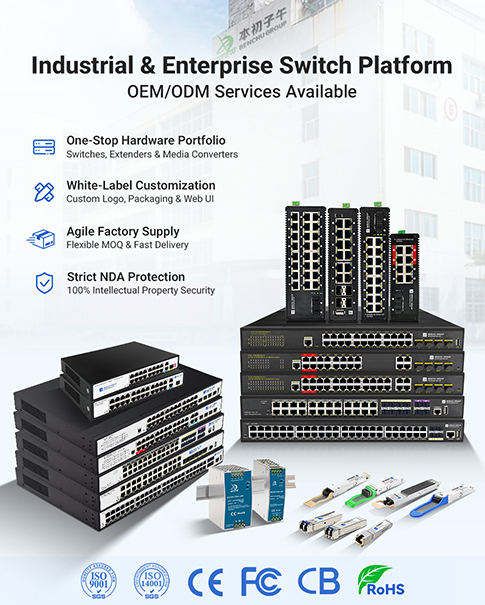
  • What is the difference between Layer 2 and Layer 3 PoE switches?
    Dec 17, 2021
      The primary difference between Layer 2 (L2) and Layer 3 (L3) PoE switches lies in their networking capabilities and functions. While both types of switches can provide Power over Ethernet (PoE), they differ in the network tasks they can perform. Here’s a detailed comparison:   1. OSI Model Layer Functionality Layer 2 PoE Switch: --- Operates at the Data Link Layer (Layer 2) of the OSI model. --- Primarily responsible for switching packets based on MAC addresses. --- Forwards data within the same network or VLAN by learning the MAC addresses of connected devices. --- L2 switches do not understand or route traffic based on IP addresses. They rely on ARP (Address Resolution Protocol) to map IP addresses to MAC addresses and forward data within the same local network segment. Layer 3 PoE Switch: --- Operates at the Network Layer (Layer 3) of the OSI model. --- Capable of performing routing functions by using IP addresses to forward packets between different networks or VLANs. --- Functions like a router, with the ability to route traffic across different subnets, VLANs, or networks, enabling inter-network communication.     2. Routing Capabilities Layer 2 PoE Switch: --- No native routing capabilities; it can only forward traffic within the same network segment or VLAN based on MAC addresses. --- Requires an external router to route traffic between different subnets or VLANs. --- Ideal for smaller networks that don’t require complex routing between different network segments. Layer 3 PoE Switch: --- Supports IP routing and can make decisions based on IP addresses, allowing traffic to be forwarded between different networks or VLANs. --- Can perform inter-VLAN routing, eliminating the need for an external router in larger or more complex networks. --- Suitable for larger networks that need to manage traffic between multiple VLANs or subnets.     3. Use Cases and Network Complexity Layer 2 PoE Switch: --- Commonly used in small to medium-sized networks or in simpler deployments where all devices reside on the same VLAN or subnet. --- Ideal for powering and connecting devices like IP cameras, VoIP phones, access points, and IoT devices within the same local network. Layer 3 PoE Switch: --- More suitable for larger, more complex networks that involve multiple VLANs, subnets, or the need to route traffic between different parts of the network. --- Often used in enterprise networks, data centers, or organizations with branch offices and multiple VLANs for segmenting traffic.     4. VLAN Support Layer 2 PoE Switch: --- Supports VLANs and VLAN tagging (802.1Q), allowing traffic segmentation within the same switch, but requires external routing devices for communication between VLANs. --- Suitable for creating logical network segments and providing isolated communication within the same switch. Layer 3 PoE Switch: --- Also supports VLANs, but with the added ability to perform inter-VLAN routing natively without the need for an external router. --- Provides enhanced network segmentation and routing, allowing more control and flexibility in managing traffic between different VLANs.     5. Performance and Efficiency Layer 2 PoE Switch: --- Generally simpler and more cost-effective than Layer 3 switches. --- Lower processing overhead since it only forwards traffic based on MAC addresses. --- Best for environments with minimal routing needs or for devices that only need to communicate within the same subnet or VLAN. Layer 3 PoE Switch: --- Typically more powerful in terms of processing, as it handles both switching and routing, which involves more complex decision-making. --- Reduces network latency and congestion by performing routing locally, without the need to send traffic to an external router. --- Best for organizations that need greater control over network traffic, multiple VLANs, or subnets.     6. Cost Layer 2 PoE Switch: --- Less expensive than Layer 3 switches because they lack routing functionality and are simpler in design. --- Suitable for small networks or budget-conscious environments that don’t require extensive routing. Layer 3 PoE Switch: --- More expensive due to its advanced routing capabilities and greater processing power. --- A better investment for larger organizations with complex networking needs, but the cost can be justified by the performance improvements and network simplification it provides.     7. Example Applications Layer 2 PoE Switch: --- Small offices or retail stores that need to power and connect IP cameras, VoIP phones, and Wi-Fi access points within a single VLAN. --- Networks where traffic remains largely within the same subnet, with no need for routing between different network segments. Layer 3 PoE Switch: --- Enterprise campuses or large offices with multiple departments, each operating on its own VLAN, requiring inter-VLAN routing for communication. --- Data centers where routing between different server clusters or network segments is necessary for traffic management. --- Branch offices where traffic needs to be routed between different locations over the WAN or VPN.     Summary Feature Layer 2 PoE Switch Layer 3 PoE Switch OSI Layer Data Link Layer (Layer 2) Network Layer (Layer 3) Traffic Forwarding Based on MAC addresses Based on IP addresses Routing Capability No routing, only switching within VLANs or subnets Capable of routing between VLANs, subnets, or networks Use Case Small to medium-sized networks Large, complex networks with multiple VLANs or subnets VLAN Support VLAN tagging, but requires external router for routing VLAN support with native inter-VLAN routing Performance Simpler, lower processing needs Higher processing power for routing and switching Cost Less expensive More expensive, justified by routing and processing power Best For Simple network environments without routing needs Enterprise networks needing routing between subnets/VLANs   In essence, Layer 2 PoE switches are ideal for smaller, simpler networks that don’t need routing between different network segments, while PoE Ethernet Switches layer 3 offer more advanced features like inter-VLAN routing and are better suited for larger or more complex networks.    
    Read More
  • Can PoE switches be used outdoors?
    Dec 20, 2021
      Yes, PoE switches can be used outdoors, but it requires the use of outdoor-rated PoE Ethernet Switches designed specifically to withstand harsh environmental conditions. These switches are built with protective features to ensure reliable operation in outdoor settings.   Key Considerations for Outdoor PoE Switches: 1.Weatherproofing (IP Rating): --- Outdoor PoE switches typically come with a high IP (Ingress Protection) rating, such as IP65 or IP67, which indicates they are resistant to dust, water, and moisture. This allows them to operate reliably even in rain, snow, or dusty conditions. 2.Temperature Tolerance: --- Outdoor switches are designed to function in a wide temperature range, from extreme heat to freezing cold. They can often handle temperatures between -40°C to +75°C depending on the model, making them suitable for use in diverse climates. 3.Surge Protection: --- To handle electrical surges caused by lightning or power fluctuations, outdoor PoE switches often come with built-in surge protection. This is critical for ensuring the longevity and reliability of the devices connected to the network in areas prone to electrical disturbances. 4.Enclosure and Mounting: --- Outdoor PoE switches are usually housed in robust enclosures made from weather-resistant materials, such as metal or reinforced plastic. These enclosures protect the switch from physical damage, UV radiation, and weather conditions. Mounting brackets are often included for easy installation on poles, walls, or other outdoor structures. 5.PoE Power for Outdoor Devices: --- Many outdoor devices, such as IP cameras, Wi-Fi access points, and IoT sensors, rely on PoE for both power and data transmission. Outdoor PoE switches are ideal for powering these devices without needing to run separate electrical lines. 6.Fiber Connectivity: --- In some outdoor environments, especially over long distances, fiber optic connections are used to provide high-speed network links to the PoE Network Switches. Many outdoor PoE switches include SFP ports for fiber connectivity, ensuring a stable and high-performance connection.     Applications of Outdoor PoE Switches: Surveillance Systems: Used to power and connect IP cameras in parking lots, stadiums, or other large outdoor areas. Public Wi-Fi: Powers outdoor Wi-Fi access points in public parks, campuses, or city-wide wireless networks. Smart Cities and IoT: Connects and powers IoT sensors for traffic management, environmental monitoring, and street lighting. Building Security: Powers and networks devices like gate controllers or security cameras around buildings or industrial sites.     Summary: Outdoor rated PoE switches are specifically designed to be durable and reliable in challenging environments, featuring weatherproofing, surge protection, and temperature tolerance. When deploying them, it’s essential to ensure they are appropriately rated for outdoor use to maintain performance and safety.    
    Read More
  • How does PoE simplify network management?
    Sep 12, 2022
      Power over Ethernet (PoE) simplifies network management in several key ways, enhancing both efficiency and scalability in various networking environments. By combining data and power delivery over a single Ethernet cable, PoE eliminates the need for separate power supplies for devices like IP cameras, wireless access points, and VoIP phones. Here’s how PoE simplifies network management:   1. Centralized Power Control Simplified Power Distribution: PoE allows network administrators to control power to devices remotely from a central switch or controller. This centralization makes it easy to manage power cycles (rebooting devices), perform maintenance, or schedule power for devices like cameras or access points without physically accessing them. Remote Power Management: Power can be monitored, scheduled, and even shut down remotely. This is especially useful for IT teams managing devices across large areas or multiple sites, reducing the need for on-site visits.     2. Reduced Cabling Complexity Single Cable for Power and Data: PoE eliminates the need for separate electrical wiring to power devices, simplifying installation and reducing cable clutter. This is especially useful in hard-to-reach areas or locations where installing additional power outlets would be costly or impractical. Less Infrastructure Dependency: Without the need for electrical outlets near each device, PoE gives network administrators more flexibility in device placement, especially for things like surveillance cameras or wireless access points, which can be installed where data cabling already exists.     3. Cost Savings Lower Installation Costs: With Network Switches PoE, the need for electricians to install separate power lines is removed, resulting in significant savings on installation and labor costs. PoE uses standard Ethernet cabling (Cat5e, Cat6) that can carry both data and power, minimizing the need for additional materials. Fewer Power Supplies: By eliminating the need for individual power adapters for each device, PoE reduces hardware costs. Devices can draw power directly from the network switch, streamlining power distribution and reducing hardware overhead.     4. Improved Network Scalability Easy Deployment of New Devices: PoE simplifies the addition of new devices to the network, allowing administrators to quickly deploy IP cameras, access points, or IoT devices without the need to factor in power availability. Devices can be easily connected with a single Ethernet cable, making expansions faster and more efficient. Modular Growth: As network needs grow, PoE Network Switches can scale more easily than traditional networks. Devices can be added incrementally without having to worry about power constraints or infrastructure upgrades.     5. Enhanced Reliability Uninterrupted Power Supply (UPS): PoE switches can be connected to an uninterruptible power supply (UPS), ensuring that all connected devices (such as IP cameras and access points) continue operating during power outages. This ensures high availability and reliability in critical environments, like security systems or communications networks. Centralized Monitoring: Power consumption for PoE-enabled devices can be monitored from the switch, allowing administrators to track performance and identify any issues (e.g., power draw fluctuations or device malfunctions) remotely.     6. Simplified Maintenance and Troubleshooting Remote Device Reboots: PoE allows for remote power cycling (rebooting) of devices like cameras or access points that may be experiencing issues. This reduces the need for physical access to devices and minimizes network downtime. Simplified Diagnostics: Many PoE Ethernet Switches come with advanced management features like SNMP (Simple Network Management Protocol) for monitoring the health and power consumption of connected devices. This allows IT teams to quickly diagnose problems and optimize power distribution without manual intervention.     7. Flexibility in Device Placement No Need for Proximity to Power Outlets: PoE enables devices to be installed in locations that would otherwise be difficult to power, such as ceilings, walls, or outdoor areas. This flexibility is particularly valuable for devices like security cameras, access points, and digital signage, where positioning is critical for optimal coverage. Ideal for Remote and Hard-to-Reach Areas: PoE is especially beneficial for remote deployments where access to power lines is limited or unavailable. For instance, it is frequently used in outdoor surveillance systems, smart cities, and industrial IoT setups.     8. Energy Efficiency Smart Power Management: PoE devices can use energy-efficient standards such as PoE+ (802.3at) or PoE++ (802.3bt), which intelligently allocate power based on the needs of each device. This ensures that only the required amount of power is delivered, reducing overall energy consumption and optimizing the network's power usage.     Summary of PoE Benefits for Network Management: Simplification Aspect Description Centralized Power Control Remotely manage and monitor device power consumption. Reduced Cabling Single cable delivers both power and data, reducing clutter. Cost Savings Lower installation and hardware costs due to no separate power cabling. Scalability Easily add new devices without worrying about power outlets. Reliability PoE-connected devices can remain operational during power outages using UPS. Simplified Maintenance Remote power cycling and device monitoring reduce downtime. Flexible Placement Devices can be placed anywhere Ethernet cables can reach. Energy Efficiency Smart power management optimizes energy consumption.     Conclusion: PoE greatly simplifies network management by centralizing power control, reducing cabling, cutting costs, and improving scalability and reliability. Its ability to deliver power and data over a single cable makes it an ideal solution for modern networks that need to accommodate a growing number of connected devices efficiently and flexibly.    
    Read More
1 2 3
A total of3pages

leave a message

leave a message
If you are interested in our products and want to know more details,please leave a message here,we will reply you as soon as we can.
submit

home

products

WhatsApp

Contact Us