PoE Network Switch

Home

PoE Network Switch

  • When Should I Use a PoE Switch?
    Jul 18, 2024
    Power over Ethernet (PoE) switches have become a critical component in modern networking solutions, offering a convenient way to power devices through the same cables that transmit data. Understanding when to use a PoE switch can significantly enhance the efficiency and flexibility of your network setup. This article will explore the scenarios where a Network PoE Switch or a PoE port switch is the best choice, highlighting the benefits and applications of this technology.1. Deploying IP Cameras and Surveillance SystemsOne of the most common uses for Enterprise PoE Switch is in surveillance systems. IP cameras, which require both power and data connectivity, can be efficiently deployed using a Network PoE Switch. By utilizing a PoE port switch, you can eliminate the need for separate power sources for each camera, simplifying installation and reducing cable clutter. This is especially advantageous in large-scale installations where running additional power lines would be costly and time-consuming.2. Setting Up Wireless Access PointsWireless Access Points (WAPs) are essential for extending the reach of your wireless network. Using a PoE switch to power WAPs allows you to place them in optimal locations for signal strength, such as ceilings or walls, without worrying about the availability of power outlets. A Network PoE Switch ensures that both power and data are delivered through a single Ethernet cable, making it easier to expand and manage your wireless network infrastructure.3. VoIP Phone SystemsVoice over Internet Protocol (VoIP) phones are increasingly used in modern office environments due to their cost-effectiveness and flexibility. PoE switch 10 100mbps are ideal for powering VoIP phones, as they provide both the network connection and power through the same cable. This simplifies the setup process and allows for easier relocation and reconfiguration of phones within the office. Using a PoE port switch ensures that your VoIP system is both reliable and easy to maintain.4. Installing Network Devices in Hard-to-Reach AreasIn many cases, network devices such as routers, switches, and controllers need to be installed in locations where power outlets are scarce or difficult to access. PoE switches provide a practical solution by delivering power over the Ethernet cable, allowing these devices to be placed in optimal positions without the need for additional electrical infrastructure. This is particularly useful in environments like warehouses, outdoor areas, and large commercial buildings.5. Simplifying Cable ManagementUsing 8 Port PoE Network Switches can significantly simplify cable management in your network setup. By combining power and data transmission into a single cable, PoE switches reduce the number of cables required, leading to a cleaner and more organized installation. This is beneficial in both small office settings and large enterprise environments, where cable management can become a complex and costly task.6. Expanding Network CapacityAs your network grows, adding more devices can strain existing power outlets and increase the complexity of your setup. A PoE switch can help alleviate this issue by providing additional PoE ports for new devices. Whether you are adding more IP cameras, WAPs, or VoIP phones, a PoE port switch allows for seamless expansion without the need for additional power sources. PoE Switch 8 Port gigabit have significant advantages. Since they cover both power and data, you only need one Ethernet cable for each device. This feature becomes more useful when you have a few power outlets and limited space for cables. With the help of these PoE switches, you can organize the cables.PoE switches offer a versatile and efficient solution for powering and connecting network devices. They are particularly useful in scenarios where running separate power lines would be impractical or costly. By using a Network PoE Switch or a PoE port switch, you can simplify installation, reduce cable clutter, and enhance the flexibility of your network setup. Whether you are deploying IP cameras, WAPs, VoIP phones, or network devices in hard-to-reach areas, PoE switches provide the power and connectivity needed to keep your network running smoothly.   Related Product Side-by-Side Comparison Models SP5210-16PFE2GE1GF16 Port 10/100M PoE Switch for IP Camera SP7500-24PGE4GC-L2M24 Port Gigabit PoE Switch for Access Point IES7511-8PGE2GF-DCIndustrial PoE Switch for Harsh Outdoor Conditions IES7211-4PGE1GF-SOLSolar Powered PoE Switch for Off-Grid Surveillance IES7511-8PGE2GF-4BT802.3bt 90W PoE++ Switch for High-Power Devices Switching Capacity 10.8Gbps 128Gbps 24Gbps 64Gbps 24Gbps Physical Port 16-10/100M PoE + 2-1G RJ45 + 1-1G SFP 24-1G PoE + 4-1G RJ45 + 4-1G SFP 8-1G PoE + 2-1G SFP 4-1G PoE + 1-1G SFP 8-1G PoE + 2-1G SFP POE Standard  IEEE 802.3at / 30W  IEEE 802.3at / 30W  IEEE 802.3at / 30W  IEEE 802.3at / 30W  IEEE 802.3at / 30W POE Budget 180W 400W 120W 240W (Depends on Input Power)  8* 30W PoE +  2*SFP Power Input AC 100~240V 50/60Hz AC 100V-240V, 50/60Hz DC 48~56V (Dual redundant inputs) DC 12~54V Wide Voltage DC 48~56V (Dual redundant inputs) Housing / Mount Metal / Rack-Mount Metal / Rack-mout Aluminum / DIN-Rail Aluminum / DIN-Rail Aluminum / DIN-Rail Operating Temp -20°C to +55°C -20°C to +55°C -40°C to +85°C -40°C to +75°C -40°C to +85°C Surge ESD 4KV ESD 6KV ESD 6KV ESD 6KV ESD 6KV Type Unmanaged L2+ Managed L2+ Managed Unmanaged L2+ Managed Action View Detail View Detail View Detail View Detail View Detail   🚀 OEM/ODM & White Label Services Available Empower your brand with Benchu's 10+ years of PoE & Industrial Switch manufacturing expertise. We provide more than just hardware; we provide your brand's competitive edge. Branding & ID Laser-etched Logo & Custom Labels Brand-specific Packaging (Giftbox/Carton) Unique Housing Colors (RAL/Pantone) Software & Tech Custom Default IP/Login Credentials Private MIBs & Specialized Firmware PCBA-only Options for System Integration Ready to Build Your Own Brand? Standard OEM Lead Time: 2-3 Weeks | Low MOQ Branding +86 755 23246531 | sales@benchu-group.com | WhatsApp: +86-17322314741 Get a Tailored Quote Now  
    Read More
  • How to Mount a Network Switch on a Wall
    Jul 31, 2024
    Mounting a network switch on a wall can be a practical and space-saving solution, especially in environments where floor space is limited or you want to keep cables neatly organized. Whether you’re setting up a home office, a small business network, or upgrading your existing setup, here’s a detailed guide to help you mount your Ethernet PoE switch securely:     Step 1: Choose the Right Location Selecting the optimal location for your PoE network switch is crucial. Consider the following factors: Accessibility: Ensure easy access for connecting Ethernet cables and power. Ventilation: Choose a well-ventilated area to prevent overheating. Protection: Avoid areas prone to moisture or excessive dust.   Step 2: Prepare Your Tools and Equipment Gather the necessary tools and equipment before you begin: Ethernet Cables: For connecting your devices to the switch. Wall Mount Bracket: Ensure it’s compatible with your switch model. Screws and Wall Anchors: Suitable for your wall type (drywall, concrete, etc.). Screwdriver and Level: To ensure accurate installation.   Step 3: Prepare the Switch Before mounting, power off the unmanaged 10/100M 8 port poe+ switch and disconnect all cables. Attach the wall mount brackets securely to the switch following the manufacturer’s instructions.   Step 4: Mark and Drill Mounting Holes Hold the switch against the wall in your chosen location. Use a pencil to mark the positions of the mounting holes on the wall. Use a level to ensure the switch is aligned horizontally.   Step 5: Drill Pilot Holes and Install Wall Anchors Depending on your wall type, drill pilot holes for the screws and install wall anchors if needed. Wall anchors provide extra support, especially in drywall or plaster.   Step 6: Mount the Switch Align the mounting brackets on the switch with the drilled holes on the wall. Securely fasten the switch to the wall using screws. Avoid over-tightening to prevent damage.   Step 7: Connect Ethernet and Power Cables Once the switch is securely mounted, reconnect the Ethernet cables from your devices to the switch ports. Ensure each cable is securely plugged in. Connect the power cable to the switch and plug it into a nearby power outlet.   Step 8: Test the Setup Power on the best poe switch and connected devices. Test network connectivity to ensure all devices are properly recognized and can communicate with each other.   Wall mount poe switch can optimize space and improve the efficiency of your network setup. By following these steps, you can ensure a secure and organized installation tailored to your specific needs. Proper installation and maintenance of your network equipment are essential for optimal performance and longevity. Ensure you follow manufacturer guidelines and safety precautions throughout the installation process.  
    Read More
  • What devices can be powered by PoE?
    Oct 11, 2020
      Power over Ethernet (PoE) can power a wide range of devices, especially those that are network-enabled and benefit from simplified power delivery over a single cable. These devices are commonly referred to as Powered Devices (PDs) and are used in various environments, such as offices, industrial facilities, and smart buildings. Here are the most common devices that can be powered by PoE:   1. Wireless Access Points (WAPs) Use Case: Wireless access points provide Wi-Fi coverage in offices, public spaces, and homes. Using PoE allows these devices to be installed in places where electrical outlets are not readily available, like ceilings or outdoor areas. Examples: Cisco Aironet, Ubiquiti UniFi, Aruba access points.     2. IP Cameras Use Case: PoE is widely used for surveillance cameras, allowing easy installation in locations like building exteriors, parking lots, or ceilings. Cameras can also receive uninterrupted power during outages if backed by a UPS system. Types: Fixed cameras, PTZ (Pan-Tilt-Zoom) cameras, dome cameras, and outdoor cameras. Examples: Hikvision, Axis Communications, Dahua, and Bosch IP cameras.     3. VoIP Phones Use Case: VoIP phones are network-enabled devices that rely on PoE to receive power and data over the same Ethernet cable, simplifying desk setups by eliminating the need for separate power adapters. Examples: Cisco IP phones, Avaya VoIP phones, Yealink phones.     4. IP Intercoms Use Case: These devices, used for communication in office buildings, residential complexes, and industrial environments, can be powered using PoE for easier installation in entry points or outdoor areas. Examples: 2N IP intercoms, Axis IP video door stations.     5. Network Switches (PoE-Powered Switches) Use Case: PoE-powered network switches (also known as PoE pass-through switches) are small switches that receive power via PoE and can also distribute power to other devices. They are useful for extending network infrastructure without requiring a nearby power source. Examples: Ubiquiti USW-Flex, Netgear PoE pass-through switches.     6. PoE Lighting Use Case: Modern smart buildings often use PoE to power LED lighting systems. This allows centralized control, automation, and energy efficiency by integrating lighting into the network. Examples: Philips PowerBalance, Molex CoreSync PoE LED systems.     7. IP Speakers and Paging Systems Use Case: Used in environments like schools, hospitals, and office buildings, these systems deliver paging, announcements, and music through network-connected speakers that are powered via PoE. Examples: Axis network speakers, CyberData IP speakers.     8. IP Clocks Use Case: PoE-powered clocks are used in schools, hospitals, and offices to maintain synchronized time across a network. This simplifies installation by using a single cable for both power and network synchronization. Examples: American Time PoE clocks, Sapling PoE clocks.     9. Industrial Devices Use Case: In industrial settings, PoE is used to power ruggedized devices such as sensors, control panels, access control systems, and monitoring equipment. Examples: Schneider Electric industrial devices, Siemens industrial gateways.     10. Thin Clients Use Case: Thin clients are lightweight computers that rely on centralized servers for most of their processing power. In some deployments, PoE is used to power these devices to reduce cable management and provide a cleaner desk setup. Examples: HP Thin Clients, Dell Wyse PoE-capable thin clients.     11. IP Security Systems (Access Control) Use Case: PoE powers access control systems, including card readers, door locks, and biometric scanners, simplifying the installation in secure entry points of buildings. Examples: HID Global access control, ZKTeco biometric readers.     12. Digital Signage Use Case: PoE can power digital displays and signage used in retail, transportation hubs, and corporate settings. This simplifies deployment in areas where power outlets are scarce or inconvenient to reach. Examples: NEC PoE digital signage displays, Samsung SMART signage.     13. Point-of-Sale (PoS) Systems Use Case: PoS systems can be networked and powered via PoE to ensure consistent power supply and data connectivity in retail environments, restaurants, and other commercial spaces. Examples: NCR PoS systems, Ingenico PoE terminals.     14. Environmental Sensors Use Case: PoE powers environmental sensors for monitoring temperature, humidity, air quality, and other factors in smart buildings or data centers. Examples: AKCP environmental sensors, Netatmo weather monitoring sensors.     15. IoT Devices Use Case: Various Internet of Things (IoT) devices, such as smart building controllers, HVAC systems, and smart meters, can be powered by PoE to streamline installations and centralize control. Examples: Cisco Meraki IoT gateways, Smart building controllers by Siemens.     16. PTZ (Pan-Tilt-Zoom) Cameras Use Case: These high-end surveillance cameras require higher power to control motorized zoom, tilt, and pan functions. PoE, especially 802.3bt PoE++ Switch, is ideal for delivering the needed power. Examples: Axis Communications PTZ cameras, Dahua PTZ cameras.     Conclusion PoE technology powers a wide range of networked devices across various sectors, including business, education, security, and smart buildings. Its versatility and the ability to simplify cabling while providing centralized power management make PoE a popular choice for modern network infrastructures.    
    Read More
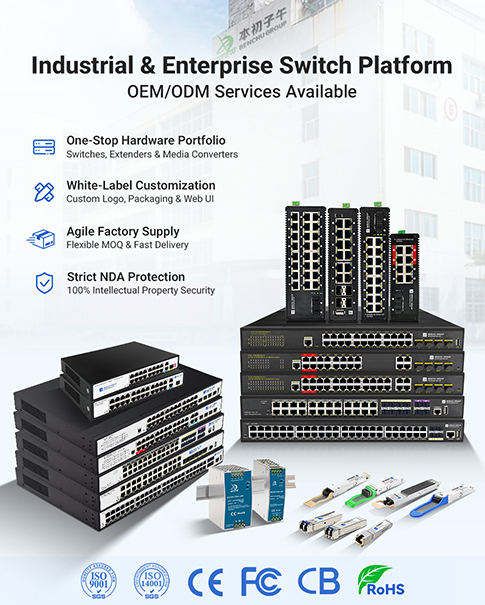
  • How do I choose the right PoE switch for my needs?
    Oct 14, 2020
      Choosing the right Power over Ethernet (PoE) switch depends on several factors, including the type of devices you are powering, the size of your network, your power requirements, and future scalability. Here’s a guide to help you select the best PoE switch for your needs:   1. Determine the Devices You Need to Power Device Type: Identify which devices you will connect to the Network Switches PoE. Common PoE-powered devices include IP cameras, wireless access points, VoIP phones, and IoT sensors. Power Requirements: Different devices have different power needs. For example, VoIP phones typically require less power (around 4-10W), while high-end IP cameras or wireless access points may need up to 30W or more. Ensure the switch can handle the power demand of all connected devices.     2. Understand PoE Standards and Power Output There are different PoE standards that define the amount of power a switch can provide to each connected device: --- IEEE 802.3af (PoE): Provides up to 15.4W per port, suitable for devices with lower power requirements, such as VoIP phones or basic IP cameras. --- IEEE 802.3at (PoE+): Delivers up to 30W per port, ideal for more power-hungry devices like advanced IP cameras or wireless access points. --- IEEE 802.3bt (PoE++): Provides up to 60W (Type 3) or 100W (Type 4) per port, supporting high-power devices like PTZ cameras, LED lighting, or digital signage. Tip: Make sure the switch’s PoE budget (total available power across all ports) is sufficient for the devices you plan to connect. For example, if you need to power ten devices that each require 15W, your switch must have a total PoE power budget of at least 150W.     3. Number of Ports --- Current Device Count: Count how many devices need to be connected to the switch. Ensure the switch has enough PoE-enabled ports to accommodate all of them. --- Future Expansion: Consider any future growth. If you plan to add more devices later, select a switch with additional ports or higher PoE capacity to avoid needing to upgrade prematurely. Tip: Switches are available with various port counts, commonly 8, 12, 24, or 48 ports. Choose a size that fits your current needs with some room for future expansion.     4. Total PoE Power Budget --- Power per Port: Calculate the total power each connected device will need and ensure the switch has a sufficient overall power budget. For example, if you connect ten PoE+ devices that require 25W each, your switch should have a power budget of at least 250W. --- Power Scaling: Some switches allow you to scale the power budget with additional power supplies. This can be useful if you need flexibility as your network grows. Tip: Ensure that the PoE switch provides a higher total power budget than your calculated needs to accommodate potential power surges or future high-powered devices.     5. Switch Management: Managed vs. Unmanaged --- Unmanaged Switch: Simple, plug-and-play devices. Ideal for small networks where no advanced features or network monitoring is required. --- Managed Switch: Provides control over network traffic, security, and configurations. Managed switches offer features like VLANs, Quality of Service (QoS), network monitoring, and troubleshooting. They are suitable for larger or more complex networks where control over data traffic and security is important. Tip: For business-critical applications, a managed switch offers greater flexibility, security, and control over your network.     6. Network Speed and Performance --- Gigabit Ethernet: For most modern networks, Gigabit Ethernet is standard, ensuring fast data transmission between devices. Ensure your switch supports 1 Gbps per port for seamless performance. --- 10 Gigabit Ethernet: If your network includes high-bandwidth applications like video surveillance or data centers, consider switches with 10 Gbps uplink ports for faster backbone connections. Tip: For most businesses, a Gigabit PoE switch will suffice, but 10 Gigabit uplinks are useful if you have large data or video traffic moving across the network.     7. Layer 2 vs. Layer 3 Switches --- Layer 2 Switch: A Layer 2 switch operates at the data link layer and is primarily used for forwarding traffic based on MAC addresses. Suitable for most small to medium networks. --- Layer 3 Switch: These switches offer routing capabilities, working at the network layer and allowing routing between different subnets or VLANs. This is useful for larger, more complex networks with multiple segments. Tip: If your network consists of multiple VLANs or subnets, a Layer 3 switch may provide better performance and traffic management.     8. PoE Power Scheduling and Management Features --- PoE Scheduling: Some switches allow you to schedule when to power PoE devices on or off, which can help save energy (for example, turning off VoIP phones after business hours). --- Power Management: Look for switches that offer power management capabilities, such as allocating power based on device priority or monitoring the power consumption of each device in real-time. Tip: If energy efficiency is a priority, opt for switches with advanced power management features.     9. Redundancy and Reliability --- Redundant Power Supplies: In mission-critical applications, consider switches that support redundant power supplies. This ensures the switch remains operational even if one power source fails. --- Environmental Conditions: If you are deploying switches in harsh or outdoor environments, look for ruggedized, industrial-grade switches that can withstand extreme temperatures, humidity, or vibrations. Tip: For critical environments like industrial applications or outdoor installations, select rugged switches with built-in power redundancy.     10. Additional Features --- VLAN Support: Virtual LANs (VLANs) allow you to segment your network into different groups, improving performance and security. This is particularly important in large or security-sensitive environments. --- Quality of Service (QoS): QoS prioritizes certain types of traffic, such as VoIP or video, ensuring that time-sensitive data gets through without delays. --- Link Aggregation: This feature allows multiple Ethernet links to be combined into a single logical link to increase bandwidth and provide redundancy. Tip: For advanced networks with IP cameras or VoIP, prioritize features like VLAN, QoS, and link aggregation.     11. Brand and Warranty --- Reputable Manufacturers: Stick to trusted brands such as Cisco, Huawei, Ubiquiti, H3C, Netgear, and Benchu Group. These manufacturers offer high-quality PoE switches with reliable support and updates. --- Warranty and Support: Check the warranty period and available support options, especially for mission-critical networks. Some brands offer extended warranties and responsive customer service. Tip: Investing in a reputable brand may cost more initially but can reduce the risk of network downtime and offer better long-term reliability.     Conclusion Choosing the right PoE switch for your business involves evaluating your current and future networking needs, including the types of devices you will power, total power budget, network size, and advanced features. Consider factors like network speed, scalability, and the manageability of the switch. For most businesses, a Gigabit managed PoE+ switch with room for expansion will be sufficient, but more advanced networks may require Layer 3 routing, 10 Gbps uplinks, or higher PoE budgets.    
    Read More
  • What is the Difference Between an Industrial Switch and a Normal Switch?
    Oct 30, 2024
    In today's increasingly connected world, switches play a crucial role in networking. Whether you're managing a small office or an expansive industrial facility, understanding the differences between an industrial switch and a normal switch is essential for optimizing your network's performance.   Understanding Normal Switches A normal switch, often found in home or small office environments, is designed to connect multiple devices on a local area network (LAN). These switches are typically easy to install and require minimal configuration. Common types include unmanaged switches, which operate automatically without user intervention, and managed switches, which offer more control over network traffic.   Normal switches come in various configurations, including the POE switch 24 Port and the POE switch 48 Port. Power over Ethernet (PoE) technology allows these switches to deliver both data and power through a single cable, making them ideal for devices like IP cameras, VoIP phones, and wireless access points. The choice between a 24-port and a 48-port switch depends on the number of devices that need to be connected, with the latter providing greater capacity.   The Role of Industrial Switches On the other hand, industrial switches are specifically engineered for harsh environments typical of manufacturing, warehousing, and outdoor applications. These switches are built to withstand extreme temperatures, vibrations, dust, and moisture. They often feature rugged enclosures and robust connectors, making them suitable for deployment in challenging conditions.   Industrial network switches offer advanced features not typically found in normal switches. For instance, they often include enhanced security protocols, redundancy options, and superior data processing capabilities. These features are essential for maintaining reliable communications in critical industrial applications, where downtime can result in significant losses.     Key Differences   Durability and Design Normal Switches: Generally made for indoor use, they may not withstand extreme conditions or physical stress. They are designed with standard enclosures suitable for controlled environments. Industrial Switches: Built with rugged housings, these switches are resistant to extreme temperatures, humidity, dust, and electrical interference. Their design ensures long-term reliability even in demanding settings.   Performance and Features Normal Switches: Suitable for basic networking tasks, they may have limited features, especially in unmanaged models. While PoE capabilities enhance their functionality, they typically lack advanced management options. Industrial Switches: Equipped with advanced management features, including VLAN support, QoS (Quality of Service), and SNMP (Simple Network Management Protocol), they allow for better control and monitoring of network traffic.   Redundancy and Reliability Normal Switches: While they can be reliable in stable environments, they often lack built-in redundancy. If a switch fails, the network can experience downtime. Industrial Switches: Designed with redundancy features, such as dual power inputs and ring topology support, these switches ensure continuous operation, minimizing the risk of failure.   Application Normal Switches: Ideal for home networks, small offices, and environments where conditions are controlled. They serve general connectivity needs without the necessity for robust security features. Industrial Switches: Suited for critical infrastructure, manufacturing facilities, and outdoor applications, these switches handle heavy data loads while ensuring high levels of security and reliability. Selecting the right switch for your network needs is vital for achieving optimal performance. For environments that require robustness and reliability, an industrial network switch is the better choice. However, for typical office settings where conditions are stable, a normal switch, including options like the POE Network Switch, will suffice. Understanding these differences will help you make informed decisions to enhance your networking capabilities.  
    Read More

leave a message

leave a message
If you are interested in our products and want to know more details,please leave a message here,we will reply you as soon as we can.
submit

home

products

WhatsApp

Contact Us