PoE Switch 8 Port gigabit

Home

PoE Switch 8 Port gigabit

  • When Should I Use a PoE Switch?
    Jul 18, 2024
    Power over Ethernet (PoE) switches have become a critical component in modern networking solutions, offering a convenient way to power devices through the same cables that transmit data. Understanding when to use a PoE switch can significantly enhance the efficiency and flexibility of your network setup. This article will explore the scenarios where a Network PoE Switch or a PoE port switch is the best choice, highlighting the benefits and applications of this technology.1. Deploying IP Cameras and Surveillance SystemsOne of the most common uses for Enterprise PoE Switch is in surveillance systems. IP cameras, which require both power and data connectivity, can be efficiently deployed using a Network PoE Switch. By utilizing a PoE port switch, you can eliminate the need for separate power sources for each camera, simplifying installation and reducing cable clutter. This is especially advantageous in large-scale installations where running additional power lines would be costly and time-consuming.2. Setting Up Wireless Access PointsWireless Access Points (WAPs) are essential for extending the reach of your wireless network. Using a PoE switch to power WAPs allows you to place them in optimal locations for signal strength, such as ceilings or walls, without worrying about the availability of power outlets. A Network PoE Switch ensures that both power and data are delivered through a single Ethernet cable, making it easier to expand and manage your wireless network infrastructure.3. VoIP Phone SystemsVoice over Internet Protocol (VoIP) phones are increasingly used in modern office environments due to their cost-effectiveness and flexibility. PoE switch 10 100mbps are ideal for powering VoIP phones, as they provide both the network connection and power through the same cable. This simplifies the setup process and allows for easier relocation and reconfiguration of phones within the office. Using a PoE port switch ensures that your VoIP system is both reliable and easy to maintain.4. Installing Network Devices in Hard-to-Reach AreasIn many cases, network devices such as routers, switches, and controllers need to be installed in locations where power outlets are scarce or difficult to access. PoE switches provide a practical solution by delivering power over the Ethernet cable, allowing these devices to be placed in optimal positions without the need for additional electrical infrastructure. This is particularly useful in environments like warehouses, outdoor areas, and large commercial buildings.5. Simplifying Cable ManagementUsing 8 Port PoE Network Switches can significantly simplify cable management in your network setup. By combining power and data transmission into a single cable, PoE switches reduce the number of cables required, leading to a cleaner and more organized installation. This is beneficial in both small office settings and large enterprise environments, where cable management can become a complex and costly task.6. Expanding Network CapacityAs your network grows, adding more devices can strain existing power outlets and increase the complexity of your setup. A PoE switch can help alleviate this issue by providing additional PoE ports for new devices. Whether you are adding more IP cameras, WAPs, or VoIP phones, a PoE port switch allows for seamless expansion without the need for additional power sources. PoE Switch 8 Port gigabit have significant advantages. Since they cover both power and data, you only need one Ethernet cable for each device. This feature becomes more useful when you have a few power outlets and limited space for cables. With the help of these PoE switches, you can organize the cables.PoE switches offer a versatile and efficient solution for powering and connecting network devices. They are particularly useful in scenarios where running separate power lines would be impractical or costly. By using a Network PoE Switch or a PoE port switch, you can simplify installation, reduce cable clutter, and enhance the flexibility of your network setup. Whether you are deploying IP cameras, WAPs, VoIP phones, or network devices in hard-to-reach areas, PoE switches provide the power and connectivity needed to keep your network running smoothly.   Related Product Side-by-Side Comparison Models SP5210-16PFE2GE1GF16 Port 10/100M PoE Switch for IP Camera SP7500-24PGE4GC-L2M24 Port Gigabit PoE Switch for Access Point IES7511-8PGE2GF-DCIndustrial PoE Switch for Harsh Outdoor Conditions IES7211-4PGE1GF-SOLSolar Powered PoE Switch for Off-Grid Surveillance IES7511-8PGE2GF-4BT802.3bt 90W PoE++ Switch for High-Power Devices Switching Capacity 10.8Gbps 128Gbps 24Gbps 64Gbps 24Gbps Physical Port 16-10/100M PoE + 2-1G RJ45 + 1-1G SFP 24-1G PoE + 4-1G RJ45 + 4-1G SFP 8-1G PoE + 2-1G SFP 4-1G PoE + 1-1G SFP 8-1G PoE + 2-1G SFP POE Standard  IEEE 802.3at / 30W  IEEE 802.3at / 30W  IEEE 802.3at / 30W  IEEE 802.3at / 30W  IEEE 802.3at / 30W POE Budget 180W 400W 120W 240W (Depends on Input Power)  8* 30W PoE +  2*SFP Power Input AC 100~240V 50/60Hz AC 100V-240V, 50/60Hz DC 48~56V (Dual redundant inputs) DC 12~54V Wide Voltage DC 48~56V (Dual redundant inputs) Housing / Mount Metal / Rack-Mount Metal / Rack-mout Aluminum / DIN-Rail Aluminum / DIN-Rail Aluminum / DIN-Rail Operating Temp -20°C to +55°C -20°C to +55°C -40°C to +85°C -40°C to +75°C -40°C to +85°C Surge ESD 4KV ESD 6KV ESD 6KV ESD 6KV ESD 6KV Type Unmanaged L2+ Managed L2+ Managed Unmanaged L2+ Managed Action View Detail View Detail View Detail View Detail View Detail   🚀 OEM/ODM & White Label Services Available Empower your brand with Benchu's 10+ years of PoE & Industrial Switch manufacturing expertise. We provide more than just hardware; we provide your brand's competitive edge. Branding & ID Laser-etched Logo & Custom Labels Brand-specific Packaging (Giftbox/Carton) Unique Housing Colors (RAL/Pantone) Software & Tech Custom Default IP/Login Credentials Private MIBs & Specialized Firmware PCBA-only Options for System Integration Ready to Build Your Own Brand? Standard OEM Lead Time: 2-3 Weeks | Low MOQ Branding +86 755 23246531 | sales@benchu-group.com | WhatsApp: +86-17322314741 Get a Tailored Quote Now  
    Read More
  • What is the difference between a gigabit PoE switch and a PoE switch?
    Aug 02, 2024
      In the realm of networking, Power over Ethernet (PoE) technology has revolutionized the way devices are powered and connected. Among the various types available, gigabit PoE switches stand out for their enhanced capabilities and performance benefits.   What is a PoE Switch? A PoE switch, or Power over Ethernet switch, is a networking device that integrates Power over Ethernet technology. It allows Ethernet cables to carry electrical power, along with data, to PoE-enabled devices such as IP cameras, VoIP phones, and wireless access points. This eliminates the need for separate power sources and simplifies installation.   Understanding Gigabit PoE Switches A 8 Port Gigabit Managed Ethernet Switch is a specific type of Network Switch PoE that supports gigabit Ethernet speeds (up to 1000 Mbps) while providing PoE capabilities. This high-speed capability is crucial for applications requiring large data transfers, such as video surveillance systems or high-density wireless networks. Key Advantages of Gigabit PoE Switches:     Enhanced Speed and Bandwidth: PoE Switch gigabit support speeds up to 10 times faster than traditional Fast Ethernet, ensuring smooth data transmission and reduced latency.     Increased Efficiency: By combining data and power delivery over a single Ethernet cable, gigabit PoE switches simplify network deployments and reduce infrastructure costs.     Scalability and Flexibility: These switches offer scalability to accommodate growing network demands and support a wide range of PoE-powered devices across various industries.     Reliability and Performance: Gigabit PoE switches are designed for reliability, with features like Quality of Service (QoS) to prioritize critical data traffic and ensure consistent performance.   Gigabit PoE Switches Find Applications In:     Enterprise Networks: Supporting high-speed data and power delivery to numerous devices.     Smart Buildings: Powering IP cameras, access control systems, and IoT devices.     Education and Healthcare: Facilitating reliable connectivity for multimedia classrooms and patient care environments.   As you can see, while both PoE switches and PoE Switch 8 Port gigabit leverage Ethernet cables for power and data transmission, the distinction lies in their performance capabilities. Gigabit PoE switches excel in delivering higher speeds, increased bandwidth, and enhanced efficiency compared to standard PoE switches. This makes them ideal for applications demanding robust network performance and seamless connectivity.   Understanding these technical nuances is crucial for selecting the optimal networking solution tailored to specific operational needs. For deeper insights into the advanced capabilities and versatile applications of PoE Network Switch gigabit, please don't hesitate to get in touch with us. Keep an eye out for future updates on the latest advancements in networking technologies.  
    Read More
  • Why This 8-Port 2.5G PoE Switch with 10G Uplink Is a Game-Changer for SMBs
    Mar 14, 2026
      For years, small and medium-sized businesses (SMBs) have found themselves caught in a networking no-man‘s-land. Traditional Gigabit switches, limited to 1 Gbps, struggle to keep pace with modern workloads like large file transfers and video conferencing. Conversely, enterprise-grade 10GBase-T solutions often require costly new cabling and offer far more switching capacity than a growing office actually needs. Having analyzed the current landscape of multi-gigabit technology, I’ve observed that the market is finally maturing to address this specific gap. The emergence of the 8 Port 2.5G PoE Switch with a 10G uplink represents a pivotal shift, delivering high-speed connectivity without the financial overhead typically associated with enterprise network overhauls.   Bridging the Gap with Existing Infrastructure From a technical research perspective, the most compelling aspect of the 2.5G standard is its backward compatibility. Unlike 10GBASE-T, which often demands the shorter distances and tighter twists of Cat6a or Cat7 cabling, 2.5G BASE-T was engineered specifically to operate flawlessly over existing Cat5e and Cat6 infrastructure . This is not merely a convenience; it is a fundamental economic advantage. For an SMB, this means the ability to unlock multi-gigabit speeds without the disruptive and expensive process of rewiring walls or drop ceilings. The switch effectively removes the cabling bottleneck, allowing businesses to leverage the investment they have already made in their physical infrastructure.   Power and Throughput for the Modern Edge The “game-changer” designation truly solidifies when analyzing the power and throughput architecture of these devices. Take, for example, a unit like the SP5210-8PXE1TF. It doesn't just pass data; it actively energizes the workspace. By complying with IEEE 802.3af/at, it delivers up to 30 watts per port to Power over Ethernet (PoE) devices . This capability transforms how SMBs deploy their edge devices. High-performance Wi-Fi 6 access points, which require substantial power for multi-user MIMO, and PTZ security cameras with heaters and blowers can be installed anywhere without needing a nearby electrical outlet . Furthermore, the aggregate 120-watt power budget ensures that all eight ports can maintain substantial power delivery simultaneously, supporting a dense ecosystem of powered devices.   Eliminating Uplink Traffic Jams Perhaps the most critical technical bottleneck in legacy SMB switches has been the uplink. It is common to see a 24-port switch choked by a single 1 Gbps uplink, creating a funnel that strangles inter-network communication. The integration of a 10Gb SFP+ uplink fundamentally solves this structural deficiency. With a backplane bandwidth of 80 Gbps and a forwarding rate of 44.64 Mpps, switches built on modern chipsets—such as those in the Broadcom BCM5315x family—ensure that the 2.5G downlinks are never starved for backhaul capacity . This architecture allows for high-speed communication between workstations, Network Attached Storage (NAS), and servers without congestion, effectively future-proofing the network core against the increasing velocity of data.   Built for Reliability in Harsh Conditions Reliability is often a hidden variable in networking, only appreciated during failure. For SMBs operating in physically demanding environments—be it a manufacturing floor, a warehouse, or an outdoor digital signage deployment—the robustness of the hardware is paramount. My evaluation of current 2.5G switches shows a welcome industry trend toward industrial-grade resilience. Features such as 6KV lightning protection and wide-temperature designs are becoming standard on units designed for the SMB market. This ensures continuous network operation despite electrical surges or temperature extremes, maintaining the integrity of critical operations without the downtime that can lead to significant financial losses for a small business .   A Compact Powerhouse for the Future In conclusion, the convergence of high-speed 2.5G ports, substantial PoE budgets, and a 10G fiber backbone within a compact form factor addresses the exact pain points that have historically plagued small businesses. These switches, often sized at a convenient 11-inch width for flexible mounting, offer a strategic advantage. They allow SMBs to adopt a network strategy that is both immediately beneficial—solving today's bandwidth and power challenges—and inherently scalable, ready to handle the next generation of Wi-Fi and IoT devices. By investing in this class of technology, SMBs are not just buying a switch; they are purchasing the headroom to grow.    
    Read More
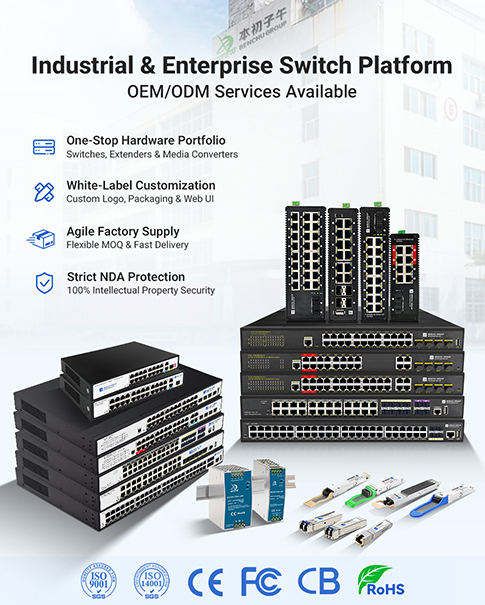
  • Is Your Network Ready for 90W Per Port? Meet the 2.5G PoE++ Switch That Changes Everything
    Mar 17, 2026
      As a researcher deeply engaged in the evolution of network infrastructure, I've observed a significant shift. The conversation is no longer solely about data throughput; it's about the convergence of power and speed at the edge. The question, "Is Your Network Ready for 90W Per Port?" is more pertinent than ever, and devices like the SP5220-8PXE1TF-8BT are why. We are moving beyond simply connecting devices to truly empowering them. This new class of 8 port PoE++ switch technology fundamentally changes what's possible in a LAN environment, transforming Ethernet cabling from a mere data conduit into a comprehensive power and information delivery system.   The cornerstone of this evolution is the IEEE 802.3bt (PoE++) standard, which this device leverages to offer up to 90W per port. From a technical standpoint, this is revolutionary. Previous standards (802.3af/at) were sufficient for basic telephones and cameras, but they fall short of powering today's high-performance edge devices. Now, with a robust 380W PoE budget within a total power capacity of 400W, a single unmanaged PoE++ switch like the SP5220-8PXE1TF-8BT can simultaneously drive power-hungry Pan-Tilt-Zoom (PTZ) cameras with integrated heaters, sophisticated digital signage, and the latest Wi-Fi 6/6E or even Wi-Fi 7 access points to their full potential . This high-power delivery eliminates the need for separate electrical runs, significantly reducing installation complexity and cost, and allowing for network deployments in previously challenging locations .   Beyond raw power, the integration of 2.5G Multi-Gigabit ports addresses the parallel demand for higher data bandwidth. Our research indicates that network bottlenecks are increasingly shifting from the wireless access point to the wired backhaul. With eight RJ45 ports supporting 10/100/1000/2500Mbps, this 2.5G PoE switch ensures that the influx of data from high-resolution 4K/8K video streams, real-time analytics, and high-density wireless connections is handled without latency or packet loss . The switch's non-blocking architecture, with a backplane bandwidth of 80Gbps and a forwarding rate of 44.64Mpps, confirms that it is engineered to handle this traffic seamlessly, ensuring that the "last meter" of the wired connection is not the weakest link in the chain.   Furthermore, the inclusion of a flexible SFP+ uplink port operating at 1G/2.5G/10Gbps is critical for future-proofing network architecture. This allows the switch to integrate into existing infrastructures with legacy speeds while providing a clear, high-capacity path to the core network as demands grow . The 10G uplink ensures that the aggregated traffic from all eight high-power, high-speed ports does not encounter a bottleneck when connecting to servers or the wider network backbone . This kind of forward-thinking design is essential for researchers and IT planners who are building networks intended to remain viable for the next five to ten years.   In conclusion, the SP5220-8PXE1TF-8BT is a compelling example of how switching technology is adapting to meet the needs of a truly connected world. Its combination of substantial per-port power, multi-gigabit data rates, and high-capacity uplinks in a robust, rack-mountable form factor makes it an ideal building block for modern enterprises, smart buildings, and industrial settings . By embracing such a 90-watt PoE++ switch, we are not just upgrading a piece of hardware; we are laying the groundwork for a more intelligent, efficient, and powerful network infrastructure capable of supporting the next generation of digital innovation.    
    Read More

leave a message

leave a message
If you are interested in our products and want to know more details,please leave a message here,we will reply you as soon as we can.
submit

home

products

WhatsApp

Contact Us