Network Switches PoE

Home

Network Switches PoE

  • How do I know if my network switch is PoE?
    Aug 01, 2024
    Determining whether your PoE Network Switches supports Power over Ethernet (PoE) is crucial for optimizing your network infrastructure and ensuring that you can power devices such as IP cameras, wireless access points, and VoIP phones directly through the Ethernet cables. There are five basic ways to check if the switch has PoE enabled or not:     1. Check the Manufacturer’s Specifications The first and most straightforward method is to refer to the manufacturer’s specifications. Manufacturers often include “PoE” or “P” in the model number to indicate PoE capability. For example: You can typically find this information in the user manual, on the manufacturer’s website, or on the packaging of the switch. Look for terms such as “PoE,” “PoE+,” or “802.3af/at” in the product description. PoE (802.3af): Provides up to 15.4 watts of power per port. PoE+ (802.3at): Provides up to 30 watts of power per port. PoE++ (802.3bt): Provides up to 60 or 100 watts of power per port, depending on the type.   2. Inspect the Physical Switch Many toughswitch poe pro have clear labels or indicators on the device itself. Here are some things to look for: Port Labels: Ports on a Ring Network 16 port Industrial PoE Switch are often labeled with “PoE” or “PoE+.” Power Indicators: Some switches have LED indicators that light up when PoE is active on a port. These LEDs might be labeled or color-coded differently than standard activity LEDs.   3. Access the Switch’s Web Interface If your switch supports web management, you can log into its web interface to check its capabilities. Here’s how: Connect to the switch: Use a computer connected to the same network and enter the IP address of the switch into a web browser. Log in: Use the administrator credentials to log in. Check PoE Settings: Navigate to the settings or configuration section. Look for a menu or tab related to PoE. This section will typically provide details on which ports are PoE-enabled and their current power status.   4. Use Network Management Software Network management software can provide detailed information about your network devices, including whether your switch supports PoE. These tools can scan your network and provide a detailed inventory of devices, including PoE capabilities.   5. Power a PoE Device As a practical test, you can connect a known PoE device, such as an IP camera or wireless access point, to the switch. If the device powers up without an external power source, then your Network Switches PoE supports PoE. However, ensure that your device is compatible with the PoE standard supported by your switch (PoE, PoE+, or PoE++).   Identifying whether your network switch is PoE-enabled involves checking the manufacturer’s specifications and model number, inspecting the physical switch, accessing the web interface, using network management software,or performing a practical test with a PoE device. By following these steps, you can ensure that your network setup is optimized for powering devices through Ethernet cables, simplifying your network infrastructure, and enhancing operational efficiency.  
    Read More
  • How do I choose the right PoE switch for my needs?
    Oct 14, 2020
      Choosing the right Power over Ethernet (PoE) switch depends on several factors, including the type of devices you are powering, the size of your network, your power requirements, and future scalability. Here’s a guide to help you select the best PoE switch for your needs:   1. Determine the Devices You Need to Power Device Type: Identify which devices you will connect to the Network Switches PoE. Common PoE-powered devices include IP cameras, wireless access points, VoIP phones, and IoT sensors. Power Requirements: Different devices have different power needs. For example, VoIP phones typically require less power (around 4-10W), while high-end IP cameras or wireless access points may need up to 30W or more. Ensure the switch can handle the power demand of all connected devices.     2. Understand PoE Standards and Power Output There are different PoE standards that define the amount of power a switch can provide to each connected device: --- IEEE 802.3af (PoE): Provides up to 15.4W per port, suitable for devices with lower power requirements, such as VoIP phones or basic IP cameras. --- IEEE 802.3at (PoE+): Delivers up to 30W per port, ideal for more power-hungry devices like advanced IP cameras or wireless access points. --- IEEE 802.3bt (PoE++): Provides up to 60W (Type 3) or 100W (Type 4) per port, supporting high-power devices like PTZ cameras, LED lighting, or digital signage. Tip: Make sure the switch’s PoE budget (total available power across all ports) is sufficient for the devices you plan to connect. For example, if you need to power ten devices that each require 15W, your switch must have a total PoE power budget of at least 150W.     3. Number of Ports --- Current Device Count: Count how many devices need to be connected to the switch. Ensure the switch has enough PoE-enabled ports to accommodate all of them. --- Future Expansion: Consider any future growth. If you plan to add more devices later, select a switch with additional ports or higher PoE capacity to avoid needing to upgrade prematurely. Tip: Switches are available with various port counts, commonly 8, 12, 24, or 48 ports. Choose a size that fits your current needs with some room for future expansion.     4. Total PoE Power Budget --- Power per Port: Calculate the total power each connected device will need and ensure the switch has a sufficient overall power budget. For example, if you connect ten PoE+ devices that require 25W each, your switch should have a power budget of at least 250W. --- Power Scaling: Some switches allow you to scale the power budget with additional power supplies. This can be useful if you need flexibility as your network grows. Tip: Ensure that the PoE switch provides a higher total power budget than your calculated needs to accommodate potential power surges or future high-powered devices.     5. Switch Management: Managed vs. Unmanaged --- Unmanaged Switch: Simple, plug-and-play devices. Ideal for small networks where no advanced features or network monitoring is required. --- Managed Switch: Provides control over network traffic, security, and configurations. Managed switches offer features like VLANs, Quality of Service (QoS), network monitoring, and troubleshooting. They are suitable for larger or more complex networks where control over data traffic and security is important. Tip: For business-critical applications, a managed switch offers greater flexibility, security, and control over your network.     6. Network Speed and Performance --- Gigabit Ethernet: For most modern networks, Gigabit Ethernet is standard, ensuring fast data transmission between devices. Ensure your switch supports 1 Gbps per port for seamless performance. --- 10 Gigabit Ethernet: If your network includes high-bandwidth applications like video surveillance or data centers, consider switches with 10 Gbps uplink ports for faster backbone connections. Tip: For most businesses, a Gigabit PoE switch will suffice, but 10 Gigabit uplinks are useful if you have large data or video traffic moving across the network.     7. Layer 2 vs. Layer 3 Switches --- Layer 2 Switch: A Layer 2 switch operates at the data link layer and is primarily used for forwarding traffic based on MAC addresses. Suitable for most small to medium networks. --- Layer 3 Switch: These switches offer routing capabilities, working at the network layer and allowing routing between different subnets or VLANs. This is useful for larger, more complex networks with multiple segments. Tip: If your network consists of multiple VLANs or subnets, a Layer 3 switch may provide better performance and traffic management.     8. PoE Power Scheduling and Management Features --- PoE Scheduling: Some switches allow you to schedule when to power PoE devices on or off, which can help save energy (for example, turning off VoIP phones after business hours). --- Power Management: Look for switches that offer power management capabilities, such as allocating power based on device priority or monitoring the power consumption of each device in real-time. Tip: If energy efficiency is a priority, opt for switches with advanced power management features.     9. Redundancy and Reliability --- Redundant Power Supplies: In mission-critical applications, consider switches that support redundant power supplies. This ensures the switch remains operational even if one power source fails. --- Environmental Conditions: If you are deploying switches in harsh or outdoor environments, look for ruggedized, industrial-grade switches that can withstand extreme temperatures, humidity, or vibrations. Tip: For critical environments like industrial applications or outdoor installations, select rugged switches with built-in power redundancy.     10. Additional Features --- VLAN Support: Virtual LANs (VLANs) allow you to segment your network into different groups, improving performance and security. This is particularly important in large or security-sensitive environments. --- Quality of Service (QoS): QoS prioritizes certain types of traffic, such as VoIP or video, ensuring that time-sensitive data gets through without delays. --- Link Aggregation: This feature allows multiple Ethernet links to be combined into a single logical link to increase bandwidth and provide redundancy. Tip: For advanced networks with IP cameras or VoIP, prioritize features like VLAN, QoS, and link aggregation.     11. Brand and Warranty --- Reputable Manufacturers: Stick to trusted brands such as Cisco, Huawei, Ubiquiti, H3C, Netgear, and Benchu Group. These manufacturers offer high-quality PoE switches with reliable support and updates. --- Warranty and Support: Check the warranty period and available support options, especially for mission-critical networks. Some brands offer extended warranties and responsive customer service. Tip: Investing in a reputable brand may cost more initially but can reduce the risk of network downtime and offer better long-term reliability.     Conclusion Choosing the right PoE switch for your business involves evaluating your current and future networking needs, including the types of devices you will power, total power budget, network size, and advanced features. Consider factors like network speed, scalability, and the manageability of the switch. For most businesses, a Gigabit managed PoE+ switch with room for expansion will be sufficient, but more advanced networks may require Layer 3 routing, 10 Gbps uplinks, or higher PoE budgets.    
    Read More
  • Are PoE switches energy-efficient?
    Sep 14, 2021
      Yes, PoE switches are generally considered energy-efficient, especially when compared to traditional power setups that require separate power sources for each connected device. PoE (Power over Ethernet) technology is designed to optimize power delivery and reduce energy consumption. Here are several reasons why PoE switches contribute to energy efficiency:   1. Consolidated Power Delivery Single Cable for Power and Data: PoE switches provide both data and power through a single Ethernet cable, which eliminates the need for separate power outlets and reduces energy loss in transmission. This simplification reduces overall infrastructure and energy consumption compared to traditional setups where each device needs an individual power supply.     2. Smart Power Allocation Power Management Features: Many managed PoE switches come with advanced power management features that allocate power efficiently based on the actual needs of connected devices. For example, they can detect how much power each device requires and supply only what is necessary, minimizing waste. This is especially important when different devices require varying power levels. Idle Port Detection: PoE switches can detect when a connected device is powered off or not in use and will stop supplying power to that device, reducing unnecessary power consumption.     3. PoE Standards and Power Efficiency Lower Voltage Transmission: PoE delivers power at lower voltages (usually 48V), which is more energy-efficient than traditional AC power supplies that often require voltage conversions, leading to energy losses. Newer PoE Standards: The latest PoE standards, such as IEEE 802.3at (PoE+) and IEEE 802.3bt (PoE++), provide more power to devices while maintaining efficiency. These standards allow switches to optimize power output, making them more suitable for higher power-consuming devices without excessive energy waste.     4. Centralized Power Management Single Power Source: By powering multiple devices from one central PoE switch, you can better manage power usage and even integrate it with energy-saving strategies. This setup also reduces the need for multiple, inefficient external power supplies, improving the overall energy footprint of your network. Power Backup Integration: Network switches PoE can be easily connected to uninterruptible power supplies (UPS), ensuring that connected devices like VoIP phones, IP cameras, and wireless access points remain powered during outages. This centralizes power management, reducing the need for individual device battery backups, which are often less energy-efficient.     5. Reduced Heat and Power Loss --- gigabit PoE Network Switch typically produce less heat compared to traditional power systems because they use more efficient power distribution methods. Lower heat production means less energy is wasted, and in some environments, it can also reduce the need for cooling, further saving energy.     6. Energy-Efficient Ethernet (EEE) --- Many modern PoE switches are equipped with Energy-Efficient Ethernet (IEEE 802.3az), which helps reduce power consumption during periods of low network activity. EEE dynamically adjusts power usage based on the amount of traffic, allowing switches to enter low-power states when idle, further conserving energy.     7. Simplified Infrastructure Reduces Overall Energy Use No Need for Multiple Power Sources: By removing the need for separate power cables and outlets for each device, PoE Network Switches use fewer resources overall. This simplified infrastructure means fewer electrical circuits and less energy consumed for powering devices.     Energy Efficiency Benefits in Various Applications: VoIP Phones: Since PoE switches can provide just enough power to VoIP phones and automatically shut off unused ports, they prevent unnecessary power consumption. IP Cameras: Many PoE switches support dynamic power allocation, where they only supply the necessary power to IP cameras during active use, which is highly energy-efficient in surveillance systems. Wireless Access Points: PoE switches can detect the power needs of different access points and adjust accordingly, preventing overconsumption of energy.     Conclusion: PoE switches are energy-efficient due to their ability to deliver both power and data over a single cable, their advanced power management features, and their integration with energy-efficient technologies like Energy-Efficient Ethernet. By optimizing power usage, reducing waste, and eliminating the need for separate power supplies, PoE switches offer an efficient solution for modern networks, reducing both energy consumption and operational costs.    
    Read More
  • Can PoE switches provide backup power?
    Oct 15, 2021
      PoE switches do not inherently provide backup power by themselves, but they can be part of a system that offers backup power if combined with an Uninterruptible Power Supply (UPS) or other power redundancy systems. Here’s how it works and what you need to know:   How PoE Switches Provide Power A PoE switch delivers both power and data over a single Ethernet cable to connected PoE-enabled devices, such as IP cameras, VoIP phones, and wireless access points. The power comes from the switch’s internal power supply. If the power supply is interrupted (e.g., due to a power outage), the 90W PoE Switch cannot provide power to the connected devices on its own.     Using a UPS for Backup Power To ensure continuous power during outages, PoE Network Switches are often used in conjunction with a UPS (Uninterruptible Power Supply) or a redundant power system. A UPS acts as a backup battery for the Network Switches PoE, enabling it to continue operating for a period of time after a power outage. This is critical in environments where network devices must remain operational, such as security systems, communication networks, or industrial settings. Benefits of Using a UPS with a PoE Switch: 1.Power Continuity: Ensures that the PoE switch continues to deliver power to connected devices even during a power outage. 2.Network Uptime: Keeps critical devices like IP cameras, VoIP phones, and wireless access points operational during short-term power failures. 3.Surge Protection: Most UPS units provide protection against power surges and spikes, safeguarding the PoE switch and connected devices. 4.Graceful Shutdown: In case of prolonged outages, a UPS allows time to safely shut down equipment without sudden loss of power.     Redundant Power Supplies Some high-end PoE switches offer redundant power supply (RPS) options. An RPS is an additional power source that can take over if the primary power supply fails. This adds an extra layer of reliability, ensuring the switch and connected PoE devices continue to receive power if one power source is disrupted. Advantages of Redundant Power Supplies: --- Increased Reliability: Ensures the PoE powered switch remains powered even if the primary power supply fails. --- Seamless Power Transfer: The transition to the backup power supply is typically seamless, so connected devices experience no interruption.     Summary While PoE switches alone do not provide backup power, they can be integrated into systems with UPS or redundant power supplies to maintain power during outages. By adding a UPS or an RPS, you ensure that critical PoE-powered devices remain operational even in the event of a power failure, enhancing network reliability and uptime.    
    Read More
  • How to troubleshoot PoE power issues?
    Nov 10, 2021
      Troubleshooting Power over Ethernet (PoE) power issues involves identifying and resolving problems related to the delivery of power and data over Ethernet cables to connected PoE devices. Here’s a step-by-step guide to help you diagnose and fix common PoE power issues:   1. Verify Device Compatibility Ensure that the device connected to the PoE port is PoE-compatible and conforms to the same PoE standard as the switch (e.g., PoE, PoE+, or PoE++). Non-PoE devices won’t receive power from PoE ports.     2. Check Cable and Connections Inspect Cables: Ensure that the Ethernet cables are in good condition, properly terminated, and free from damage. Use Cat5e or higher rated cables for PoE applications. Verify Connections: Confirm that all connections are secure and properly seated. Loose connections can lead to intermittent power issues.     3. Measure Voltage and Power Use a PoE Tester: A PoE tester can measure the voltage and power being delivered over the Ethernet cable. Check if the power levels match the requirements of the device. Check Voltage Levels: Ensure that the voltage being supplied by the PoE switch matches the voltage required by the device (e.g., 5V, 9V, 12V, or 48V for PoE devices).     4. Inspect the PoE Switch Power Budget: Check if the PoE Network Switches has enough power budget to support all connected devices. If the power budget is exceeded, some devices may not receive adequate power. Port Configuration: Verify the configuration of the PoE port on the switch. Some managed switches allow you to configure individual ports, including enabling or disabling PoE.     5. Test with Different Ports Switch Ports: Try connecting the PoE device to a different PoE-enabled port on the switch. If the device works on another port, the original port may be faulty. Alternate Switch: Connect the device to a different Network Switches PoE to rule out issues with the original switch.     6. Check for Electrical Issues Power Supply: Ensure that the switch’s power supply is functioning correctly. A malfunctioning power supply can affect the PoE output. UPS Backup: If using a UPS, ensure it’s providing power correctly. A failing UPS can lead to power issues for the PoE switch and connected devices.     7. Inspect the PoE Device Device Health: Check if the PoE device itself is functioning correctly. Try powering the device with an alternative power source if possible to rule out device-specific issues. Reset the Device: Sometimes, resetting the device to factory settings can resolve issues related to power detection.     8. Look for Environmental Factors Interference: Electrical interference or physical damage to cables and connectors can affect power delivery. Ensure that cables are routed away from sources of interference. Temperature: Overheating can cause PoE switches and devices to malfunction. Ensure that both the switch and the devices are operating within their specified temperature ranges.     9. Software and Firmware Updates Update Firmware: Ensure that the Network Switches PoE firmware is up to date. Manufacturers often release updates that fix bugs or improve performance. Check for Software Issues: For managed switches, review any logs or diagnostic tools provided by the switch’s management interface to identify errors or warnings.     10. Consult Documentation and Support Manufacturer’s Manual: Review the manufacturer’s documentation for specific troubleshooting steps related to your PoE powered switch or device. Technical Support: If the issue persists, contact the manufacturer’s technical support for assistance or consult with a network professional.     Summary Troubleshooting PoE power issues involves checking device compatibility, verifying cable and connection integrity, measuring voltage levels, inspecting the PoE switch, testing with different ports, and considering environmental factors. Using a systematic approach and the right tools, such as PoE testers and firmware updates, can help identify and resolve most PoE-related problems effectively.    
    Read More
  • How much power does a PoE camera need?
    Nov 13, 2021
      The power requirements for a PoE camera can vary based on the camera's features, resolution, and additional functions such as heating, cooling, or advanced analytics. Here’s a general overview of the power needs for different types of PoE cameras:   1. Basic PoE Cameras Power Requirement: Typically require 10-15 watts. Details: These are basic models, often used for standard video surveillance. They usually include features like basic motion detection and standard resolution (up to 1080p).     2. PoE+ Cameras Power Requirement: Usually need 15-30 watts. Details: These cameras may offer higher resolutions (e.g., 4K), enhanced features such as infrared night vision, or pan-tilt-zoom (PTZ) capabilities. They often require more power to support these additional features.     3. High-Power PoE Cameras Power Requirement: Can require up to 60 watts (with 802.3bt PoE++). Details: High-power PoE cameras include advanced features such as high-definition video, integrated heating/cooling elements for extreme environments, or more advanced analytics. They might also be equipped with built-in heaters or other components that require additional power.   PoE Standards and Their Power Limits PoE (IEEE 802.3af): Provides up to 15.4 watts per port. Suitable for basic cameras with minimal power requirements. PoE+ (IEEE 802.3at): Provides up to 30 watts per port. Ideal for cameras with higher power needs or additional features. PoE++ (IEEE 802.3bt): --- Type 3: Provides up to 60 watts per port. Supports high-power cameras or devices. --- Type 4: Provides up to 100 watts per port. Used for very high-power devices or specialized equipment.     Choosing the Right PoE Standard for Your Camera When selecting a PoE Ethernet Switches or injector for your camera: 1.Check the Camera’s Specifications: Verify the exact power requirements from the manufacturer’s documentation. 2.Ensure Compatibility: Choose a Managed PoE Switches or injector that matches the power standard required by the camera (PoE, PoE+, or PoE++). 3.Consider Power Budget: If you have multiple cameras, ensure that the network switches PoE total power budget can accommodate all devices simultaneously.     Summary The power needs for PoE cameras generally range from 10 watts for basic models to up to 60 watts or more for high-power or feature-rich models. The exact requirement depends on the camera’s resolution, features, and any additional components. Make sure to match the PoE standard of your switch or injector with the camera’s power needs to ensure reliable operation.    
    Read More
  • How does PoE improve network reliability?
    Nov 18, 2021
      Power over Ethernet (PoE) enhances network reliability in several ways, contributing to more robust and efficient network operations. Here’s how PoE improves network reliability:   1. Simplified Cabling Single-Cable Solution: PoE enables both power and data to be delivered over a single Ethernet cable. This reduces the complexity of installations, minimizes cable clutter, and decreases the risk of cable damage or disconnection, all of which contribute to a more reliable network setup. Reduced Points of Failure: Fewer cables and connections mean fewer potential points of failure. By consolidating power and data into one cable, PoE minimizes the likelihood of issues arising from multiple power sources and connectors.     2. Enhanced Flexibility and Scalability Optimal Device Placement: PoE allows devices like IP cameras, wireless access points, and VoIP phones to be placed in optimal locations for coverage and performance without being constrained by the proximity of power outlets. This flexibility improves network performance and reliability by ensuring devices are deployed where they are most effective. Ease of Expansion: Adding new PoE devices to the network is straightforward and does not require additional power infrastructure. This scalability means that network expansions or changes can be made quickly and efficiently, maintaining network stability.     3. Centralized Power Management Unified Power Supply: PoE switches or PoE injectors provide power to multiple devices from a central point. This centralized power management makes it easier to monitor and manage power usage, ensuring consistent power delivery and reducing the risk of power-related issues. Simplified Troubleshooting: Centralized power systems simplify troubleshooting and maintenance. If a power issue arises, it can be addressed more quickly when power distribution is managed from a single point.     4. Increased Network Uptime Uninterruptible Power Supply (UPS) Integration: PoE Network Switches can be connected to a UPS, providing backup power during outages. This ensures that PoE-powered devices remain operational even when the main power source fails, contributing to higher network uptime and reliability. Redundant Power Options: Some Network Switches PoE offer redundant power supplies (RPS), which provide backup power in case the primary power source fails. This redundancy further enhances network reliability.     5. Improved Device Reliability Stable Power Delivery: PoE delivers consistent power levels to connected devices, which is crucial for maintaining their reliable operation. Variability in power supply can lead to device malfunctions or failures, but PoE ensures that devices receive a stable and sufficient power supply. Reduced Wear and Tear: By eliminating the need for external power adapters and power cords, PoE reduces wear and tear on devices and connections, leading to longer device lifespans and fewer hardware issues.     6. Simplified Infrastructure Reduced Electrical Work: PoE reduces the need for additional electrical wiring and outlets, simplifying infrastructure requirements. This reduction in electrical work decreases the chances of installation errors and the associated reliability issues. Easier Upgrades: Upgrading network devices or adding new ones is simpler with PoE, as it doesn’t require modifications to the existing electrical infrastructure. This ease of upgrading helps maintain network reliability by allowing for smooth transitions to newer technology.     Summary PoE enhances network reliability through simplified cabling, centralized power management, increased flexibility, and scalability. It also contributes to higher network uptime by integrating with UPS systems and providing stable power delivery. By reducing the need for additional electrical infrastructure and minimizing potential points of failure, PoE ensures a more reliable and efficient network environment.    
    Read More
  • What are the latest trends in PoE technology?
    Dec 12, 2021
      The latest trends in Power over Ethernet (PoE) technology reflect advancements in power capacity, efficiency, and the expanding range of applications. These trends are shaping how PoE is used in both enterprise and industrial settings, driven by the growing demand for smart devices and IoT solutions. Here are some key trends in PoE technology:   1. Higher Power Delivery with PoE++ (IEEE 802.3bt) PoE++ Standard: The introduction of PoE++ (IEEE 802.3bt) enables power delivery of up to 100 watts per port, significantly higher than the 15.4 watts (PoE) and 30 watts (PoE+) of earlier standards. This is ideal for powering high-demand devices such as: --- 4K IP cameras with advanced features like PTZ (pan-tilt-zoom). --- LED lighting systems. --- High-performance wireless access points (Wi-Fi 6/6E). --- Digital signage, video conferencing systems, and other power-hungry devices. Impact: Higher power capabilities allow PoE to support a broader range of devices, including larger and more complex smart building systems and industrial equipment, expanding its application across different sectors.     2. PoE for Smart Buildings and IoT Smart Building Infrastructure: PoE is increasingly being integrated into smart building ecosystems, where a single Ethernet cable can power and network a variety of devices such as security cameras, lighting, HVAC systems, and sensors. This integration improves energy efficiency, reduces installation costs, and simplifies network management. IoT Devices: With more IoT devices deployed in offices and industrial environments, PoE is playing a crucial role in powering and connecting these devices, offering reliable power and data transmission over a single cable. Examples include smart thermostats, access control systems, and environmental sensors.     3. PoE in Wireless Technology Wi-Fi 6/6E Access Points: The latest Wi-Fi 6 and Wi-Fi 6E access points require more power to deliver higher throughput and coverage. 802.3bt PoE++ Switch is ideal for supporting these high-performance wireless devices without needing separate power outlets, simplifying the deployment of dense Wi-Fi networks. 5G Small Cell Deployments: PoE is being used in the deployment of 5G small cells, which require power and data transmission. PoE simplifies the installation of small cells in urban areas or crowded environments by reducing the need for additional power infrastructure.     4. PoE Lighting PoE Lighting Systems: LED lighting powered by PoE is an emerging trend in smart building design. PoE allows for centralized control of lighting systems, enabling better energy efficiency, remote management, and integration with other smart systems like occupancy sensors. PoE lighting also eliminates the need for separate electrical wiring, making installation easier and more cost-effective. Integration with Building Automation: PoE lighting can be integrated into broader building automation systems, providing features like daylight harvesting, automated dimming, and energy monitoring.     5. PoE for Edge Computing and Industrial IoT Edge Computing Devices: As edge computing grows, PoE is being used to power and connect devices that process data closer to the source (e.g., cameras, sensors). This reduces latency and improves the performance of real-time applications like video analytics and industrial automation. Industrial PoE: In industrial environments, PoE is increasingly used for IP cameras, sensors, and automation equipment. PoE’s ability to provide reliable power in harsh conditions, combined with its simplicity, makes it an attractive option for smart manufacturing and industrial IoT (IIoT) deployments.     6. Advanced PoE Management and Efficiency Energy-Efficient PoE: There is a growing focus on energy efficiency in Network Switches PoE and devices. Modern PoE switches often include features like power scheduling, where devices are powered down during off-hours to save energy, and dynamic power allocation, where power is distributed only when needed. Smart Power Management: Advanced PoE Network Switches now offer intelligent power management features that monitor power usage, automatically prioritize critical devices, and provide remote management tools. This improves overall network reliability and energy consumption.     7. PoE and Sustainability Initiatives Green Building Certifications: With increasing attention to sustainability and energy efficiency, PoE-powered smart systems are helping organizations achieve certifications like LEED (Leadership in Energy and Environmental Design). PoE’s ability to reduce energy consumption and streamline infrastructure makes it attractive for sustainable building projects. Reducing Carbon Footprint: By combining power and data in a single cable, PoE reduces the need for extensive electrical wiring and power outlets, cutting down on material costs and labor, and contributing to lower carbon emissions during construction.     8. Increased Distance for PoE Networks PoE Extenders: PoE networks are typically limited to 100 meters (328 feet) in cable length. However, PoE extenders are increasingly used to extend the reach of PoE networks up to 500 meters (1640 feet) or more, allowing devices to be deployed over greater distances without losing power or data integrity.     9. PoE and Redundancy for Critical Applications Redundant Power Supply: To improve reliability, especially in mission-critical applications like surveillance, PoE switches now come with redundant power supply (RPS) features. This ensures that PoE devices, such as security cameras, remain operational even if the primary power source fails. Backup Power with PoE: Many organizations are combining PoE with uninterruptible power supplies (UPS) to ensure continuous power for essential devices during power outages, increasing network uptime and reliability.     Summary of Key Trends --- Higher power delivery with PoE++ (up to 100W per port) is expanding the range of devices that PoE can support. --- PoE is central to smart building infrastructure and IoT deployments, powering devices like sensors, lighting, and HVAC systems. --- Wi-Fi 6/6E access points and 5G small cells are increasingly powered by PoE, reducing the need for additional power infrastructure. --- PoE lighting is becoming more prevalent in smart building design, improving energy efficiency and control. --- Edge computing and industrial IoT devices are being powered by PoE to reduce latency and simplify installation. --- Advanced power management features in PoE switches are improving energy efficiency and network reliability. --- Sustainability initiatives are driving PoE adoption for reducing energy consumption and infrastructure costs.   These trends reflect PoE's growing role as a versatile, scalable, and energy-efficient solution for modern network infrastructure.    
    Read More
  • How does PoE simplify network management?
    Sep 12, 2022
      Power over Ethernet (PoE) simplifies network management in several key ways, enhancing both efficiency and scalability in various networking environments. By combining data and power delivery over a single Ethernet cable, PoE eliminates the need for separate power supplies for devices like IP cameras, wireless access points, and VoIP phones. Here’s how PoE simplifies network management:   1. Centralized Power Control Simplified Power Distribution: PoE allows network administrators to control power to devices remotely from a central switch or controller. This centralization makes it easy to manage power cycles (rebooting devices), perform maintenance, or schedule power for devices like cameras or access points without physically accessing them. Remote Power Management: Power can be monitored, scheduled, and even shut down remotely. This is especially useful for IT teams managing devices across large areas or multiple sites, reducing the need for on-site visits.     2. Reduced Cabling Complexity Single Cable for Power and Data: PoE eliminates the need for separate electrical wiring to power devices, simplifying installation and reducing cable clutter. This is especially useful in hard-to-reach areas or locations where installing additional power outlets would be costly or impractical. Less Infrastructure Dependency: Without the need for electrical outlets near each device, PoE gives network administrators more flexibility in device placement, especially for things like surveillance cameras or wireless access points, which can be installed where data cabling already exists.     3. Cost Savings Lower Installation Costs: With Network Switches PoE, the need for electricians to install separate power lines is removed, resulting in significant savings on installation and labor costs. PoE uses standard Ethernet cabling (Cat5e, Cat6) that can carry both data and power, minimizing the need for additional materials. Fewer Power Supplies: By eliminating the need for individual power adapters for each device, PoE reduces hardware costs. Devices can draw power directly from the network switch, streamlining power distribution and reducing hardware overhead.     4. Improved Network Scalability Easy Deployment of New Devices: PoE simplifies the addition of new devices to the network, allowing administrators to quickly deploy IP cameras, access points, or IoT devices without the need to factor in power availability. Devices can be easily connected with a single Ethernet cable, making expansions faster and more efficient. Modular Growth: As network needs grow, PoE Network Switches can scale more easily than traditional networks. Devices can be added incrementally without having to worry about power constraints or infrastructure upgrades.     5. Enhanced Reliability Uninterrupted Power Supply (UPS): PoE switches can be connected to an uninterruptible power supply (UPS), ensuring that all connected devices (such as IP cameras and access points) continue operating during power outages. This ensures high availability and reliability in critical environments, like security systems or communications networks. Centralized Monitoring: Power consumption for PoE-enabled devices can be monitored from the switch, allowing administrators to track performance and identify any issues (e.g., power draw fluctuations or device malfunctions) remotely.     6. Simplified Maintenance and Troubleshooting Remote Device Reboots: PoE allows for remote power cycling (rebooting) of devices like cameras or access points that may be experiencing issues. This reduces the need for physical access to devices and minimizes network downtime. Simplified Diagnostics: Many PoE Ethernet Switches come with advanced management features like SNMP (Simple Network Management Protocol) for monitoring the health and power consumption of connected devices. This allows IT teams to quickly diagnose problems and optimize power distribution without manual intervention.     7. Flexibility in Device Placement No Need for Proximity to Power Outlets: PoE enables devices to be installed in locations that would otherwise be difficult to power, such as ceilings, walls, or outdoor areas. This flexibility is particularly valuable for devices like security cameras, access points, and digital signage, where positioning is critical for optimal coverage. Ideal for Remote and Hard-to-Reach Areas: PoE is especially beneficial for remote deployments where access to power lines is limited or unavailable. For instance, it is frequently used in outdoor surveillance systems, smart cities, and industrial IoT setups.     8. Energy Efficiency Smart Power Management: PoE devices can use energy-efficient standards such as PoE+ (802.3at) or PoE++ (802.3bt), which intelligently allocate power based on the needs of each device. This ensures that only the required amount of power is delivered, reducing overall energy consumption and optimizing the network's power usage.     Summary of PoE Benefits for Network Management: Simplification Aspect Description Centralized Power Control Remotely manage and monitor device power consumption. Reduced Cabling Single cable delivers both power and data, reducing clutter. Cost Savings Lower installation and hardware costs due to no separate power cabling. Scalability Easily add new devices without worrying about power outlets. Reliability PoE-connected devices can remain operational during power outages using UPS. Simplified Maintenance Remote power cycling and device monitoring reduce downtime. Flexible Placement Devices can be placed anywhere Ethernet cables can reach. Energy Efficiency Smart power management optimizes energy consumption.     Conclusion: PoE greatly simplifies network management by centralizing power control, reducing cabling, cutting costs, and improving scalability and reliability. Its ability to deliver power and data over a single cable makes it an ideal solution for modern networks that need to accommodate a growing number of connected devices efficiently and flexibly.    
    Read More
  • What safety features are included in PoE switches?
    Sep 20, 2022
      PoE network switches come with several safety features to protect both the network devices and the overall infrastructure. These features are designed to ensure that power delivery is safe, efficient, and reliable, minimizing risks such as electrical overload, short circuits, and device damage. Below are some key safety features commonly found in PoE switches:   1. Power Detection (Auto-Sensing) How it works: PoE switches automatically detect if a connected device is PoE-compatible before supplying power. This ensures that non-PoE devices, like computers or printers, do not receive power, preventing damage. Benefit: Protects non-PoE devices from accidental exposure to PoE voltage.     2. Overload Protection How it works: If a powered device (PD) attempts to draw more power than the switch can provide, the PoE switch will automatically limit the power or shut off power to the device. Benefit: Prevents overheating, damage to the switch, and connected devices due to excessive power consumption.     3. Short Circuit Protection How it works: In the event of a short circuit in the connected Ethernet cable or device, the PoE switch will detect the issue and cut off the power to that specific port. Benefit: Protects the switch and connected devices from electrical damage caused by short circuits, ensuring the overall safety of the network.     4. Overvoltage Protection How it works: Overvoltage protection ensures that the voltage supplied to connected devices remains within the safe operating limits. If the voltage rises above the expected level, the PoE Hub Switch will shut down or regulate the power delivery. Benefit: Prevents connected devices from receiving too much voltage, which could damage sensitive components.     5. Overtemperature Protection How it works: Many PoE switches include temperature sensors that monitor the internal heat of the switch. If the temperature exceeds a certain threshold, the switch may throttle power output or temporarily shut down to avoid overheating. Benefit: Protects the switch from overheating, which could lead to component failure or reduced lifespan.     6. Current Limiting How it works: PoE switches have built-in mechanisms to limit the current flowing through each port, preventing devices from drawing more current than they should. This prevents electrical faults and ensures stable power delivery. Benefit: Helps prevent power surges and damage to both the switch and the connected devices by regulating the current output.     7. Port Isolation How it works: Some PoE switches feature port isolation to prevent issues on one port (like electrical faults or malfunctions) from affecting other ports or devices on the switch. Benefit: Ensures that a problem with one connected device doesn't compromise the operation or safety of the entire network.     8. Power Budget Control How it works: PoE switches often have a power budget, which is the total amount of power they can supply to all connected devices. Many switches allow administrators to allocate or prioritize power to certain ports, preventing the switch from being overloaded. Benefit: Prevents exceeding the switch’s total power capacity, ensuring balanced and safe power distribution among devices.     9. Power Priority Allocation How it works: Managed PoE switches can assign priority levels to different ports, ensuring critical devices (like security cameras or wireless access points) receive power first in case the overall power demand exceeds the switch's capacity. Benefit: Ensures important devices remain operational even when the total power budget is exceeded.     10. Grounding and Surge Protection How it works: Many Network Switches PoE include grounding and surge protection to shield the device and network from electrical surges caused by power spikes, lightning strikes, or static discharge. Benefit: Prevents damage to the switch and connected devices from sudden electrical surges, especially important in areas prone to lightning or electrical fluctuations.     11. LLDP (Link Layer Discovery Protocol) for Power Negotiation How it works: LLDP allows PoE switches and powered devices to communicate and negotiate the exact amount of power needed. This ensures that only the required power is delivered, reducing the risk of overloading or overheating. Benefit: Optimizes power delivery, prevents excessive power supply, and improves the energy efficiency of the network.     12. PoE Scheduling (in Managed Switches) How it works: Managed PoE switches allow you to schedule when power is supplied to certain ports. For example, you can turn off power to certain devices during off-hours to reduce power consumption and avoid unnecessary strain on the switch. Benefit: Reduces the risk of overheating and extends the lifespan of both the PoE switch and connected devices by limiting power supply to times when it's actually needed.     13. Electrical Isolation How it works: PoE switches provide electrical isolation between the power source and the Ethernet data line. This ensures that power surges or electrical noise do not interfere with the data being transmitted across the network. Benefit: Protects the integrity of data transmission, ensuring network performance is not affected by power-related issues.     Conclusion: PoE switches come equipped with various safety features to ensure safe and efficient power delivery to connected devices while protecting the network from electrical faults, overheating, and power overloads. Key features such as power detection, overload protection, short circuit protection, and surge protection help maintain both device and network reliability. These safeguards make PoE switches an excellent choice for powering network devices in a secure and controlled manner.    
    Read More
  • What is a PoE-powered device (PD)?
    Oct 13, 2022
      A PoE-powered device (PD) is any network device that receives both power and data through a single Ethernet cable using Power over Ethernet (PoE) technology. This eliminates the need for separate power supplies or electrical outlets, simplifying installation and reducing wiring complexity.   Key Examples of PoE-Powered Devices: IP Cameras: Including surveillance and security cameras (especially 4K cameras), which are often powered via PoE to simplify cabling in outdoor or remote areas. VoIP Phones: Many modern office phones receive power and data from the network using PoE. Wireless Access Points (WAPs): PoE is commonly used to power wireless routers or access points, especially in places where running separate power lines is difficult. Network Switches: Some switches are PoE-powered, allowing them to extend network reach in locations where electrical outlets are unavailable. Intercoms, Access Control Devices, and Sensors: These devices in smart buildings or security systems often use PoE for power and network connectivity.     Key Benefits of PoE-Powered Devices: Simplified Installation: One Ethernet cable provides both power and data, reducing the need for electrical wiring. Flexibility: Devices can be installed in areas where power outlets are not available or practical. Scalability: As businesses grow, PoE-powered devices can be added to the network without requiring major changes to power infrastructure.     In Network Switches PoE, the Power Sourcing Equipment (PSE)—such as a PoE Network Switches or PoE injector—provides the power, while the PD is the device receiving the power and network connection.    
    Read More
  • What certifications are required for PoE switches?
    Oct 15, 2022
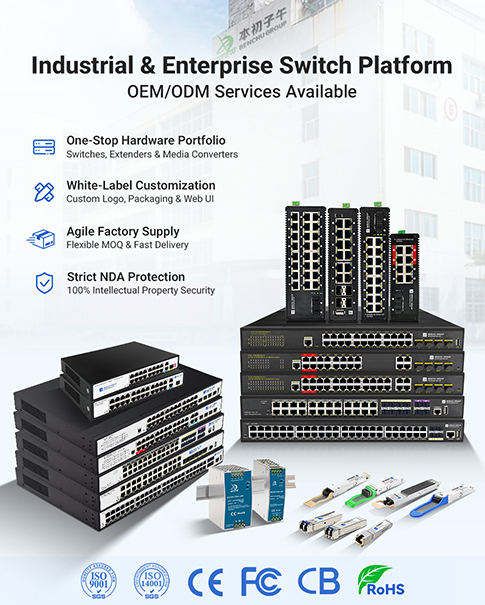
      PoE Ethernet Switches require several certifications to ensure they meet safety, performance, and regulatory standards. These certifications help guarantee that the equipment is reliable, interoperable, and safe for use in different regions. Here are the key certifications typically required for PoE switches:   1. Safety Certifications UL/ETL Listing: --- UL (Underwriters Laboratories) and ETL (Electrical Testing Laboratories) ensure that electrical products, including PoE switches, meet stringent safety standards for electrical systems. --- In some regions, the product might need UL 60950-1 or the newer UL 62368-1 certification, which covers safety for IT and audiovisual equipment. CE Marking (Europe): --- Indicates compliance with European safety, health, and environmental protection regulations. --- PoE switches must meet the Low Voltage Directive (LVD) and Electromagnetic Compatibility (EMC) Directive to be sold in the European Economic Area (EEA).     2. Electromagnetic Compatibility (EMC) Certifications FCC Certification (U.S.): --- Ensures that the device meets electromagnetic interference standards, particularly for networking and communication devices. --- Complies with FCC Part 15 regulations for Class A or Class B devices, depending on their use in commercial or residential settings. EN 55032/55024 (Europe): --- EN 55032 ensures electromagnetic compatibility for multimedia and network equipment, while EN 55024 addresses the immunity of devices to electromagnetic disturbances.     3. Energy Efficiency Certifications Energy Star: --- While not always mandatory, Energy Star certification can demonstrate that a Network Switches PoE meets energy efficiency standards, reducing power consumption and operational costs. Ecodesign Directive (Europe): --- For PoE switches sold in Europe, they must comply with the Ecodesign Directive, which sets energy consumption standards for electrical devices.     4. Environmental and Sustainability Certifications RoHS (Restriction of Hazardous Substances): --- Ensures that the PoE switch is free from hazardous materials like lead, mercury, and cadmium. --- WEEE (Waste Electrical and Electronic Equipment Directive): --- Establishes requirements for proper disposal and recycling of electrical equipment in the European Union.     5. IEEE Standards Compliance IEEE 802.3af, 802.3at, and 802.3bt PoE switch: --- PoE switches must comply with the relevant IEEE standards for Power over Ethernet. --- 802.3af for PoE, 802.3at for PoE+, and 802.3bt for higher power PoE++ devices.     6. Regional Certifications CCC (China Compulsory Certification): --- Required for PoE switches sold in China, ensuring they meet specific safety and quality standards. CB Scheme (International): --- The CB Scheme facilitates international recognition of product safety certifications, allowing easier market access in different countries.     7. ISO Certifications ISO 9001: --- A quality management certification that demonstrates the manufacturer’s commitment to delivering consistent, high-quality products. ISO 14001: --- Related to environmental management, showing that the manufacturer minimizes environmental impact during production.     These certifications ensure that PoE switches meet safety, performance, and environmental standards for global markets.    
    Read More
1 2
A total of2pages

leave a message

leave a message
If you are interested in our products and want to know more details,please leave a message here,we will reply you as soon as we can.
submit

home

products

WhatsApp

Contact Us