PoE Switch 24 Port gigabit

Home

PoE Switch 24 Port gigabit

  • What is a PoE Switch Used For?
    Jul 23, 2024
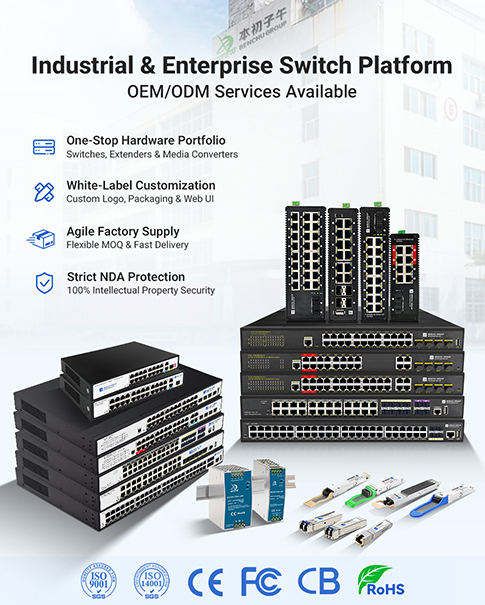
    In the realm of modern networking, Power over Ethernet (PoE) switches have become integral components, offering a revolutionary way to power and manage devices within a network infrastructure. This article explores the functionalities, applications, benefits, and future prospects of PoE switches, highlighting their importance in various industries and environments.   What is POE power over Ethernet?   A PoE switch is a specialized networking device that combines the functionality of a traditional Ethernet switch with the capability to deliver power over Ethernet cables. This integration allows devices such as IP cameras, wireless access points, VoIP phones, and IoT devices to receive both power and data through a single cable, simplifying installations and reducing infrastructure costs.   What are the benefits of using a PoE Switch?   1. Simplified Installations and Cost Efficiency One of the primary advantages of 10G Uplink Gigabit Industrial PoE Switch 16 Port is their ability to simplify installations. By eliminating the need for separate power lines, PoE Network Switches reduce the complexity of cabling and lower installation costs. This is particularly beneficial in environments where adding new devices or relocating existing ones is frequent.   2. Flexibility and Scalability PoE Switch 24 Port gigabit offer unmatched flexibility and scalability in network deployments. They enable easy expansion of networks without the constraints of power availability, allowing for quick deployment of devices in remote or challenging locations. This flexibility is crucial in dynamic environments such as offices, schools, hospitals, and industrial facilities.   3. Remote Power Management PoE switches facilitate remote power management, allowing administrators to monitor and control the power status of connected devices from a central location. This capability enhances operational efficiency by enabling proactive maintenance, troubleshooting, and power allocation based on device priority.   4. Enhanced Reliability and Continuity Reliability is enhanced with PoE switches through features like uninterruptible power supply (UPS) integration and Quality of Service (QoS) prioritization. UPS ensures continuous operation during power outages, critical for devices like security cameras and access control systems. QoS prioritization optimizes bandwidth allocation, ensuring consistent performance for essential applications.   5. Energy Efficiency and Sustainability PoE technology promotes energy efficiency by optimizing power consumption. By centrally managing power delivery and implementing energy-saving features, PoE switches reduce overall energy consumption compared to traditional power methods. This eco-friendly approach aligns with sustainability goals and regulatory requirements, making PoE switches a preferred choice for environmentally conscious organizations. As technology advances, PoE switches continue to evolve to meet the growing demands of modern networks. Innovations such as 802.3bt PoE++ Switch standard enable higher power delivery, supporting devices with increased energy requirements such as high-power cameras and advanced IoT sensors. The integration of PoE with emerging technologies like 5G and smart building solutions further expands the possibilities for PoE switches in diverse applications. Understanding the capabilities and advantages of PoE switches is essential for network administrators and IT professionals looking to optimize their network deployments and prepare for future technological advancements. By embracing PoE technology, organizations can enhance operational efficiency, reduce costs, and contribute to a more connected and sustainable digital environment.   Related Product Side-by-Side Comparison Models SP5200-8PFE2GE8 Ports Unmanaged PoE Switch for Store Security Cameras SP5220-24PGE2GF24 Ports Gigabit PoE Switch for Industrial Park CCTV Systems SP7500-24PGE4GC-L2MManaged 24 Ports PoE Switch for Enterprise Campus SP7500-24PGE4GC-4BT-L2M802.3BT 90W PoE Switch for Smart Buildings IES7511-8PGE2GF-4BTIndustrial PoE Switch for Harsh Outdoor Environments Switching Capacity 7.6Gbps 52Gbps 128Gbps 64Gbps 24Gbps Physical Port 8-10/100M PoE + 2-1G RJ45 24-1G PoE + 2-1G SFP 24-1G PoE + 4-1G RJ45 + 4-1G SFP 4* 90W PoE +  20-1G PoE + 4-1G RJ45/SFP Combo 4* 90W PoE +  4-1G PoE + 2-1G SFP POE Standard  IEEE 802.3at / 30W  IEEE 802.3at / 30W  IEEE 802.3at / 30W IEEE 802.3bt (Max.90W) IEEE 802.3bt (Max.90W) POE Budget 120W (Internal Power Supply) 300W (Internal Power Supply) 400W (Internal Power Supply) 500W (Internal Power Supply) 240W Power Input AC 100~240V 50/60Hz AC 100~240V 50/60Hz AC 100V-240V, 50/60Hz AC 100V-240V, 50/60Hz DC 48~56V (Dual redundant inputs) Housing / Mount Metal / Rack-mout Metal / Rack-mout Metal / Rack-mout Metal / Rack-mout Aluminum / DIN-Rail Operating Temp -20°C to +55°C -20°C to +55°C -20°C to +55°C -20°C to +55°C -40°C to +85°C Surge ESD 4KV ESD 6KV ESD 6KV ESD 6KV ESD 6KV Type Unmanaged Unmanaged L2+ Managed L2+ Managed L2+ Managed Action View Detail View Detail View Detail View Detail View Detail   🚀 OEM/ODM & White Label Services Available Empower your brand with Benchu's 10+ years of PoE & Industrial Switch manufacturing expertise. We provide more than just hardware; we provide your brand's competitive edge. Branding & ID Laser-etched Logo & Custom Labels Brand-specific Packaging (Giftbox/Carton) Unique Housing Colors (RAL/Pantone) Software & Tech Custom Default IP/Login Credentials Private MIBs & Specialized Firmware PCBA-only Options for System Integration Ready to Build Your Own Brand? Standard OEM Lead Time: 2-3 Weeks | Low MOQ Branding +86 755 23246531 | sales@benchu-group.com | WhatsApp: +86-17322314741 Get a Tailored Quote Now  
    Read More
  • How Many Ports Should Your PoE Switch Have for Optimal Performance?
    Mar 06, 2025
    The number of ports on a PoE switch determines its suitability for different network sizes and applications. From small offices to large enterprises, PoE switches come in various configurations to provide both power and data to connected devices. A PoE switch 24 Port Gigabit is commonly used in medium-sized networks, while a PoE switch 48 Port managed is better suited for enterprise-level deployments. But how many ports can a PoE switch have in total, and which configuration is right for your needs? Let’s dive into the details. Common PoE Switch Port Configurations PoE switches are available in different port configurations, ranging from small 4-port models to enterprise-level 48-port solutions. The most commonly used options include:       8-Port PoE Switch – Ideal for small offices, home networks, and IoT applications.     16-Port PoE Switch – Suitable for medium-sized businesses needing to connect multiple IP cameras, VoIP phones, and wireless access points.     PoE Switch 24 Port Gigabit – A great choice for growing networks that require a balance between scalability and affordability, while ensuring high-speed data transmission.     PoE Switch 48 Port managed – Designed for large-scale deployments, such as enterprise networks, surveillance systems, and data centers, offering advanced network management capabilities. Understanding PoE Power Budget by Port Count When selecting a PoE switch 24 Port Gigabit or PoE switch 48 Port managed, it's important to consider the PoE power budget. This determines how much power each connected device can receive.       A 24-port PoE switch typically has a power budget between 250W to 400W, allowing it to support multiple high-power devices like PTZ cameras and Wi-Fi 6 access points.     A 48-port PoE switch usually provides a higher power budget, ranging from 500W to 750W, making it ideal for large-scale surveillance and enterprise applications.   PoE Switch 24 Port Gigabit vs. PoE Switch 48 Port Managed: Which One Should You Choose? Choosing between a PoE switch 24 Port Gigabit and a PoE switch 48 Port managed depends on your network size and power requirements:     PoE Switch 24 Port is ideal for small to medium businesses looking to connect IP cameras, VoIP phones, and access points without overspending on unnecessary ports. The Gigabit capability ensures fast data transmission, meeting the needs of modern networks.     PoE Switch 48 Port is perfect for large enterprises, campuses, and high-density networks where multiple devices need power and data transmission at high speeds. Managed features offer greater control over VLANs, QoS, and security policies.   Other Considerations When Choosing a PoE Switch Besides port count, consider the following factors:     Gigabit vs. 10G PoE Switch – Ensure the switch supports the required bandwidth for your applications.     Managed vs. Unmanaged PoE Switch – Managed switches offer advanced control, VLAN support, and security features.     Layer 2 vs. Layer 3 PoE Switch – Layer 3 models provide routing capabilities, making them suitable for complex network infrastructures.   The choice of a PoE switch ultimately depends on your network’s scale and power demands. While a PoE switch 24 Port Gigabit strikes a balance between cost and capacity for medium-sized setups, a PoE switch 48 Port managed caters to high-density environments requiring extensive connectivity and advanced network management. Understanding your power budget, bandwidth needs, and management preferences will help you select the right switch to ensure seamless and efficient network performance.
    Read More
leave a message

leave a message
If you are interested in our products and want to know more details,please leave a message here,we will reply you as soon as we can.
submit

home

products

WhatsApp

Contact Us