Factory Specs & Quotes
Get unbranded (white-label) PDF datasheets and custom MOQ options directly from our engineering team. Fast 24-hour response. 100% Privacy Guaranteed. No spam.

A practical selection guide for surveillance projects, from cost-efficient camera access to industrial fiber networks and high-power PTZ deployments.
A 16-port PoE switch for IP cameras connects up to 16 PoE-powered cameras while transmitting data and electrical power through Ethernet cables. The right model depends on camera bandwidth, total PoE power demand, uplink connectivity, network management, and installation conditions.
However, not every 16-port PoE switch is suitable for every surveillance project. A small commercial parking lot may prioritize equipment cost, while a highway surveillance system may require fiber connections, industrial-grade hardware, redundant network paths, and higher-power PoE ports.
This guide explains the main factors to consider when buying a 16-port PoE switch for IP cameras and introduces 10 BENCHU models for different network requirements and deployment environments.
Before comparing specifications, identify where the cameras will be installed, how much bandwidth they require, how they receive power, and how the switch connects to the recording or core network.
The following scenarios show how different 16-port configurations fit different surveillance projects.
Typical project: A small roadside monitoring installation, parking area, warehouse entrance, or commercial building with up to 16 standard IP cameras.
In this type of project, cameras may be distributed around a relatively compact area. If their configured video bitrates are moderate and 100Mbps access is sufficient, a Fast Ethernet PoE switch with Gigabit uplinks can help control equipment costs.
The important distinction is that the camera-facing ports operate at 10/100Mbps, while the uplink ports operate at Gigabit speed. This provides a higher-capacity connection to the NVR or upstream network, but does not increase the speed of an individual camera port.
It is suitable when the project does not require Gigabit bandwidth on every camera connection, but still needs a Gigabit connection for aggregated video traffic. Before purchasing, check the bitrate of each camera and the total traffic crossing the uplink.
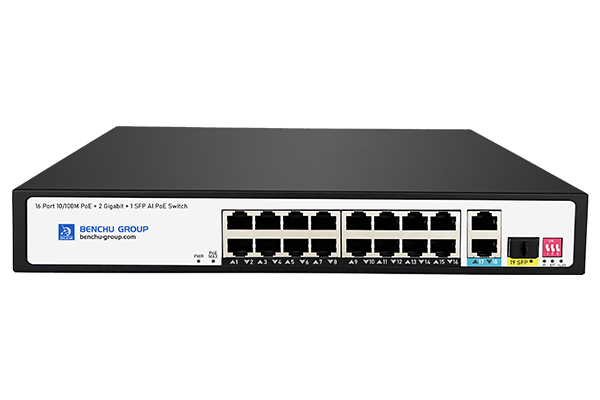
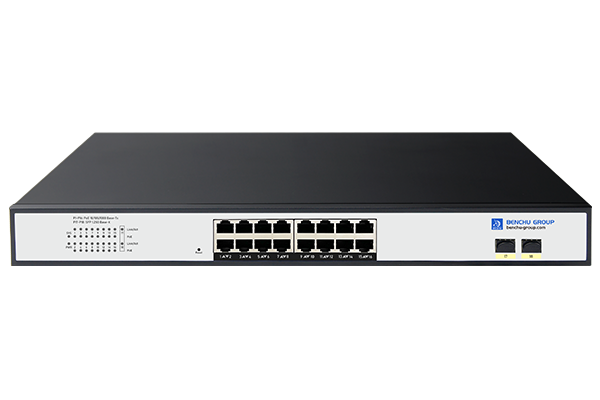
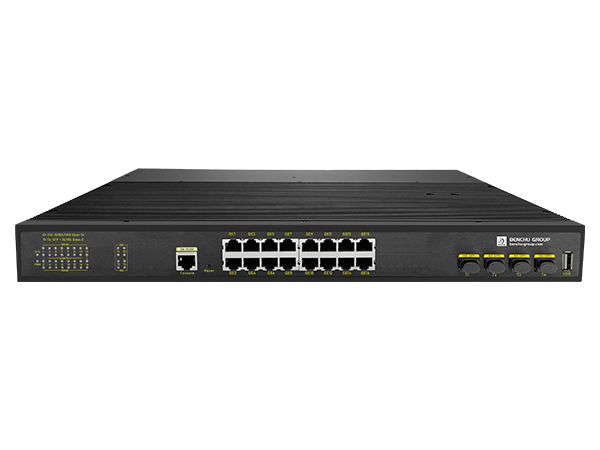
16-Port 10/100M Unmanaged PoE Switch with Gigabit RJ45 and SFP Uplinks
It combines copper and fiber uplinks, making it suitable for cost-sensitive surveillance installations requiring both nearby network connections and fiber connectivity. It is a practical option when cameras use Fast Ethernet access but the installation also needs an optical uplink.
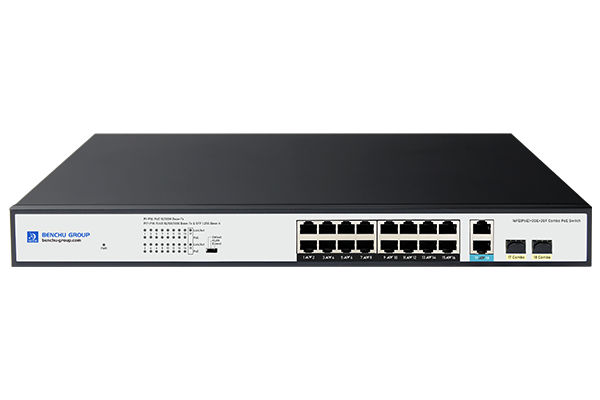
View Product Details →16-Port 10/100M Unmanaged PoE Switch with Gigabit RJ45/SFP Combo Uplinks
The Combo uplinks allow installers to select copper or fiber connectivity according to the network design. It is a suitable option for projects prioritizing economical Fast Ethernet access and flexible uplink media.
View Product Details →Typical project: A commercial parking facility, campus, shopping center, or logistics warehouse using higher-resolution IP cameras and multiple simultaneous video streams.
When camera bitrates increase, Fast Ethernet access may become a limiting factor. A full Gigabit PoE switch provides 10/100/1000Mbps access ports and more bandwidth for each camera connection.
For example, a surveillance system with high-resolution cameras, continuous recording, and multiple live-view clients should be evaluated according to its actual network traffic rather than the number of cameras alone.
It provides more bandwidth per camera connection and greater flexibility for future upgrades. If the NVR or core switch is nearby, Gigabit RJ45 uplinks may be sufficient. If the network uses fiber, select a model with SFP uplinks.
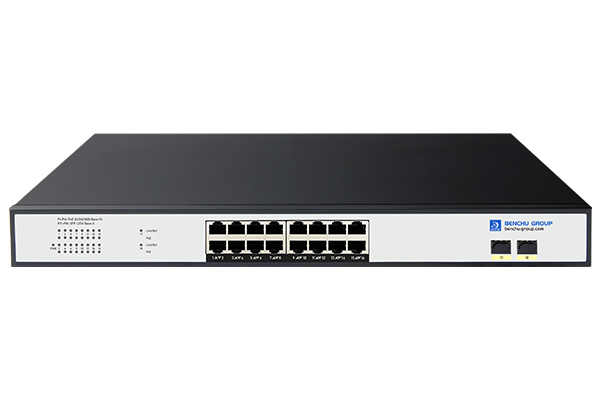
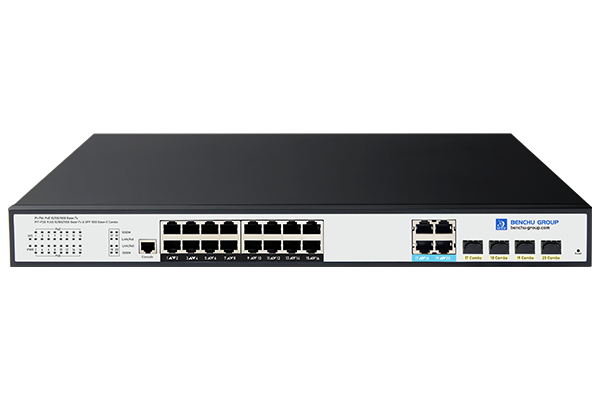
16-Port Full Gigabit Unmanaged PoE Switch with 2 SFP Uplinks
Suitable for surveillance installations requiring Gigabit camera connections and dedicated fiber uplinks without advanced network configuration. It is a straightforward choice for a Gigabit camera network with fiber connectivity to an upstream switch.
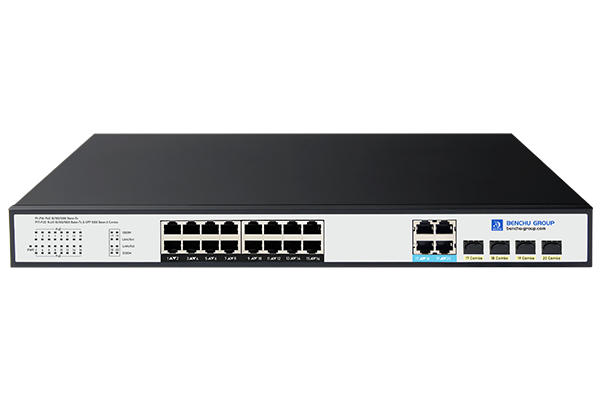
View Product Details →16-Port Full Gigabit Unmanaged PoE Switch with 4 Combo Uplinks
Its four Combo uplink interfaces provide flexible copper or fiber connectivity for installations requiring multiple network connections. It is worth considering when the surveillance network needs more than one upstream connection option.
View BENCHU Products →Typical project: An office campus, shopping center, hospital, or large commercial facility with multiple camera groups, separate network segments, and centralized monitoring.
In these projects, network administrators may need to separate camera traffic from office devices, monitor port status, prioritize selected traffic, or configure multicast handling.
An unmanaged switch can provide basic connectivity, but it does not offer the same network control as a managed model. A Web-managed or L2+ managed switch is more appropriate when the project requires configurable network functions.
Management features help administrators organize camera networks, monitor connectivity, and configure supported traffic-control functions. Choose the management level according to the actual network design rather than paying for features the project will not use.
16-Port Gigabit Managed PoE Switch with 2 SFP Uplinks
Consider this model when the surveillance installation requires Gigabit camera access, fiber uplinks, and browser-based network management. It provides a management option for projects that need more control than a basic unmanaged switch.
View BENCHU Products →16-Port Full Gigabit L2+ Managed PoE Switch with 4 Combo Uplinks
Suitable for enterprise surveillance networks requiring traffic segmentation, flexible uplinks, and advanced network management. Its L2+ functions are useful when multiple camera groups and upstream network connections need structured configuration.
View Product Details →Typical project: A highway monitoring network, roadside control cabinet, transportation facility, factory perimeter, or outdoor surveillance installation with cameras distributed over long distances.
These installations often have more demanding environmental conditions than indoor enterprise networks. The switch may be installed inside a roadside cabinet where temperature changes, electrical interference, and limited maintenance access need to be considered.
Fiber uplinks are particularly useful when remote camera cabinets need to connect to a central monitoring network over longer distances. Industrial switches can also provide features such as wide operating temperature support, DIN-rail mounting, and redundant DC power inputs, depending on the model.
If standard PoE+ is sufficient for the connected cameras, an industrial Gigabit PoE+ switch can provide the required camera connectivity while addressing the installation environment. The number and type of SFP uplinks should match the actual fiber topology.
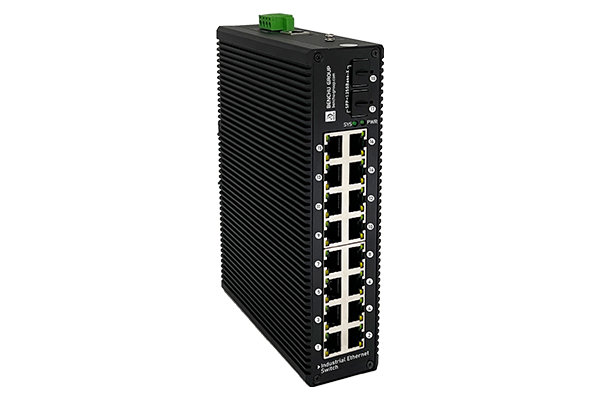
16-Port Gigabit Industrial Unmanaged PoE Switch with 2 SFP Uplinks
This model is suitable for roadside cabinets and industrial surveillance installations where Gigabit camera access and fiber uplinks are required, but advanced network management is not necessary. Its industrial construction and wide operating temperature range address conditions that a standard enterprise switch may not be designed for.
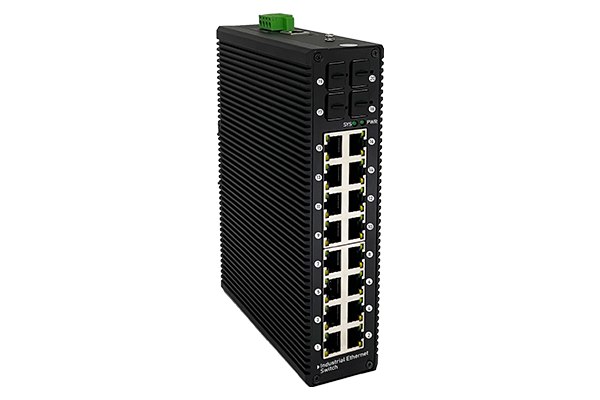
View Product Details →16-Port Gigabit Managed Industrial PoE+ Switch with 4 SFP Uplinks
Designed for industrial surveillance networks that require managed fiber connectivity and network redundancy. Its four SFP uplinks and supported ERPS functions make it suitable for ring-based fiber connections when the network topology is correctly configured.
View Product Details →Typical project: A large industrial facility, transportation hub, or multi-site surveillance system where multiple access switches aggregate camera traffic into a central backbone.
When several switches transmit video streams to a central recording or monitoring network, a single Gigabit uplink may become a bottleneck. A switch with 10G SFP+ uplinks provides more capacity for aggregated traffic and can support a higher-bandwidth backbone.
They provide additional uplink capacity for aggregated video traffic and inter-switch connections. Check the required optical transceivers, fiber type, link distance, and compatibility with the core switch.
16-Port Gigabit Managed Industrial PoE+ Switch with 4 × 10G SFP+ Uplinks
Designed for industrial surveillance networks requiring higher uplink bandwidth, Layer 3 management, and fiber connectivity. It is especially relevant when multiple camera networks need to aggregate into a high-capacity backbone rather than relying on a single Gigabit uplink.
View Product Details →Typical project: Highway intersections, toll plazas, large outdoor parking areas, and industrial sites using a combination of high-power PTZ cameras and standard IP cameras.
Some PTZ cameras include motors, heaters, infrared illuminators, or other functions that increase power consumption. If a camera requires more power than a standard PoE+ port can supply, a compatible IEEE 802.3bt PoE++ port may be necessary.
For a mixed surveillance system, it is often more practical to use a switch with designated high-power ports for PTZ cameras and standard PoE+ ports for fixed cameras.
It allows high-power cameras to use designated PoE++ ports while standard IP cameras remain connected to PoE+ ports. This avoids selecting a high-power port configuration for every camera when only some devices need it.
16-Port Gigabit Managed Industrial PoE++ Switch
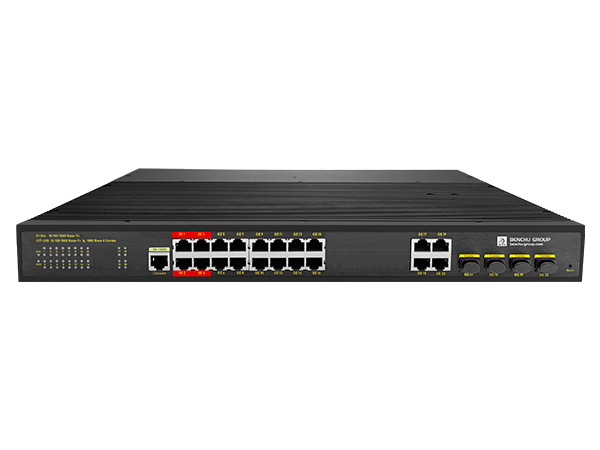
This configuration is suitable for industrial surveillance networks combining compatible high-power PTZ cameras with standard PoE+ IP cameras. The four designated 90W ports provide additional power for compatible devices, while the remaining PoE+ ports serve standard cameras. Its industrial design and flexible Combo uplinks also support cabinet-based surveillance deployments.
View Product Details →After identifying the deployment scenario, the next step is to check whether the switch can supply enough power to all connected cameras.
Two specifications must be considered:
Standard PoE for compatible lower-power IP cameras and network devices.
PoE+ for compatible cameras with higher power requirements.
PoE++ for compatible high-power cameras and devices requiring more power.
The figures above refer to the maximum PSE output ratings of the respective PoE standards. The power available to the powered device is lower after cable losses. Always check the camera's supported PoE standard and maximum power consumption.
Consider a surveillance project with 12 standard IP cameras and four PTZ cameras.
| Camera Type | Quantity | Power per Camera | Total Power |
|---|---|---|---|
| Standard IP Camera | 12 | 10W | 120W |
| PTZ Camera | 4 | 25W | 100W |
| Total | 16 | 220W |
The calculated camera demand is 220W. The selected switch should provide a sufficient total PoE budget with additional operating margin. If some PTZ cameras require 90W PoE++, the switch must also have compatible high-power ports rather than simply a large total budget.
A switch with a 470W total PoE budget does not necessarily provide 90W on every port. For example, the IES7521-16PGE4GC-4BT-AC has four designated 90W PoE++ ports and twelve 30W PoE+ ports.
Before purchasing, map each camera to the appropriate switch port and confirm both its individual power requirement and the total system demand.
Access speed determines the maximum link rate between each camera and the PoE switch. The choice should be based on the actual camera bitrate, resolution, frame rate, codec, and simultaneous stream requirements.
Fast Ethernet can be a cost-effective choice when the camera traffic fits within 100Mbps per access link. It is often considered for standard surveillance cameras in projects where Gigabit access is not required.
However, a Gigabit uplink does not increase the speed of the individual 100Mbps camera ports. Check the actual traffic of each camera and the combined load on the uplink.
Full Gigabit access provides 10/100/1000Mbps connectivity on each camera-facing port. It is useful for higher-bitrate cameras, multiple simultaneous streams, and networks that may expand over time.
For larger projects, also check the switch's switching capacity, packet forwarding rate, and uplink architecture. Gigabit access alone does not guarantee that an entire network is free from congestion.
Uplink interfaces determine how the 16-port PoE switch connects to the NVR, aggregation switch, core network, or remote fiber backbone.
Gigabit RJ45 uplinks use copper Ethernet cabling. They are suitable for nearby network equipment, with a typical maximum channel distance of 100 meters for standard Ethernet copper cabling.
SFP uplinks provide fiber connectivity through compatible optical transceivers. They are useful for connecting roadside cabinets, separate buildings, and remote surveillance locations.
Before choosing an SFP switch, verify fiber type, transceiver compatibility, connector type, link distance, and uplink bandwidth.
A Combo interface offers an RJ45 copper connection and an SFP optical connection sharing the same logical port. This allows the installer to choose the required medium, but the two interfaces in one Combo pair should not be counted as two independent simultaneous uplinks.
10G SFP+ is useful when multiple PoE switches aggregate camera traffic toward a central network. It provides more uplink capacity than a standard Gigabit connection and can support larger surveillance backbones.
For a compact 16-camera installation, Gigabit uplinks may be sufficient. For remote camera cabinets connected through fiber, select SFP uplinks. For multiple switches and high aggregated traffic, evaluate 10G SFP+ uplinks.
A typical enterprise surveillance network showing 16 PoE-powered IP cameras connected to a 16-port PoE switch, with uplinks to an NVR, router, and monitoring network.
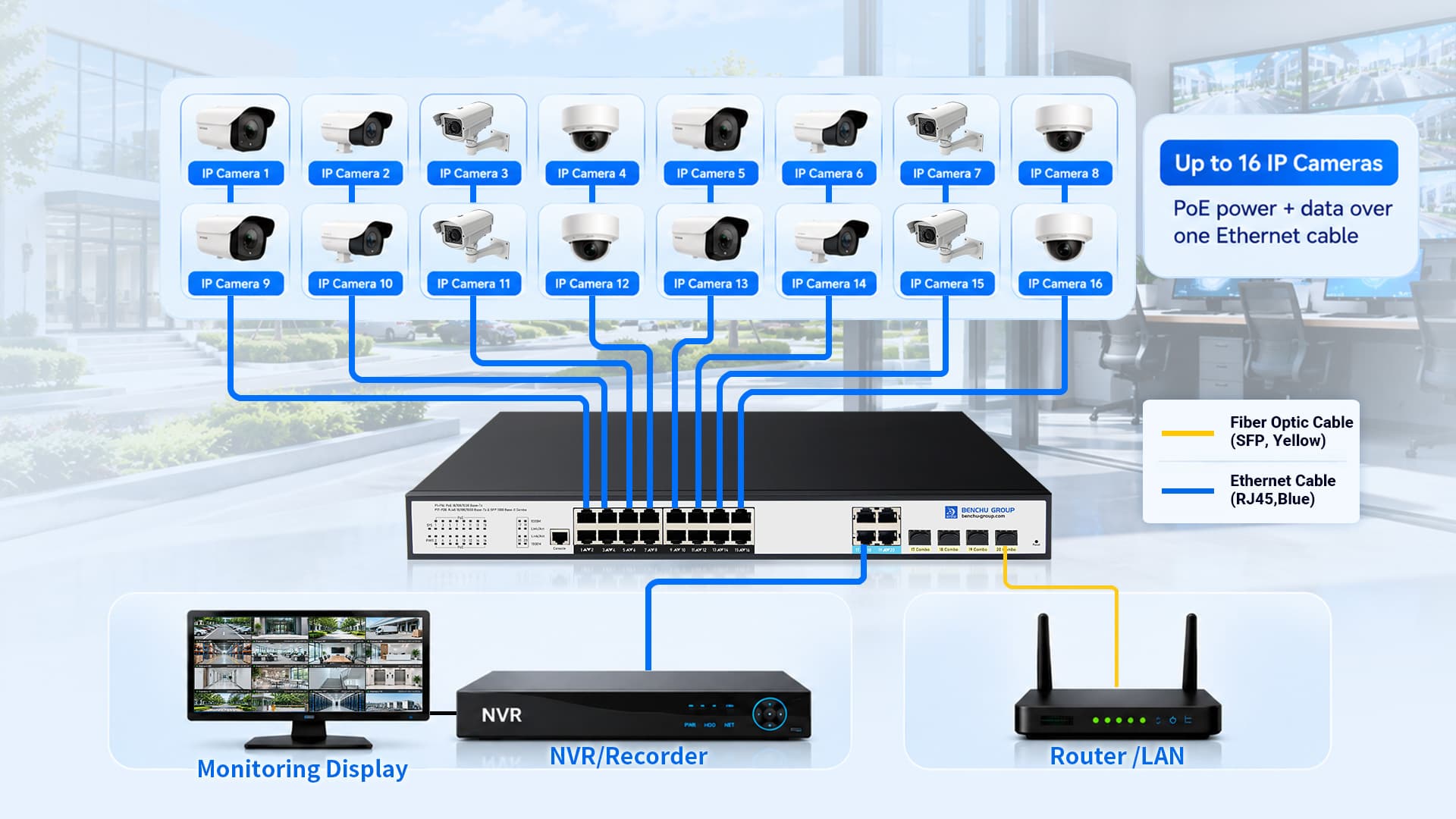
Design concept: 16 IP cameras connect to the PoE switch through Ethernet cables carrying both data and power. The switch uplinks to the NVR and router or core network for video recording and remote monitoring.
Management features should be selected according to the complexity of the surveillance network.
| Switch Type | Typical Application | What to Consider |
|---|---|---|
| Unmanaged | Small and straightforward camera networks. | Simple installation without advanced network configuration. |
| Web-Managed | Commercial surveillance networks requiring configuration and monitoring. | Web interface, supported port controls, and network status monitoring. |
| L2+ Managed | Large camera networks with multiple segments and remote switches. | VLAN, QoS, IGMP Snooping, ERPS, routing, and other supported functions. |
VLANs can separate surveillance cameras from office devices or divide cameras into different network groups. This helps organize traffic and apply network policies.
IGMP Snooping helps control multicast traffic distribution. It can be useful in surveillance networks where multicast video streams are used by multiple viewing devices.
ERPS provides Ethernet ring protection on supported network topologies. In a fiber-ring surveillance network, it can provide an alternate forwarding path when a link fails, subject to correct configuration and supported network design.
The physical environment can be just as important as bandwidth and PoE power. A switch installed in an air-conditioned server room has different requirements from one installed inside a roadside cabinet or factory control panel.
Enterprise PoE switches are commonly used in:
For these projects, prioritize access speed, PoE budget, uplink type, management functions, and rack or desktop installation requirements.
Industrial PoE switches are designed for more demanding environments such as highway surveillance, roadside cabinets, factories, transportation facilities, and utility sites.
Depending on the model, relevant specifications may include:
Do not assume that every industrial model has identical environmental specifications. Check the actual datasheet against the conditions at the installation site.
An industrial surveillance topology showing three 16-port industrial PoE switches connected through a fiber ring, with IP cameras, PTZ cameras, and a central monitoring room.
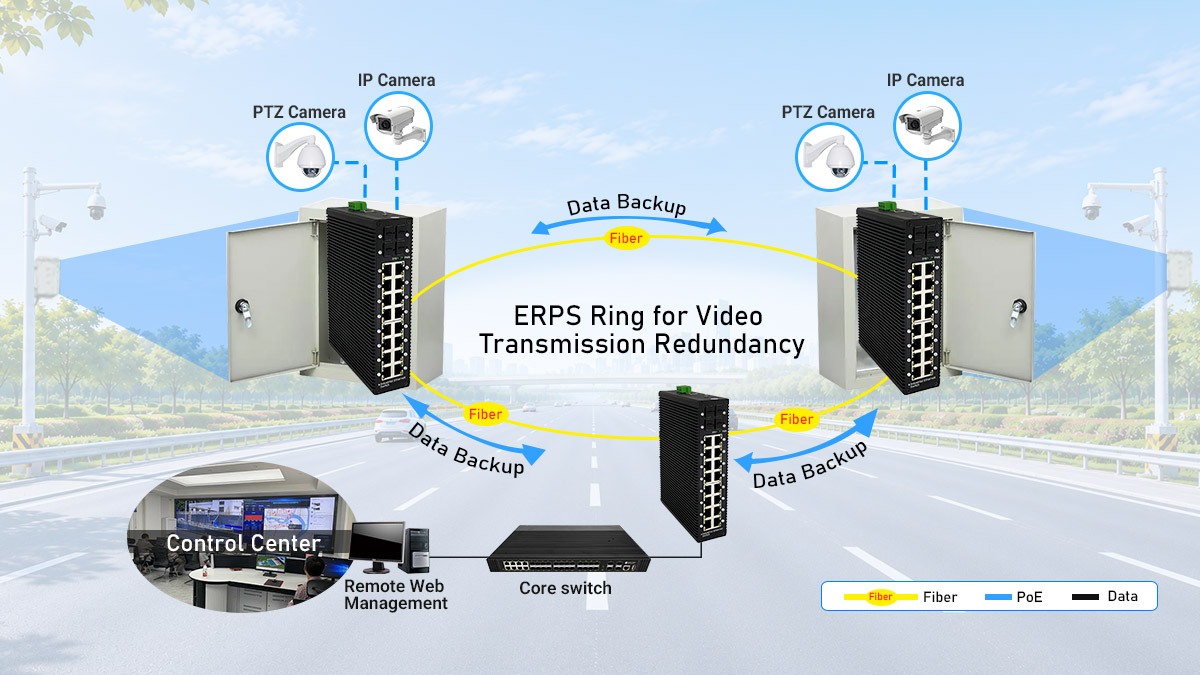
Design concept: Three industrial PoE switches are interconnected through fiber links to form a ring topology. Each switch connects local IP cameras and compatible PTZ cameras. The ring connects to the central monitoring network through an industrial core switch. ERPS protection should only be shown where supported by the selected switch models and configured topology.
After identifying the camera bandwidth, PoE power requirements, uplink architecture, and installation environment, use the following table to match your project with a suitable 16-port PoE switch.
| Deployment Requirement | Recommended Model | Reason |
|---|---|---|
| Cost-sensitive roadside or commercial surveillance using standard cameras, with Fast Ethernet access and both copper and fiber uplinks. | SP5210-16PFE2GE1GF | Its 16 Fast Ethernet PoE+ ports help control access-port costs, while two Gigabit RJ45 uplinks and one Gigabit SFP uplink provide copper and fiber connection options. |
| Budget-focused camera deployment requiring Fast Ethernet access and flexible copper or fiber uplinks. | SP5220-16PFE2GC | Its two Gigabit Combo uplinks allow installers to select RJ45 or SFP connectivity according to the network layout. |
| High-resolution cameras requiring Gigabit access and a fiber connection to the upstream network. | SP5220-16PGE2GF | It provides 16 Gigabit PoE+ access ports and two Gigabit SFP uplinks without adding advanced management functions that may not be needed. |
| Gigabit surveillance installation requiring several flexible copper or fiber uplink connections. | SP5220-16PGE4GC | Four Gigabit Combo interfaces provide flexibility when connecting different network segments or upstream equipment. |
| Commercial surveillance network requiring browser-based configuration and monitoring. | SP6500-16PGE2GF | Its managed configuration is more suitable than an unmanaged switch when administrators need to configure and monitor the network. |
| Enterprise surveillance network with VLAN, traffic control, and advanced network management requirements. | SP7500-16PGE4GC-L2M | Its L2+ management functions and four Gigabit Combo uplinks support more structured network configuration and flexible connectivity. |
| Roadside cabinets or industrial camera installations requiring simple operation, Gigabit access, and fiber uplinks. | IES7211-16PGE2GF-DC | Its industrial design, wide operating temperature range, DIN-rail mounting, redundant DC power input, and dual SFP uplinks suit demanding installation environments. |
| Highway or industrial surveillance using fiber-ring connections and managed network redundancy. | IES7511-16PGE4GF-DC | Four Gigabit SFP uplinks and managed functions including ERPS make it suitable for supported industrial fiber-ring network designs. |
| Large industrial surveillance network aggregating traffic from multiple switches over a high-capacity backbone. | IES7521-16PGE4TF-AC | Four 10G SFP+ uplinks and Layer 3 management provide greater uplink capacity and routing options for larger network architectures. |
| Industrial surveillance combining high-power PTZ cameras and standard PoE+ cameras. | IES7521-16PGE4GC-4BT-AC | Four designated 90W PoE++ ports support compatible high-power cameras, while twelve 30W PoE+ ports connect standard cameras. Its total PoE budget is 470W. |
Yes. A 16-port PoE switch can connect up to 16 PoE-powered IP cameras through its PoE access ports. However, the total PoE budget, per-port power limits, and network capacity must match the connected devices.
The required PoE budget depends on the power consumption of each camera. For example, 16 cameras consuming 10W each require 160W of power at the device level. Allow additional capacity for operational margin and check the switch's actual PSE budget.
Fast Ethernet can suit cost-sensitive camera networks when the configured camera traffic fits within 100Mbps per access port. Gigabit provides more link capacity for higher-throughput camera connections and future expansion.
Choose an industrial model for demanding environments such as factory floors, roadside cabinets, transportation facilities, and outdoor enclosures. Check the specific model's operating temperature, surge-protection rating, DC input, mounting method, and enclosure specifications.
Selecting a 16-port PoE switch for IP cameras is not simply a matter of choosing a switch with 16 PoE ports. The correct configuration depends on the camera's bandwidth, individual power demand, total PoE budget, uplink architecture, management requirements, and installation environment.
For cost-sensitive projects, Fast Ethernet access with Gigabit uplinks may be sufficient. For higher-resolution cameras and heavier video traffic, full Gigabit access provides more bandwidth. Enterprise networks may benefit from managed switching, while highway surveillance and remote outdoor installations often require industrial construction and fiber connectivity.
When compatible PTZ cameras need higher power, a mixed-port industrial PoE++ switch can provide designated 90W ports alongside standard PoE+ ports.
By matching the switch configuration to the actual surveillance application, buyers can avoid unnecessary costs while maintaining the bandwidth, power capacity, and network reliability required by the project.
BENCHU provides PoE networking solutions for surveillance brands, distributors, system integrators, and OEM/ODM customers. Contact our team to discuss product configurations, PoE power budgets, uplink options, and brand customization for your project.
Contact BENCHU for Your Project Requirements → E-Mail Us
 Call Us
 Address
5F, Block5, GuangmingGu Industrial Park, Matian Villiage, Guangming Disitrict, Shenzhen, China



 IPv6 network supported
 English